
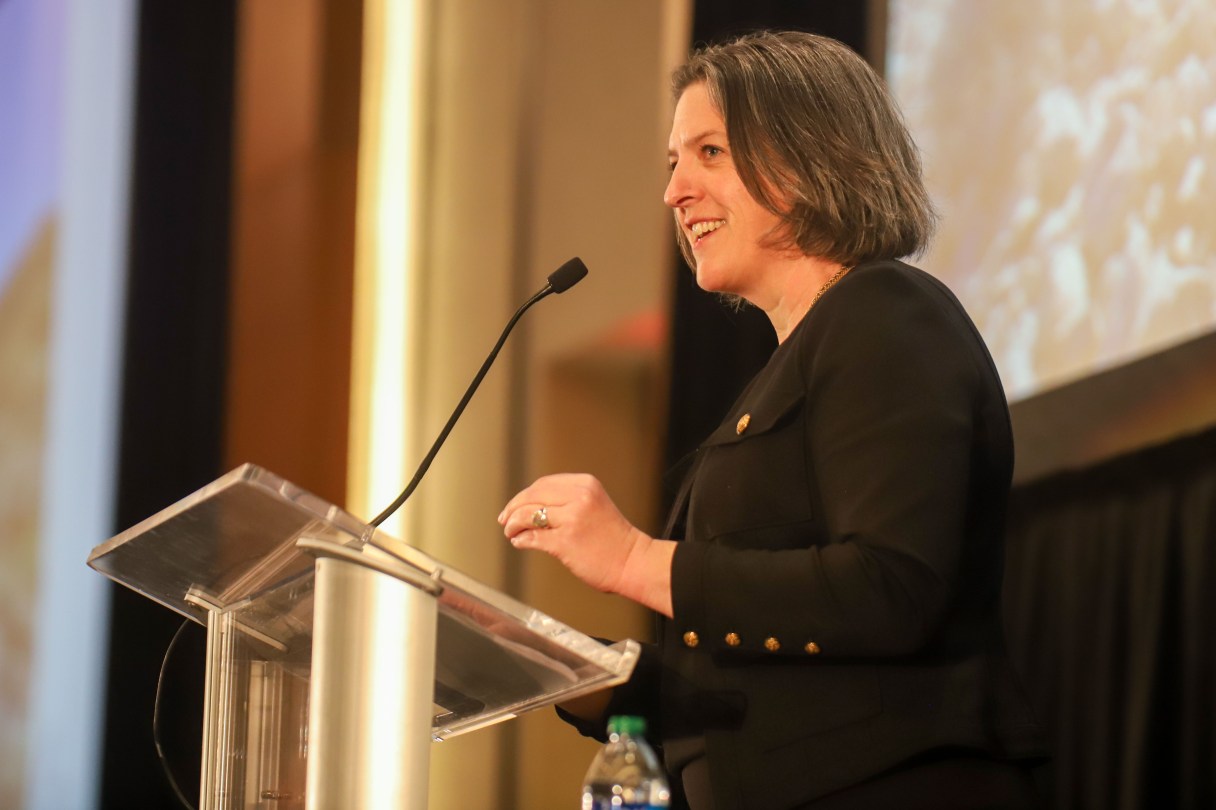

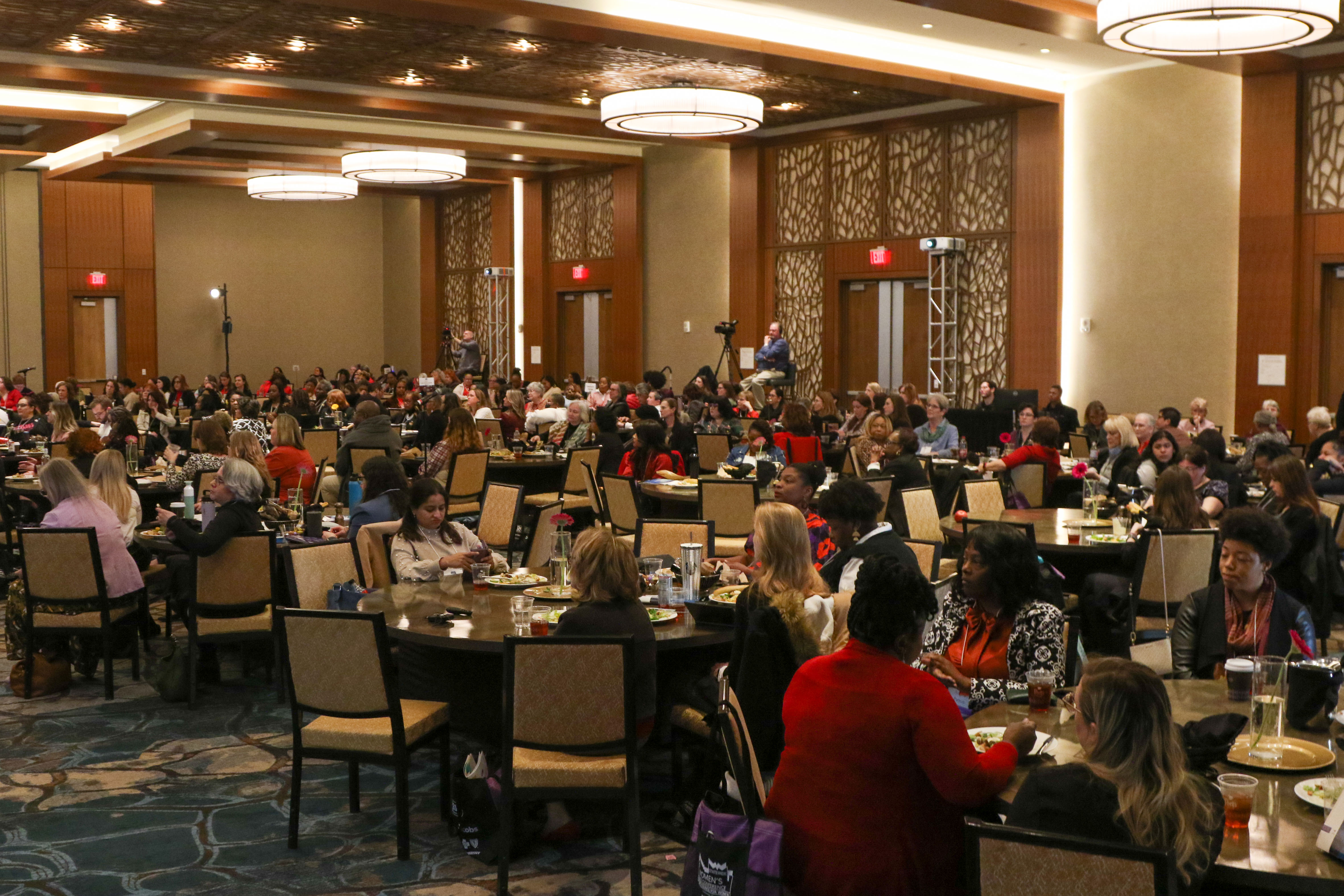
At a downtown Chattanooga hotel Friday, women buzzed between discussions on workplace inequality, local policy, sex trafficking, maternal mortality and transgender rights.
Booths advertising nonprofit organizations and educational programs or selling jewelry and cosmetics lined the hallway. A piece of paper stuck on the sign for the men’s bathroom around the corner relabeled it as a women’s restroom for the day.
The crowd was there for the Tennessee Statewide Women’s Policy Conference, the sixth to be hosted by the Chattanooga Mayor’s Council for Women.
The conference is meant to educate women about laws and policies that affect them and to discuss ideas for future policymaking. This year’s event was themed “Changing the present — Impacting the future: Dare to be the change — Now!”
Workplace expectations and policies are largely designed for men, Laurel Graefe, an executive at the Nashville branch of the Atlanta Federal Reserve Bank, said during a Friday morning session. Work done by women, including paid domestic work and work done in the home, is often undervalued, Graefe said.


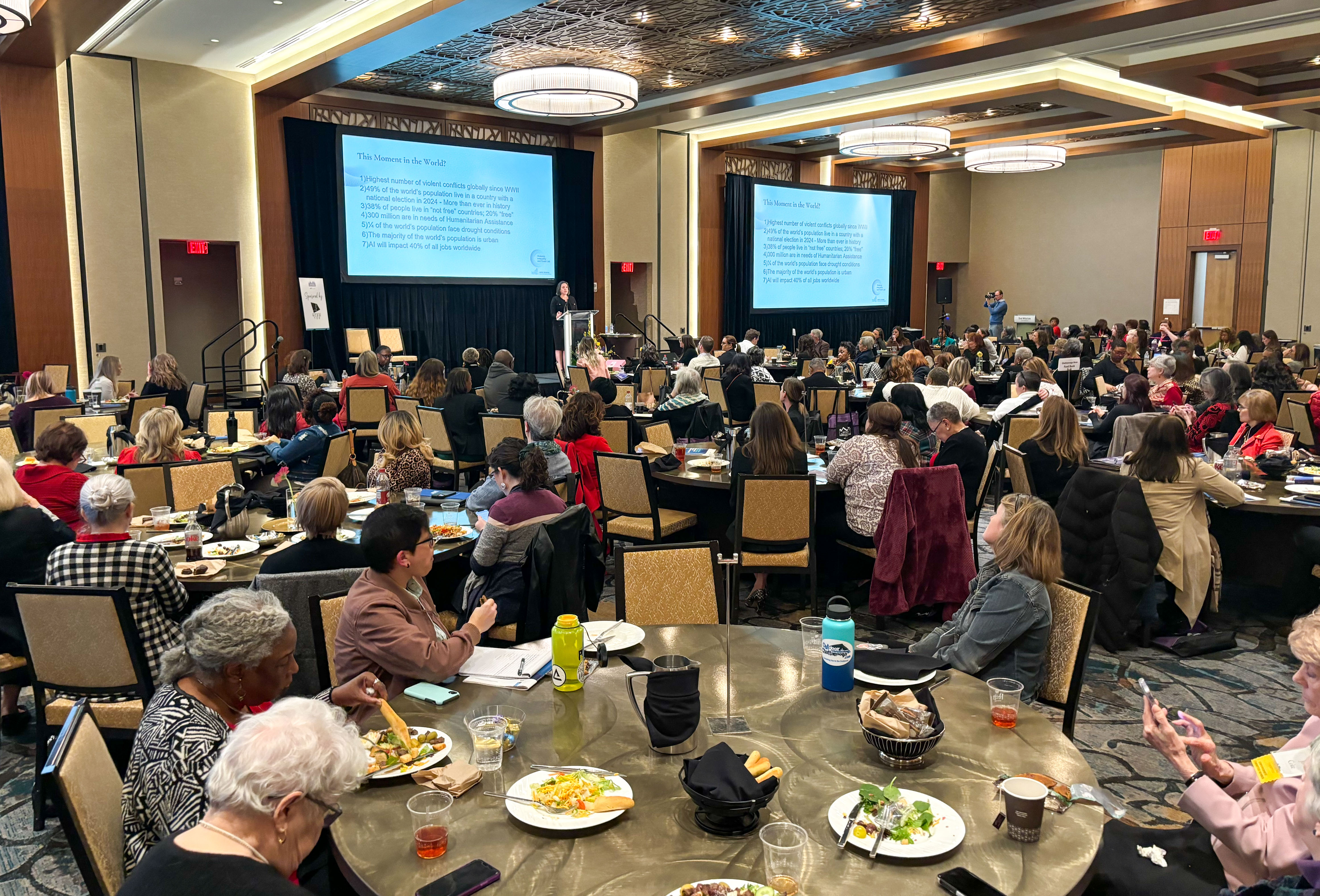
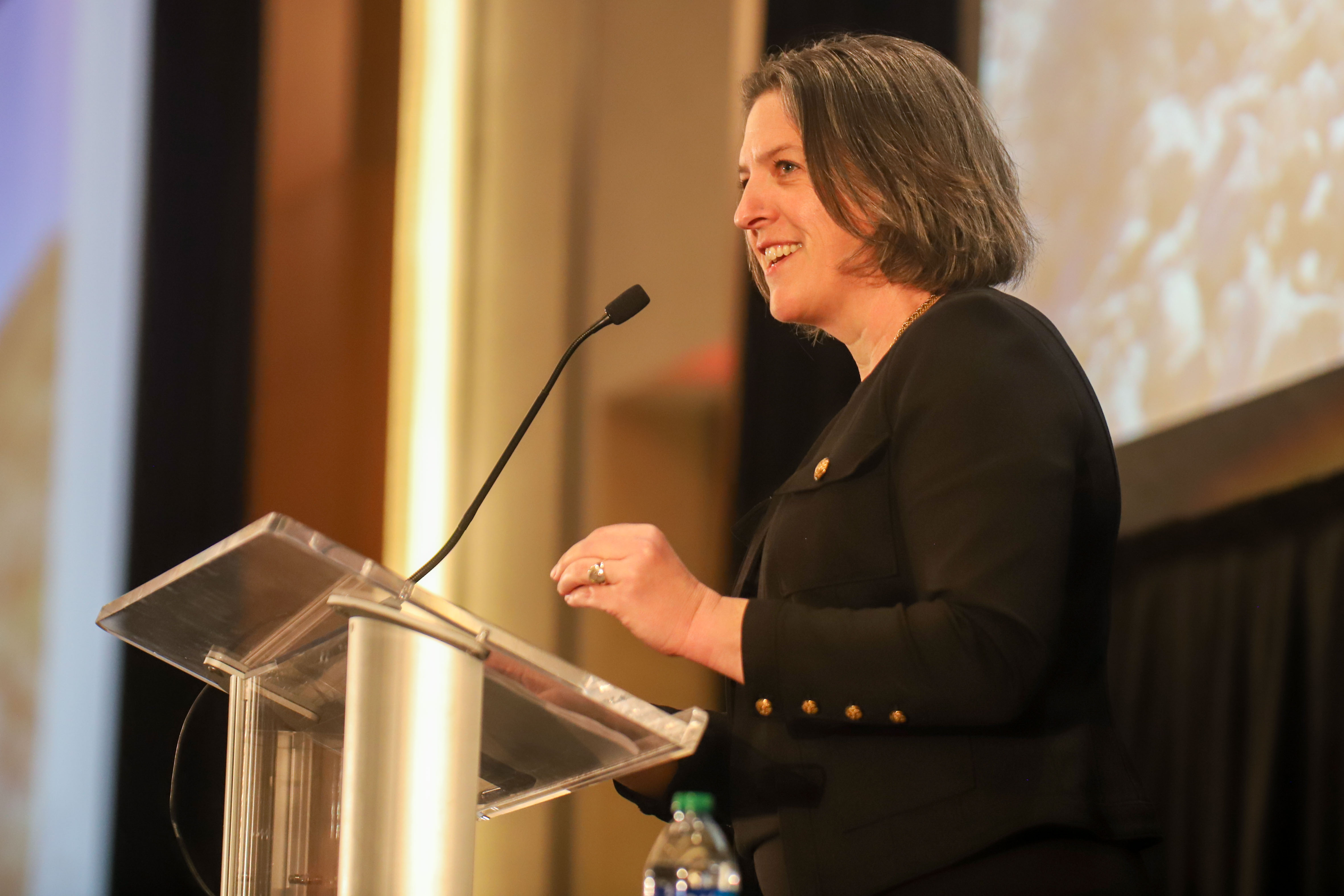
“Women tend to hold more vulnerable jobs that offer fewer benefits,” Graefe said. “What would participation look like if we designed financial products and systems that actually supported the goals and needs of women?”
Olivia Hill, an at-large member of Nashville’s Metropolitan Council and the first transgender woman elected to a political office in Tennessee, said in another session she didn’t realize how much privilege she previously possessed as a white man.
“It went away in a switch,” she told a crowd Friday morning.
She moved up in her career, working at a Vanderbilt power plant, by putting in lots of overtime and showing up at midnight, off the clock, to learn welding from people on that shift, she said.
“It was me who did that hard work, so I thought,” she said. “But then I realized after I transitioned that had I been a woman and showed up at midnight, the guys would have probably said, ‘Sweetheart, would you go make us some coffee.’ And it completely rocked my world.”
Another Friday morning panel, on local strategies to improve outcomes for women, pointed to two Tennessee laws passed in 2023 as threatening to efforts to improve equity and diversity in higher education. One allows students and employees at schools to report professors teaching divisive topics, while another protects employees who refuse to participate in training about implicit biases from being fired for their refusal.
“This is having a chilling effect in conversations within municipal government,” Shawna Davie, with the National League of Cities, said during the presentation.
Jerri Green, a newly sworn in Memphis council member, said she tries to use her other role as a senior adviser to Shelby County Mayor Lee Harris to help elevate other women, particularly women of color, to positions of power.
“When you have women in those boardrooms, talking about what we should be leading on next, they can bring up things like child care,” Green said during the panel.
A pair of health-focused sessions Friday discussed approaches to sex trafficking and the effects of maternal mortality in Tennessee.
Tennessee had the third-highest rate of mothers dying during live births between 2018 and 2021, according to an analysis by nonprofit health policy organization KFF (formerly the Kaiser Family Foundation). A recent report from BlueCross BlueShield of Tennessee found pregnant Black women were 2.3 times more likely to die than white patients, and that pregnant women of color were less likely to receive prenatal care early in their pregnancies.
Thanks to laws restricting the kind of sex education allowed in schools, it’s hard for young women to be informed on sex, contraception and disease, Stephanie Huskins, a nurse practitioner with pregnancy resource center Choices Chattanooga, said after a session on sex trafficking.
That means those conversations need to happen in the home, at church and in other parts of the community, Huskins said. At Choices, nurses also make sure to ask patients in a private setting about their safety and any potential abuse they’re experiencing, she said.
“Believe it or not, we’ve actually had patients that we’ve taken out the back entrance to the Family Justice Center and gotten them in protective custody,” Huskins said.
Contact Ellen Gerst at egerst@timesfreepress.com or 423-757-6319.