

County commission next up
In the end, the school facilities plan recommended last August by a working group of Hamilton County leaders provided two things — a reasoned blueprint for action over the next seven years and potential for a community conversation that could refine that blueprint.
The facilities plan the Hamilton County Board of Education approved Thursday night was a result of that collaboration. It was not a carbon copy of what was presented last summer. Nor was everybody happy with some of the changes that weren’t made in the plan. But it gives the Hamilton County Commission funding body a plan with which to work.
One of the biggest changes was a victory for retiring District 1 board rep Rhonda Thurman, who had lobbied for building a new Soddy-Daisy Middle School on the site of the aging, current one instead of enlarging Daisy Elementary to create a shared K-12 experience with adjacent Soddy-Daisy High School. In the end, all board members supported Thurman in her desire.
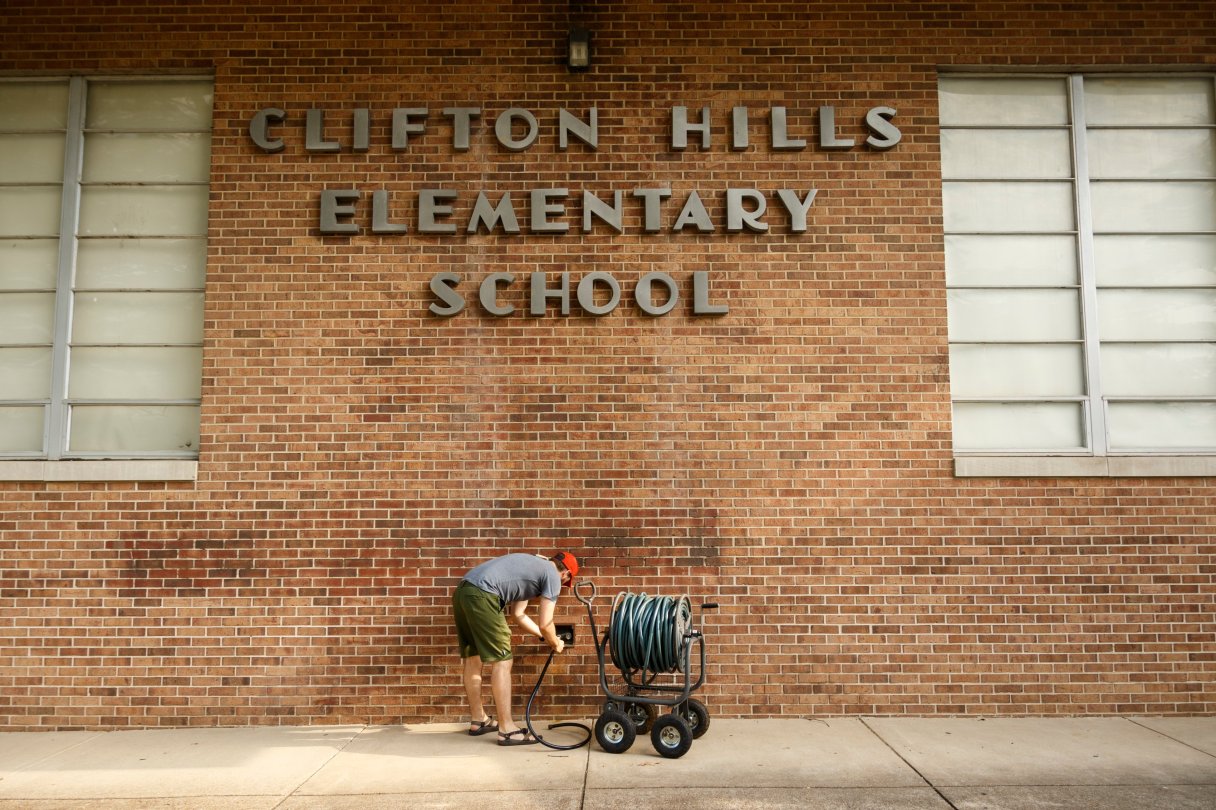
The second is the building of a new Clifton Hills Elementary on the site of the current one, which from its start has been plagued by a waterlogged campus. The plan last summer was to close the school and relocate the students to East Lake and East Side elementaries, both of which would be expanded.
The board made its top priority the renovation of the Gateway building, which would become a shared space for Chattanooga High Center for Creative Arts and a new career and technical education center, fulfilling Hamilton County Mayor Weston Wamp’s 2022 campaign desire for a new downtown school.
Fleischmann supports resolution
Conservative members of Congress should be unceasing in their criticism of the unconscionable spending by the Biden White House and Democratic Senate, but votes against a continuing resolution that funds the government have little effect if they’re unable to change anything.
We, like many conservatives, are frustrated that all of Congress seems unable to do its business in regular order anymore and must rely on the likes of continuing resolutions to keep government open. But until conservatives elect a president, a Republican Senate and increase their strength in the House, this is the best they can hope for.
U.S. Rep. Chuck Fleischmann, R-Ooltewah, we believe, understands this, which is why he voted to pass the resolution on Thursday night that will keep the government operating through March 8. He was joined in the affirmative by U.S. Reps. David Kustoff, R-Germantown, and Steve Cohen, D-Memphis.
U.S. Reps. Diana Harshbarger, R-Kingport, Tim Burchett, R-Knoxville, John Rose, R-Cookeville, and Mark Green, R-Clarksville, voted against it. U.S. Reps. Scott DeJarlais, R-Sherwood, and Andy Ogles, R-Columbia, did not vote.
The measure passed 314-108.
In the Senate, Tennessee’s Republican representatives split their vote, with Bill Hagerty voting for it and Marsha Blackburn voting against it.
It passed the Senate 77-18 and now goes to President Joe Biden for his signature.
Nothing to write home about
The Tennessee Department of Education said recently that 90% of parents surveyed whose children received Education Savings Account (ESA) dollars toward private school tuition, textbook, tutors or other spending are extremely satisfied or very satisfied with the pilot program.
However, Education Commissioner Lizzette Reynolds told a Senate Education Committee — acknowledging what had been rumored — that the first-year Tennessee Comprehensive Assessment Program test results of the students receiving the dollars “aren’t anything to write home about, is my understanding.”
“The parents are certainly satisfied and that’s a good thing,” state Sen. Raumesh Akbari, D-Memphis, said. “I think that’s half of it … but we also want the students who are taking public dollars to be performing either at or higher than those students who are in traditional public schools.”
We agree with Akbari, which is why we suggest the ESA program remain a pilot until several years of results can be measured.
The first year of the program included only qualified Shelby and Davidson students. Qualified Hamilton County students were added this school year.
Don’t put that in the landfill
Only two states are worse recyclers than Tennesseans. Ouch.
According to a new report by Eunomia Research & Consulting and the Ball Corporation, the state in 2021 (the latest year for which figures are available) recycled only 5% of packaging materials without fibers and flexible plastics, beating only West Virginia and Louisiana. The ranking dropped the state from 47th in its previous ranking to 48th.
Tennessee, as almost every state, does best with cardboard boxboard and paper packaging, recycling 33% of it. But then there is a huge drop. Volunteer state residents recycle 15% of aluminum cans, 5% of high density polyethylene (HPDE) bottles and glass bottles/jars, 4% of steel cans, and 3% of polyethylene terephthalate (PET) bottles and rigid plastics.
We can and should do better.