
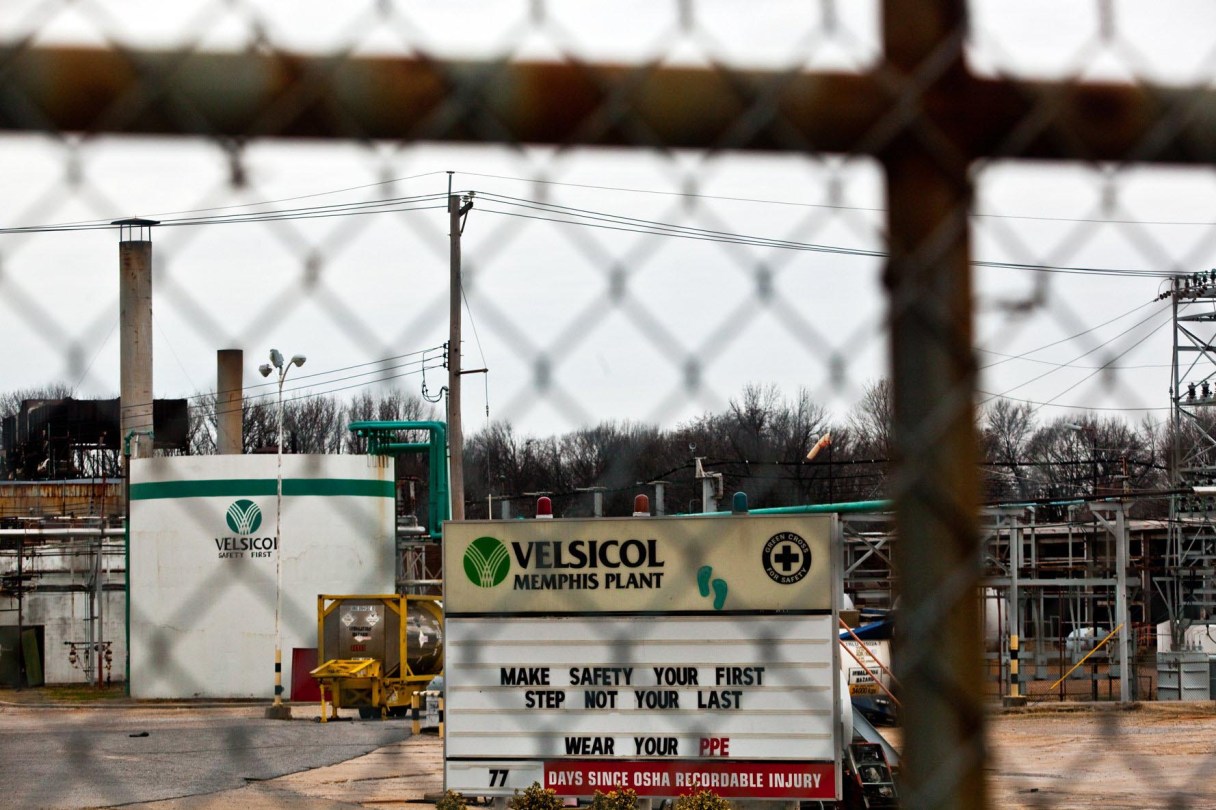
When 40 people gathered to hear about the future of a defunct chemical plant in North Memphis, many were surprised to learn the company has still been storing and shipping toxic materials for years.
Environmental advocates and residents met Velsicol Vice President George Harvell in March at the Hollywood Community Center. Harvell organized this pre-application meeting as part of a mandatory step for his company to renew a state-sanctioned permit with the Tennessee Department of Environment and Conservation.
For generations of Black families in the communities of Hollywood and Douglass Park, Velsicol’s toxic legacy is a familiar burden. Harvell recounted the company’s history during his presentation, citing familiar information about how Velsicol manufactured several pesticides that were later found to have harmful effects on both human health and the environment.
However, his presentation took an unexpected turn when he began discussing the storage of existing Velsicol products. People interjected with questions about how that was possible when the company stopped its chemical production in 2012.
Through Velsicol’s hazardous waste management permit, however, it is authorized to store and distribute chemicals including Hexachlorocyclopentadiene, also commonly referred to as hex. Used in flame retardants and pesticides, hex is a manufactured chemical that does not occur naturally.