
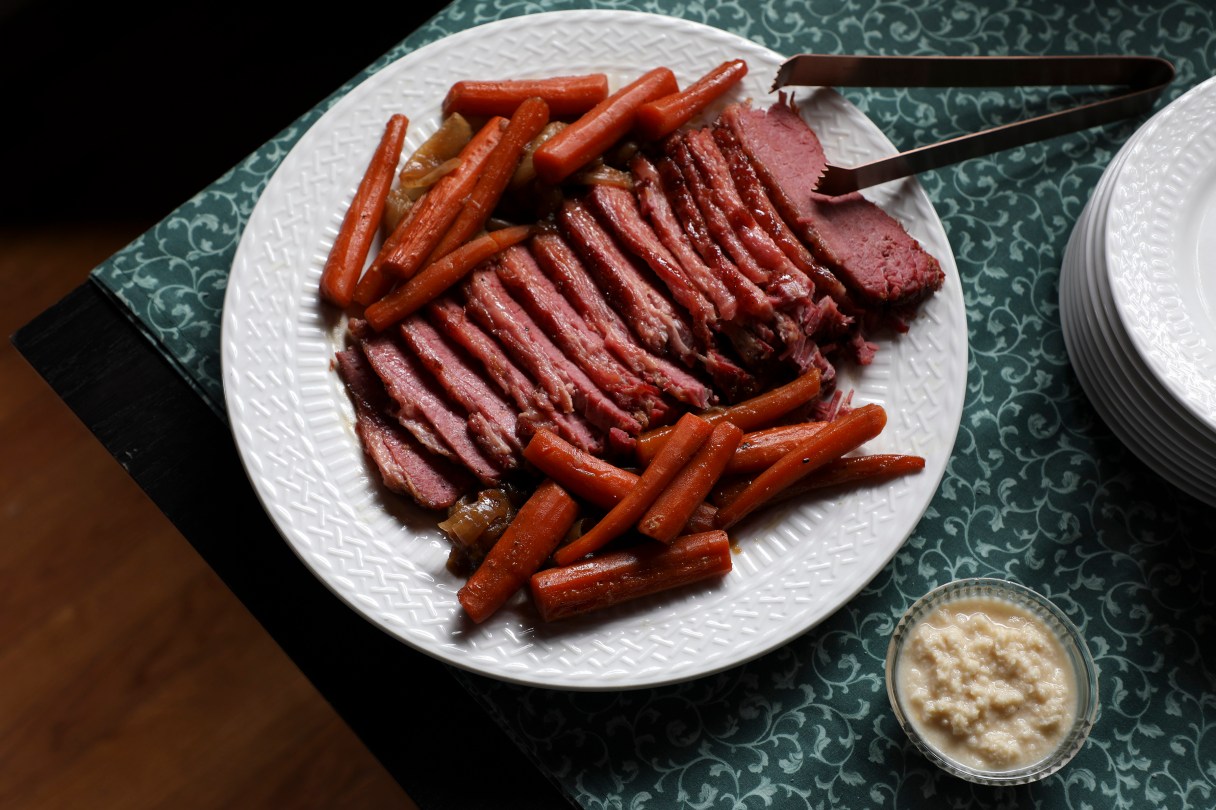
For many of us, corned beef tastes delicious every day of the year. But its popularity soars on St. Patrick’s Day – Irish heritage optional.
Like green beer, this holiday food tradition is largely a phenomenon in the United States. In fact, today’s corned beef is more Jewish than Irish. It’s rare to encounter it in Ireland.
The British are credited for corning beef in the 17th century by curing fresh beef with salt for preservation. Shaylyn Esposito, writing in the Smithsonian Magazine (March 15, 2013) explains that the term “corned” comes from the size of the salt kernels used in the curing.
A million Irish people immigrated to this country during Ireland’s Great Famine, frequently landing first in New York alongside Jewish immigrants from Eastern and Central Europe. Here, the Irish embraced beef – especially corned beef. However, Esposito explains that “the corned beef the Irish immigrants ate was much different than that produced in Ireland 200 years prior. The Irish immigrants almost solely bought their meat from kosher butchers. And what we think of today as Irish corned beef is actually Jewish corned beef thrown into a pot with cabbage and potatoes.”
Since brisket is a tough cut of beef, it is well-suited to the salting and cooking that transforms it into tender, tasty corned beef. This all explains why today corned beef can be found in Irish-American households and Jewish delis alike.