
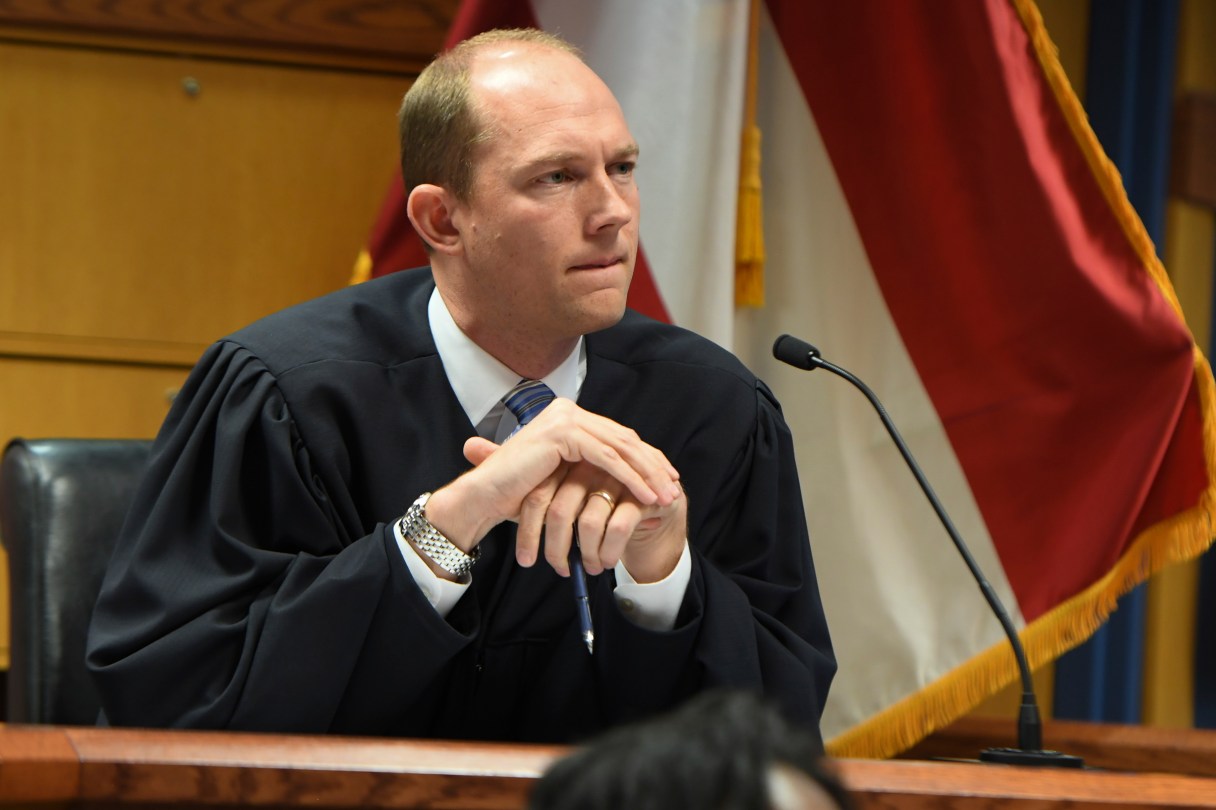
ATLANTA (AP) — The judge overseeing the Georgia election interference case against Donald Trump and others rejected on Thursday arguments by the former president that the indictment seeks to criminalize political speech protected by the First Amendment.
The indictment issued in August by a Fulton County grand jury accused Trump and 18 others of participating in a wide-ranging scheme to illegally try to overturn the 2020 presidential election in Georgia after the Republican incumbent narrowly lost the state to Democrat Joe Biden. Trump’s attorneys argued that all the charges against him involved political speech that is protected even if the speech ends up being false.
But Fulton County Superior Court Judge Scott McAfee wrote that at this pretrial stage he must consider the language of the indictment in a light favorable to the prosecution. The charges do not suggest that Trump and the others are being prosecuted simply for making false statements but rather that they acted willfully and knowingly to harm the government, he wrote.
“Even core political speech addressing matters of public concern is not impenetrable from prosecution if allegedly used to further criminal activity,” the judge wrote.
He added that even lawful acts involving speech protected by the First Amendment can be used to support a charge under Georgia’s anti-racketeering law, which prosecutors used in this case.