
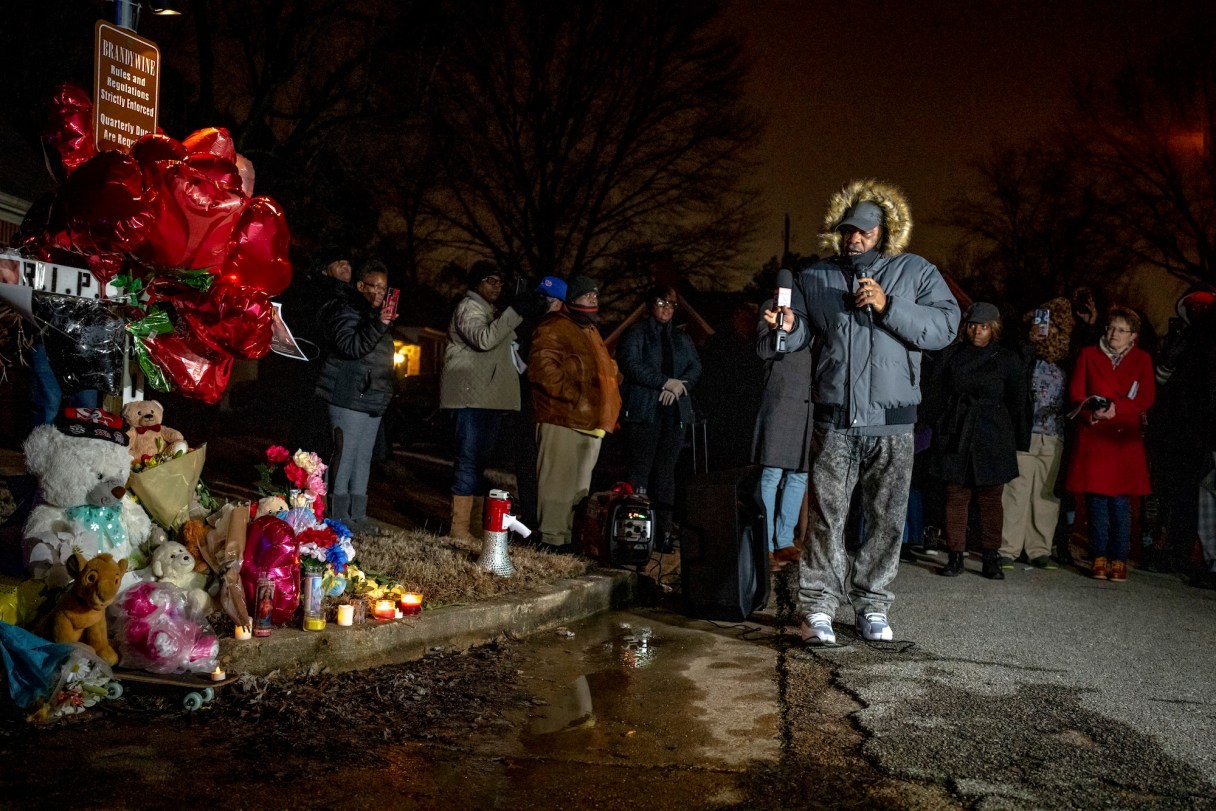
Last April, the Memphis City Council unanimously passed a law to curtail the number of driving infractions that would officially justify a police stop. The list is limited to a handful of so-called pretextual traffic stops for minor infractions such as a loose bumper or a broken brake light, which would no longer be grounds for pulling over a driver. The law was named for Tyre Nichols, a 29-year-old Black man who was beaten to death on Jan. 7, 2023, by five Memphis police officers after a traffic stop.
Last week, the Republican-controlled Tennessee legislature voted to overrule the elected representatives of Memphis, reversing the policy change. The legislation has been sent to Republican Gov. Bill Lee. Discussing the bill in February, Republican state Sen. Brent Taylor, whose district includes part of Memphis, characterized the law as a “knee-jerk reaction” to the Nichols killing. If the Tyre Nichols Driving Equality Act were allowed to stand, Taylor said, it would be only a matter of time before a “virtue-signaling” city council somewhere abolishes even more vital traffic laws. Besides, he said, “If you were to ask people, ‘How do police most often catch criminals?’ the number one answer on ‘Family Feud’ would be, ‘A traffic stop’.”
The folk wisdom of the television show “Family Feud,” at least as Taylor imagines it, is no doubt unassailable. But the pattern of Republican state officials overturning the acts of democratically elected local officials, and seizing local power, is growing ever more disconcerting.
As recent history confirms, democratic elections are not events that all Republicans believe they must respect. Last year, Republican legislators in Montana and Tennessee silenced or expelled lawmakers who were duly elected representatives of thousands of Americans. Conflicts over policing and prosecution have frequently inspired Republican backlash. Florida Gov. Ron DeSantis suspended two elected prosecutors in his state, both Democrats, whose policies he criticized. As one of the summarily fired prosecutors said last year, “That’s what elections are for.”
Yet the notion that Americans vote for candidates, and then judge them on the results they achieve in office, is increasingly under attack. Pennsylvania Republicans impeached the twice-elected district attorney of Philadelphia, flagrantly abusing a constitutional process in an unsuccessful effort to reverse the outcome of an election. (Republicans made no effort to commandeer the Philadelphia Police Department, which has struggled in recent years to identify and arrest suspects in shootings and murders.) Republicans in Mississippi decided to take control of a range of police and judicial duties in Jackson, the state’s largest city, where a majority of the residents are Black. The city, which has a Black mayor, is also mostly Democratic. Republican legislators in Missouri similarly muscled in on St. Louis.