
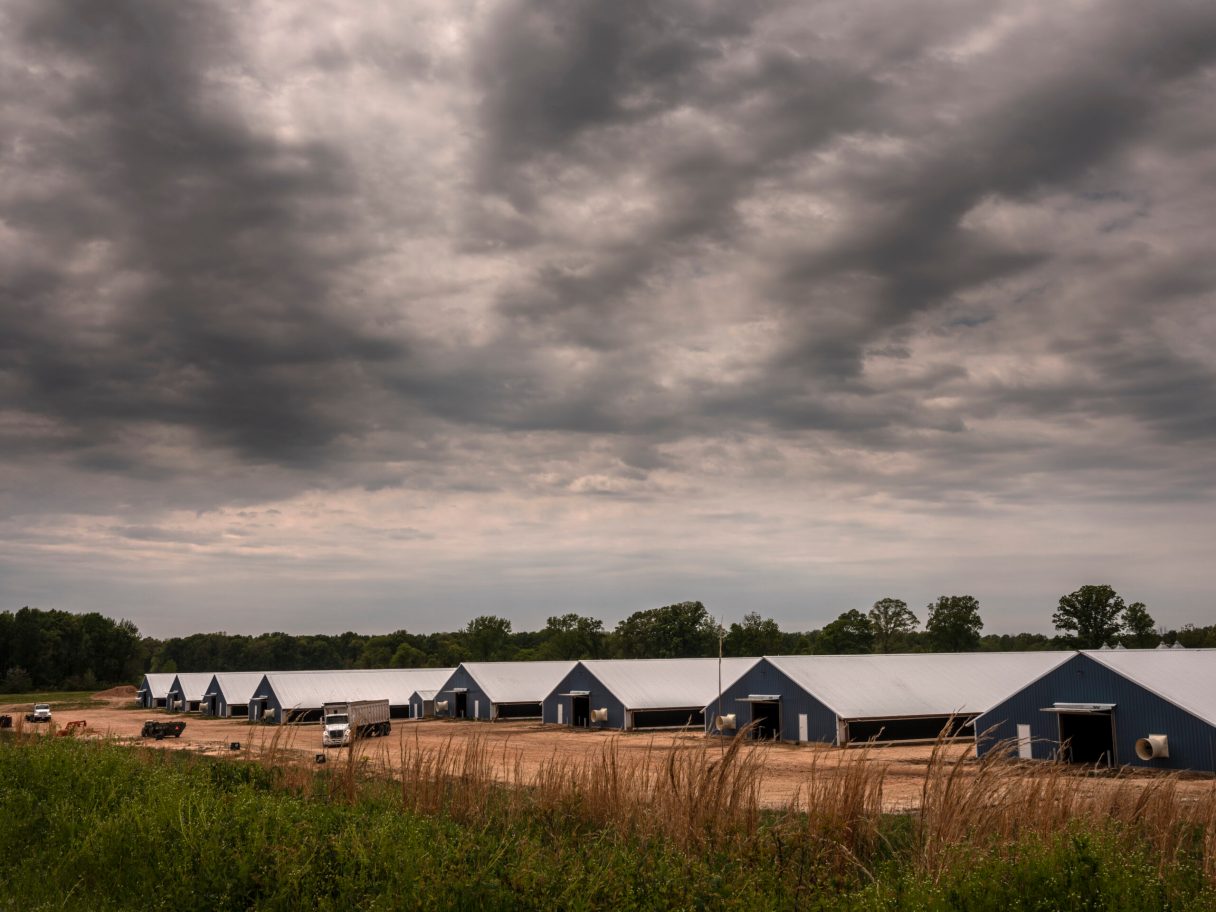
They’re scattered across the rural Tennessee landscape: blue-sided barns stretching the length of five football fields, clustered together in groups numbering as few as three to as many as 20.
Each of Tennessee’s nearly 2,200 industrial chicken barns produce about 200,000 6-pound birds each year, a process that collectively consumes more than 1 billion gallons of water across all the barns annually.
The typical Tennessean uses around 30,000 gallons of water per year, costing between $300 to $600 annually depending on where one lives. Everyone pays a local sales tax of at least 2%, and a state rate of 7%, on the water.
But the tax bill on water for chicken barns, which in Tennessee are typically controlled by subcontractors for food giants like Tyson Foods, is zero.
“During our peaks, we would often pull 10,000 gallons of water in a single day,” said Craig Watts, a former contract chicken farmer in North Carolina who now works as a director for the Socially Responsible Agriculture Project, which organizes against industrial farming. “It’s a lot of water, and those new barns in West Tennessee are bigger than what I ran.”