
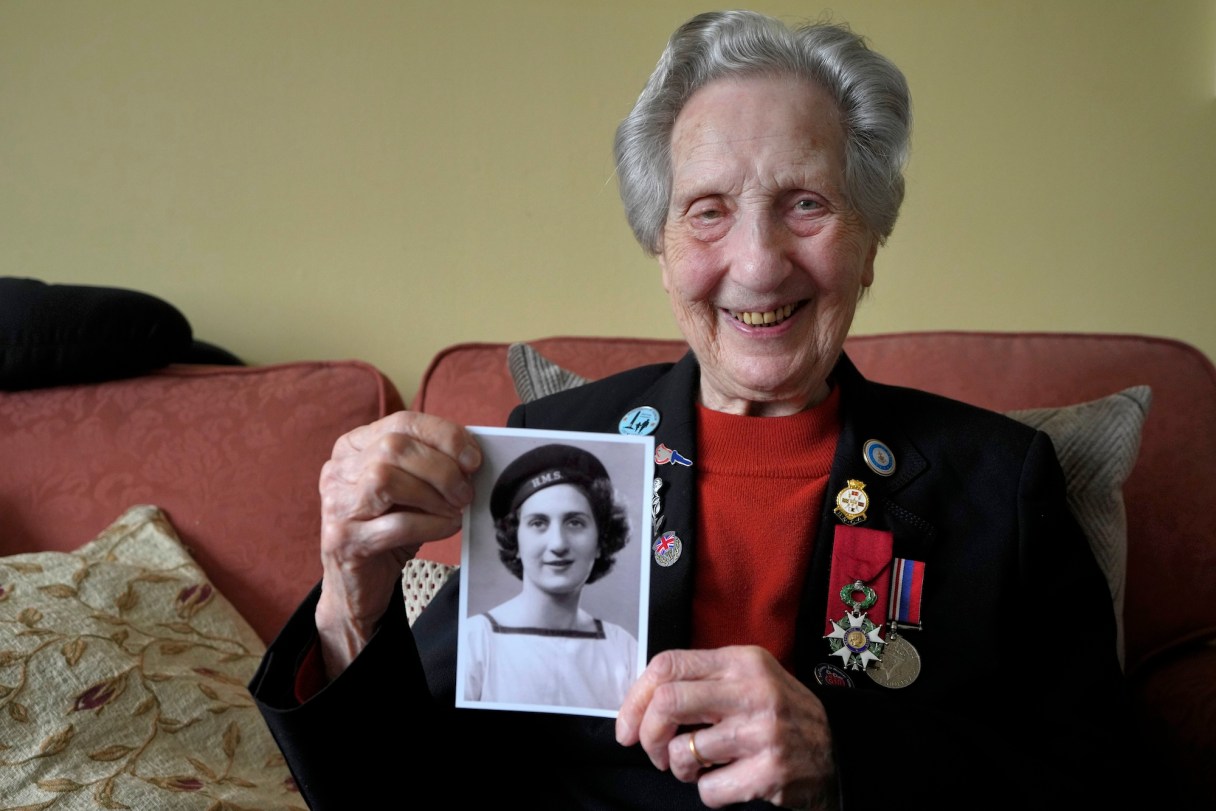
LONDON (AP) — What did you do in the war, Granny?
For British women who came of age during World War II, the answer to that question is often: quite a lot.
The history of D-Day is often told through the stories of the men who fought and died when the Allies stormed the beaches of northern France on June 6, 1944.
But behind the scenes were hundreds of thousands of military women who worked in crucial non-combat roles such as codebreakers, ship plotters, radar operators and cartographers. Often overlooked, their contributions have come into sharper focus as the number of living D-Day veterans dwindles and the world prepares for the 80th anniversary of the landings.
One of those women was Marie Scott, who was a 17-year-old radio operator when she heard the chaos of battle through her headset as she relayed messages between Allied commanders in England and men on the Normandy beaches.