
Civic Leagues in the United States began with formation of the National Municipal League in 1894. The idea was to professionalize local government and to encourage self-government, where local residents identified their own problems and found their own solutions.
Walden’s Ridge Civic League (WRCL) evolved from the parent teacher association of Fairmount Elementary School. The league was organized in October 1926, according to a note at the top of its constitution and by-laws presented on Oct. 10, 1946, and approved Nov. 14, 1946, by William R. Ferguson, P.S. Henderson and Lucius A. Brown. The league was incorporated in 1930, when there was little local government in the area.
The inhabitants of the ridge were mostly farmers and coal miners. Since they were generally poor, they contributed little to Hamilton County in taxes. The mountain people’s ethic called for self-reliance, so they demanded few services from government. Ridge residents tended to do things for themselves, relying on family, neighbors and church when needs arose. This combination of factors led to neglect by the county.
In those days, roads were largely dirt. Entertainment was reading from the Bible before sundown and attending services on Sunday. Church and neighbors furnished social welfare. There was no fire or police protection. Electricity was a rarity. For water, a family dug a well and of course a toilet pit. The few schools were without running water, so the children drew water from wells and used outhouses.
With no utilities, police or fire control, few good roads, and little formal social support, the civic league was organized to lobby the county government for vital services. If the county would not provide these services, league members determined to do so themselves. Summertown residents, often wealthier families from Chattanooga who had second summer homes on the mountain, cooperated with their hard-pressed mountain neighbors. Membership was set at $1 per year. Members paid dues of 10 cents if they attended a meeting and a fine of 25 cents if they missed.
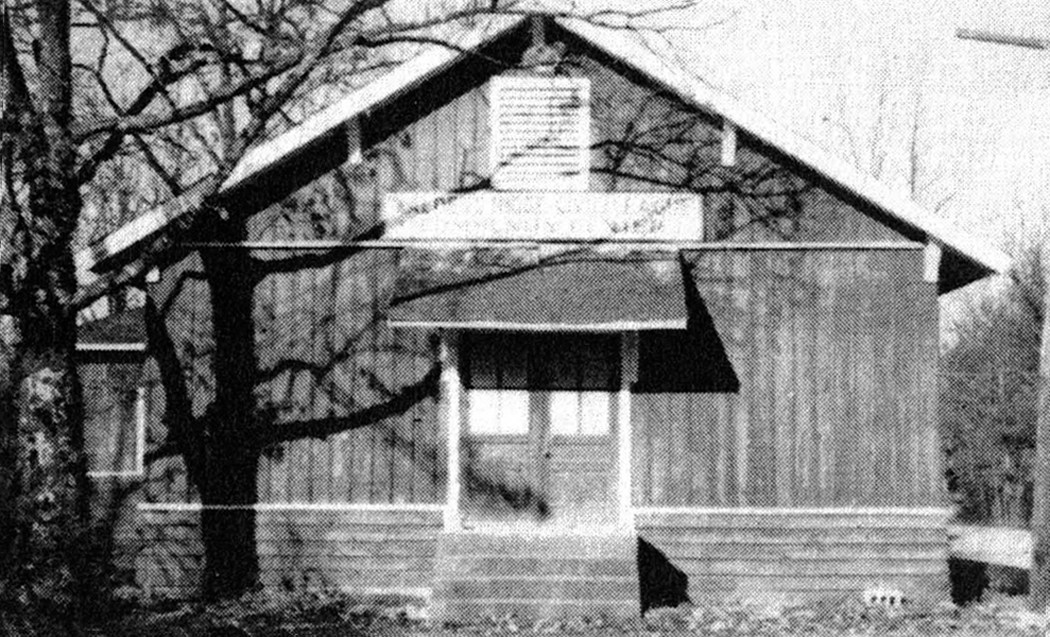
The league met regularly, except during World War II, in the auditorium of the Fairmount Elementary School. On May 22, 1946, the Hamilton County Department of Education deeded the auditorium and adjoining land to WRCL. Minutes record acquisition of the old school property as the league’s “greatest accomplishment,” and the facilities became available to the public.
Members worked diligently and formed committees: legislation and conference to connect with city, county and state governments; finance and budget to handle money for local needs; publicity and membership to build the league; roads to build, mark and maintain roads; utilities to set up a water system and to bring in electricity; transportation to start a bus line and assure trucking services; fire and police to respond to fires and to keep law and order; education and health to teach domestic, farming, hygiene and financial skills; ways and means to sustain the league; entertainment to provide lawn fetes, dances, plays, sports teams, etc.; and parks and playgrounds to maintain recreation areas.
Of first importance was a volunteer fire department and equipment for fighting the most destructive element plaguing the community. WRCL purchased a used “chemical fire truck” and housed it in a private barn. The same volunteers dealt with such crimes as vandalism and theft. That volunteer group evolved into Walden’s Ridge Emergency Service (WRES), still active today.
The league sponsored Boy Scout Troop 15, which met in the basement from 1934 to 1940 before construction of a cabin on the property. WRCL pressed the county for a modern school, and Bachman Elementary School was built in 1937. Members prompted bus service to Summertown and Fairmount in 1947. They hosted fundraising festivals and carnivals and by 1948 were attracting more than 2,000 annual visitors.
Though securing the property was a great attainment, WRCL’s greatest achievement was bringing clean water to Walden’s Ridge. In 1951, the Chattanooga Daily Times reported, “The civic league is now rounding out its 25th year of community accomplishments, chief among which are the water system now nearing completion and the electric service which has been provided for most of the area.” Indeed, Walden’s Ridge Utility District (WRUD) serves the ridge today.
The mission of the Walden’s Ridge Civic League is to preserve its history and continue traditional and new activities. Membership is open to any resident of the ridge.
Karen Paul Stone is principal of Waldenhouse Publishers and the author of several books. For more on local history, visit Chattahistoricalassoc.org.