
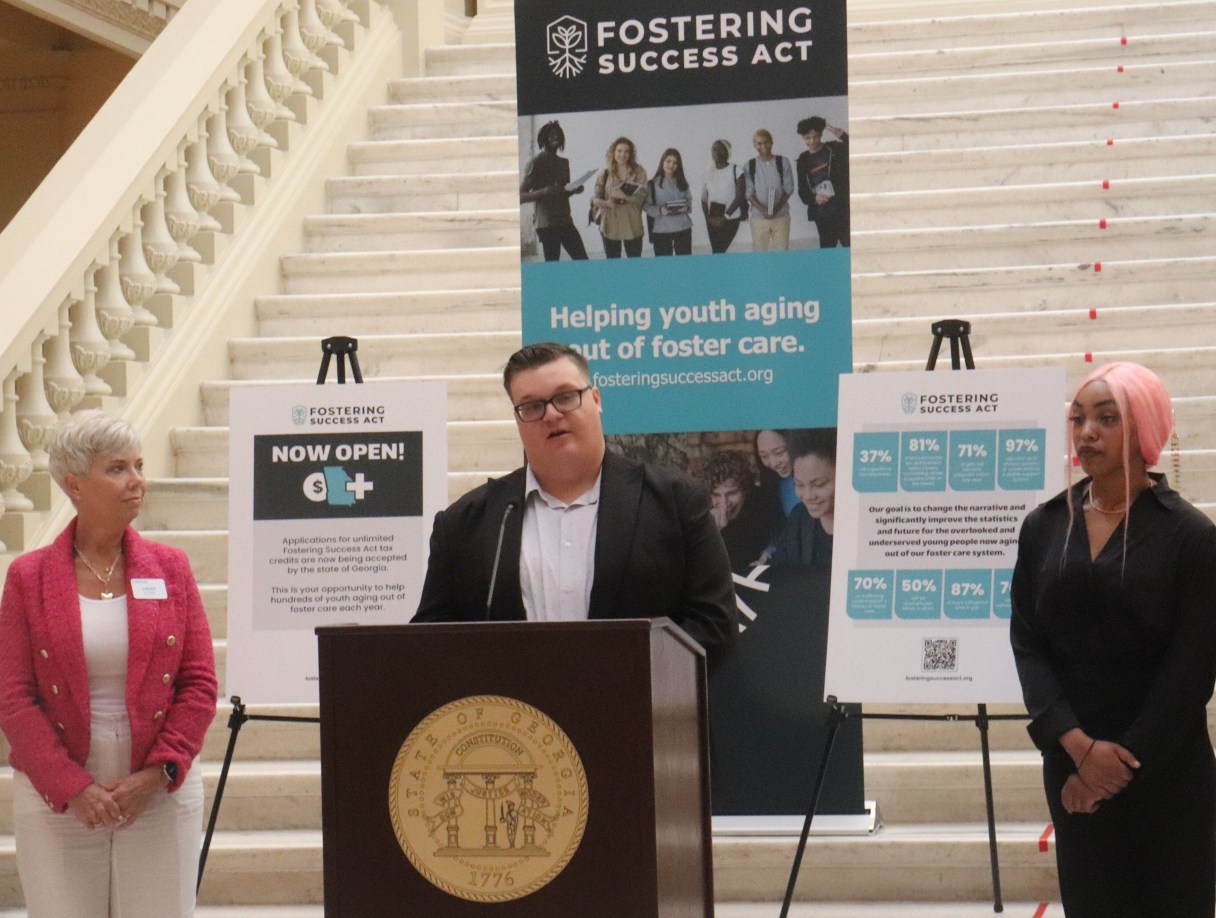
Foster care advocates are calling on Georgia taxpayers to step up and take advantage of a tax credit program meant to help former foster kids.
Support for the Qualified Foster Child Donation Credit has been slow. The program took effect in 2023 and helps former foster kids who are working towards a post-high school degree. The program uses state tax credits to fund everyday costs, such as housing, transportation and food for these young people. It also helps with physical and mental health needs. Last year, itraised almost $11.6 million, but foster care advocates are concerned not enough taxpayers are aware of the program.
This year, from January through May, it has raised less than half a million in preapprovals, according to the State Department of Revenue. At a news conference held Monday at the Georgia State Capitol, Heidi Carr, executive director of Fostering Success Act, Inc., urged taxpayers to step up.
“It is critical to support youth aging out of the system, because these young adults often lack the support needed to create a clear path for success,” she said. “Most will end up on the street with no family, no job, no education and no hope, but we can change this outcome by helping to remove barriers.”
Data provided by Carr says most kids who age of the foster care system face chronic poverty and roughly one in three will face homelessness.