
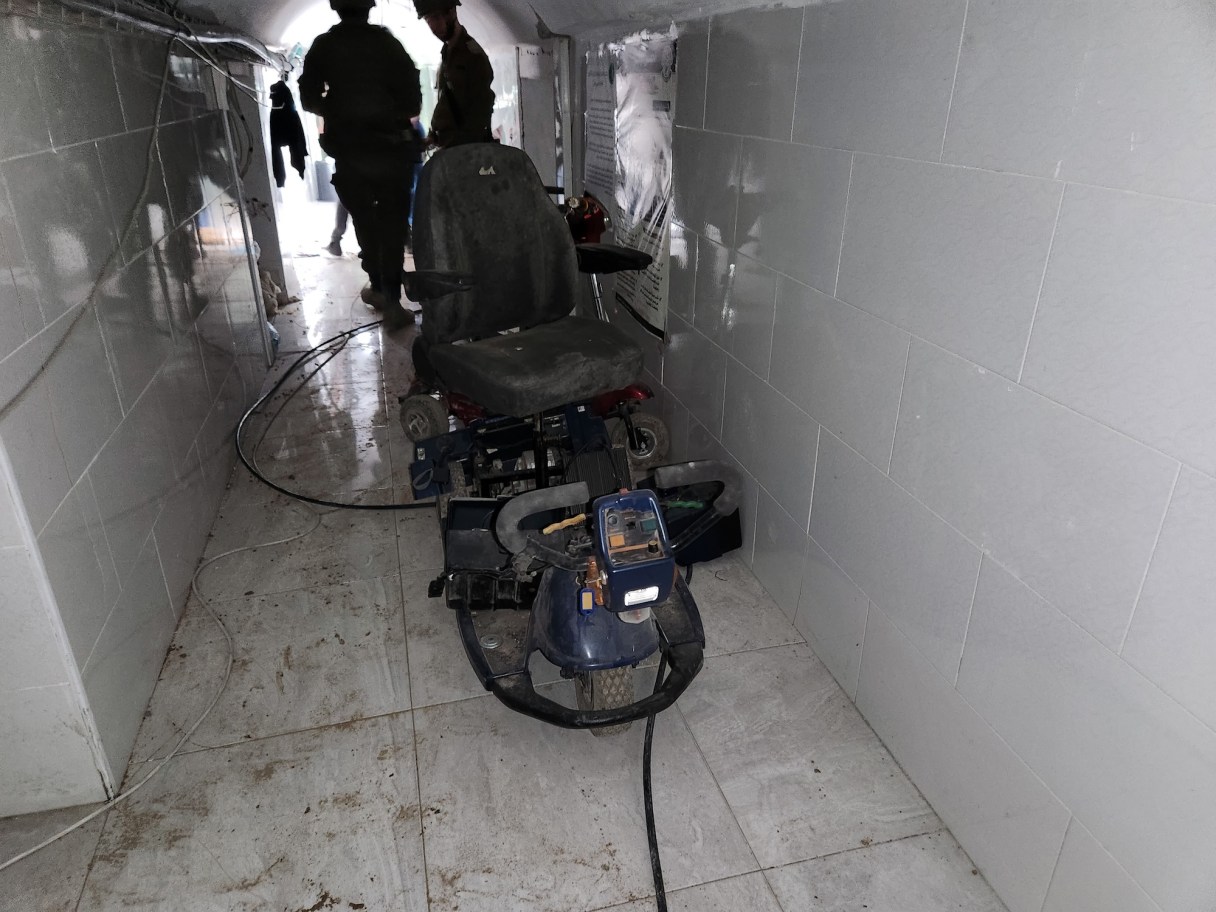
A year into Israel’s fight against Hamas, it has become clear that the military “center of gravity” – the most important element of the conflict – is not the missiles or manpower of the terrorist group. Rather, it is the 400-plus miles of tunnels carved out under the Gaza Strip. From those tunnels, Hamas and its sponsor, Iran, were able to train, equip, organize and launch the horrific attacks of Oct. 7.
The Israel Defense Forces have now publicly released a handbook captured from Hamas in 2019 that details how the group sought to maximize the lethality of capabilities it painstakingly built up underground and out of sight. The group trained forces to fight in the subterranean environment using cover of darkness, night-vision goggles, split-second timing, GPS trackers, elaborate camouflage and protective blast doors.
It is easy to believe that Hamas did so in a burst of unique creativity, and that we are seeing the emergence of a new style of warfare. In fact, the use of tunnels in war has a long history.
Recent excavations found that the Jewish rebels of Judea used hundreds of miles of tunnels connecting villages in their revolt against the Romans two millenniums ago. The ancient Chinese and Ottoman Turks both used tunnel complexes, notably in undermining cities under siege.
Tunnels played an important role in World Wars I and II. Today, the most elaborate system of tunnels dedicated to war are probably in North Korea. These are deeply buried, probably impervious to even the largest conventional bomb or missile strikes. U.S. and South Korean forces conduct extensive training designed to enter and ultimately destroy such complexes. The North Korean tunnels are much larger, better defended and full of weapons far more advanced than those in Gaza.