
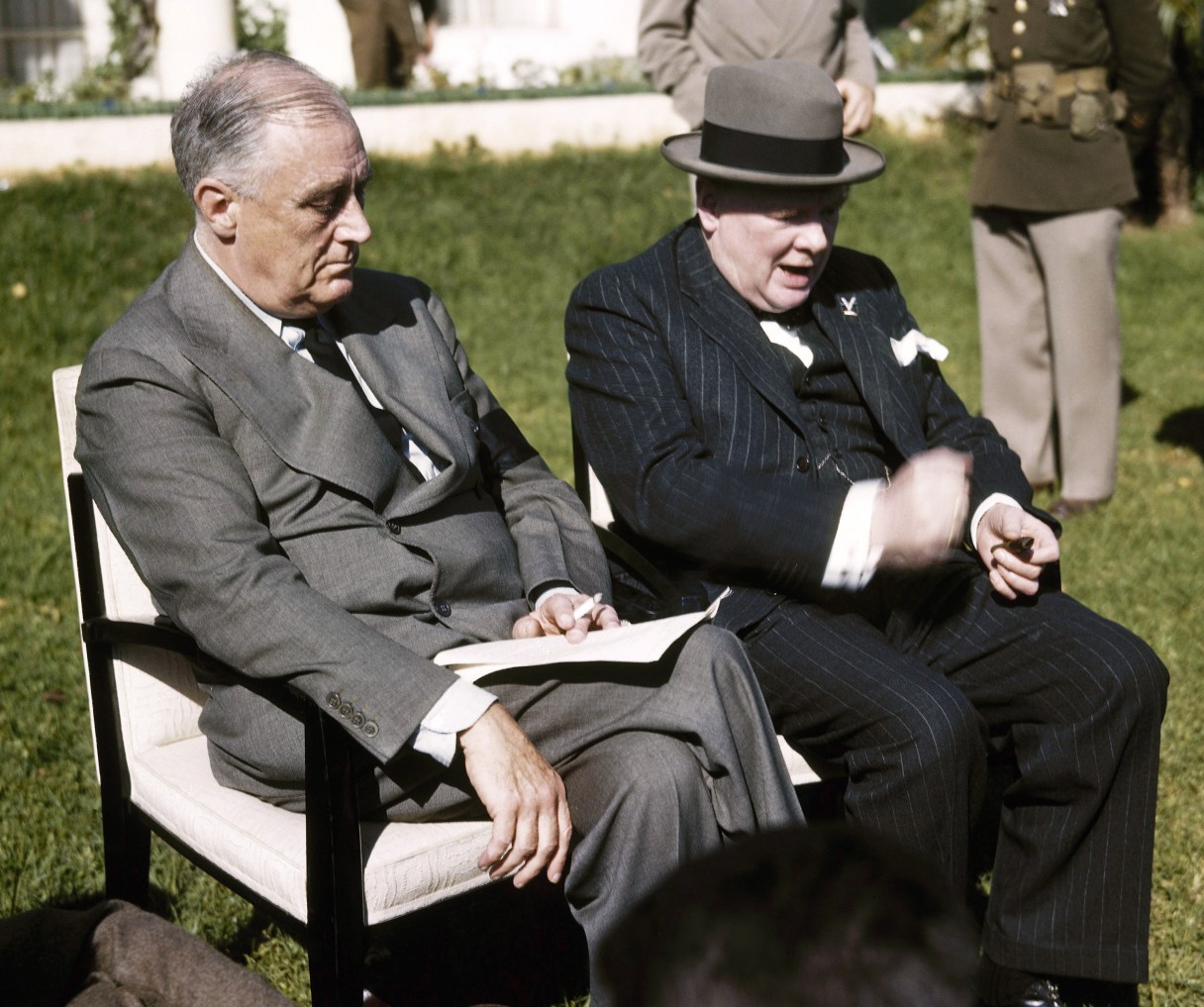
An online controversy erupted in early September with a podcast interview with Darryl Cooper, whom host Tucker Carlson called “(maybe) the best and most honest popular historian in the United States.” In the interview, Cooper not only claimed that Winston Churchill was a psychopath but also that he was “the real villain” of World War II.
Though Cooper admitted Hitler was evil, he also argued that history’s most notorious villain was, in fact, backed into a corner by Churchill, who was bent on war from the beginning. Thus, it is Churchill and not Hitler, Cooper claimed, who should bear most of the blame for the war and the Holocaust. Cooper, during the interview and afterward, chalked up opposition to his telling of the story to core elements of American identity since the war that are too deeply ingrained to be questioned.
Typically, claims like these would be unworthy of a response, other than perhaps an eye roll and quick dismissal. However, this interview has been viewed by millions and was conducted by the most popular news personality in the United States. Also, Cooper has since doubled down on his claims on X.
In his misrepresentation of the two most important figures of World War II, Cooper obscured several basic facts. First, in a claim that reveals his “extensive research” failed to consider basic history texts, he posited that historians never talk about why Hitler rose to power in Weimar Germany. In fact, many have and still do.
Cooper also argued that Hitler’s anger was the fault of England and France because they declared war on Germany after his invasion of Poland. Had they not, he claimed, the war would have been over before it really began. However, this claim ignores Hitler’s repeated goal of building “living space” for Germany in Eastern Europe, how he broke his word before the war by taking all of Czechoslovakia rather than just the German-speaking areas and the treaty obligations England and France had to Poland.