
Thursday, October 29, 2026Oct 29

This story is free to read.

Ancient genes pinpoint when humans and Neanderthals mixed and mingled

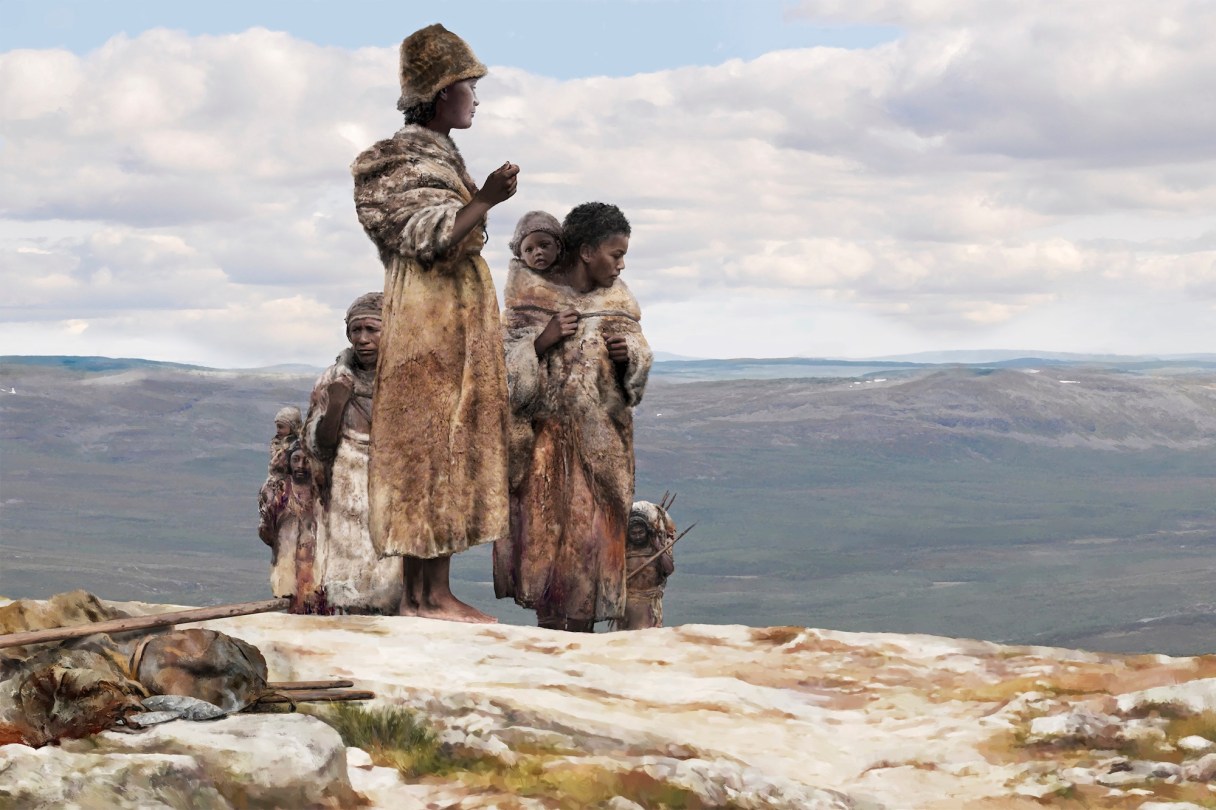
This image provided by Max Planck Institute for Evolutionary Anthropology shows an artist’s illustration of ancient humans from Ranis, Germany and the Czech Republic traveling together 45,000 years ago.(Tom Björklund/Max Planck Institute for Evolutionary Anthropology via AP)
This image provided by Max Planck Institute for Evolutionary Anthropology shows an artist’s illustration of ancient humans from Ranis, Germany and the Czech Republic traveling together 45,000 years ago.(Tom Björklund/Max Planck Institute for Evolutionary Anthropology via AP) This image provided by Max Planck Institute for Evolutionary Anthropology shows an artist’s illustration of ancient humans from Ranis, Germany and the Czech Republic traveling together 45,000 years ago.(Tom Björklund/Max Planck Institute for Evolutionary Anthropology via AP)

NEW YORK (AP) — Neanderthals and humans likely mixed and mingled during a narrow time frame 45,000 years ago, scientists reported Thursday.

Researchers analyzed ancient genes to pinpoint the time period, which is slightly more recent than previous estimates for the mating.

Modern humans emerged in Africa hundreds of thousands of years ago and eventually spread to Europe, Asia and beyond. Somewhere along the way, they met and mated with Neanderthals, leaving a lasting fingerprint on our genetic code.

Scientists don’t know exactly when or how the two groups entangled. But ancient bone fragments and genes are helping scientists figure that out.

“Genetic data from these samples really helps us paint a picture in more and more detail,” said study co-author Priya Moorjani at the University of California Berkeley.