
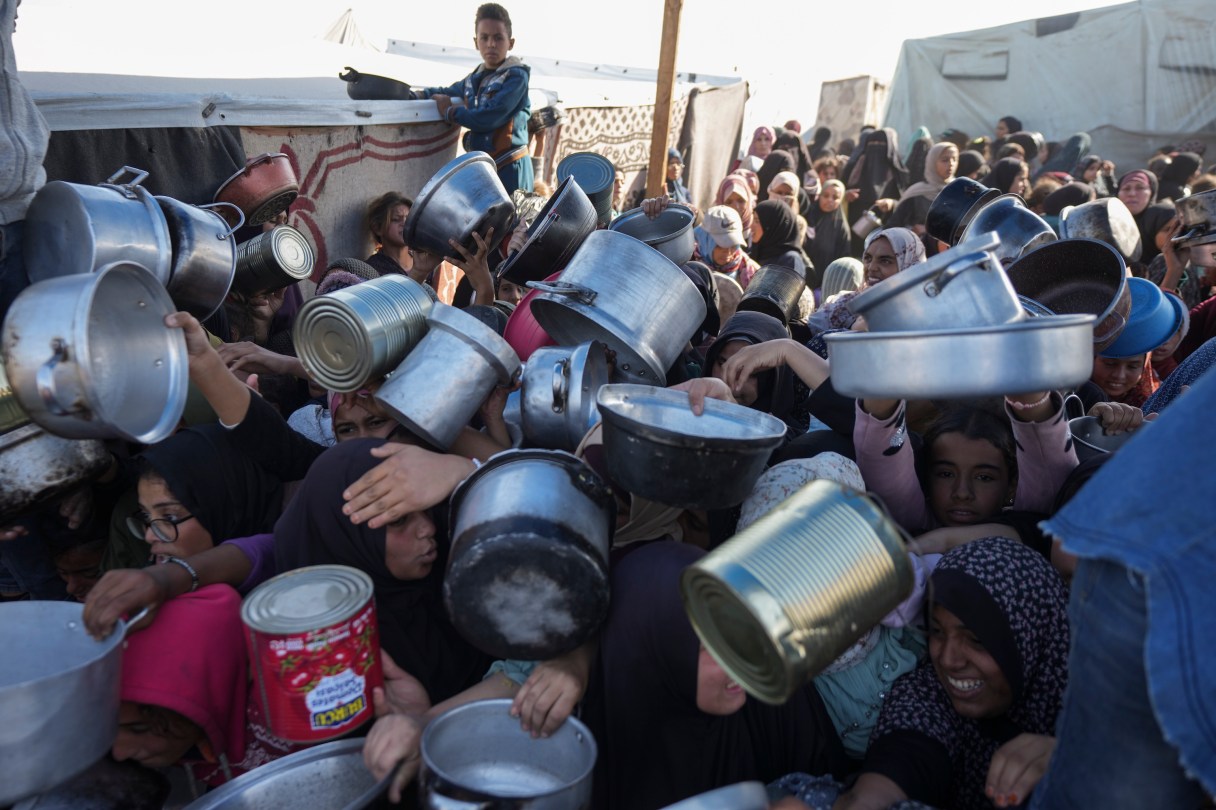
WASHINGTON (AP) — A lead organization monitoring for food crises around the world withdrew a new report this week warning of imminent famine in north Gaza under what it called Israel’s “near-total blockade,” after the U.S. asked for its retraction, U.S. officials told The Associated Press. The move follows public criticism of the report from the U.S. ambassador to Israel.
The rare public challenge from the Biden administration of the work of the U.S.-funded Famine Early Warning System, which is meant to reflect the data-driven analysis of unbiased experts, drew accusations from aid and human-rights figures of possible U.S. political interference. A finding of famine would be a rebuke of close U.S. ally Israel, which has insisted that its 15-month war in Gaza is aimed against the Hamas militant group and not against its civilian population.
U.S. ambassador to Israel Jacob Lew earlier this week called the warning by the internationally recognized group inaccurate and “irresponsible.” Lew and the U.S. Agency for International Development, which funds the monitoring group, both said the findings failed to properly account for rapidly changing circumstances in north Gaza.
The U.S. Embassy in Israel and the State Department declined comment. FEWS confirmed Thursday it had retracted its famine warning, and said it expected to re-release the report in January with updated data and analysis. The group declined further comment.
“We work day and night with the U.N. and our Israeli partners to meet humanitarian needs — which are great — and relying on inaccurate data is irresponsible,” Lew said Tuesday.