
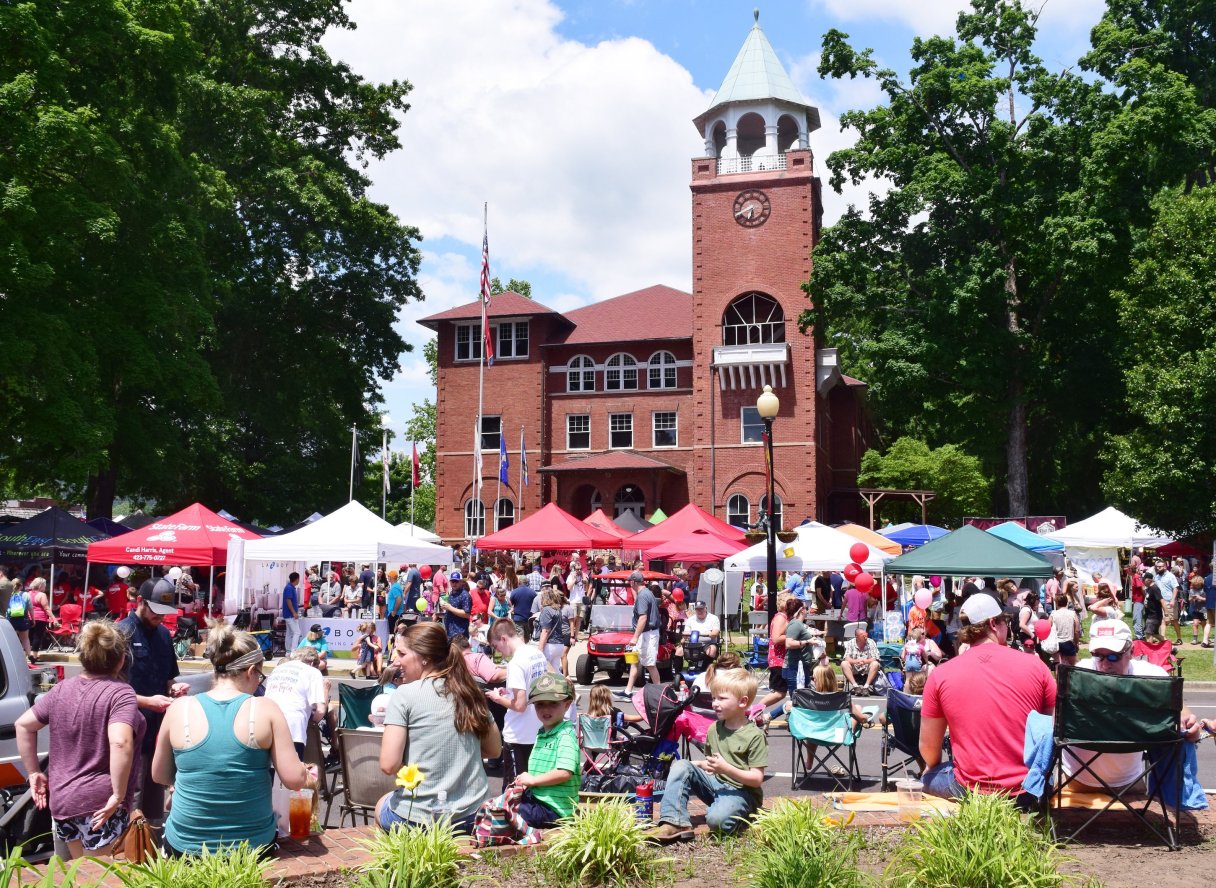

The courthouses in Bledsoe, Meigs and Rhea counties, and the old Cherokee Hotel being renovated for city government services in Cleveland, Tennessee, all got a piece of $6.1 million in historic development grants for updates to aging structures that are historic landmarks in their respective communities.
Cleveland and Meigs County both received grants of $500,000 for ongoing renovations, while Bledsoe County got about $461,000 for exterior updates to its courthouse. Rhea County was awarded $250,000 for work on its famous courthouse, noted as the site of the 1925 Scopes Trial, according to a news release from the Tennessee Department of Economic and Community Development.
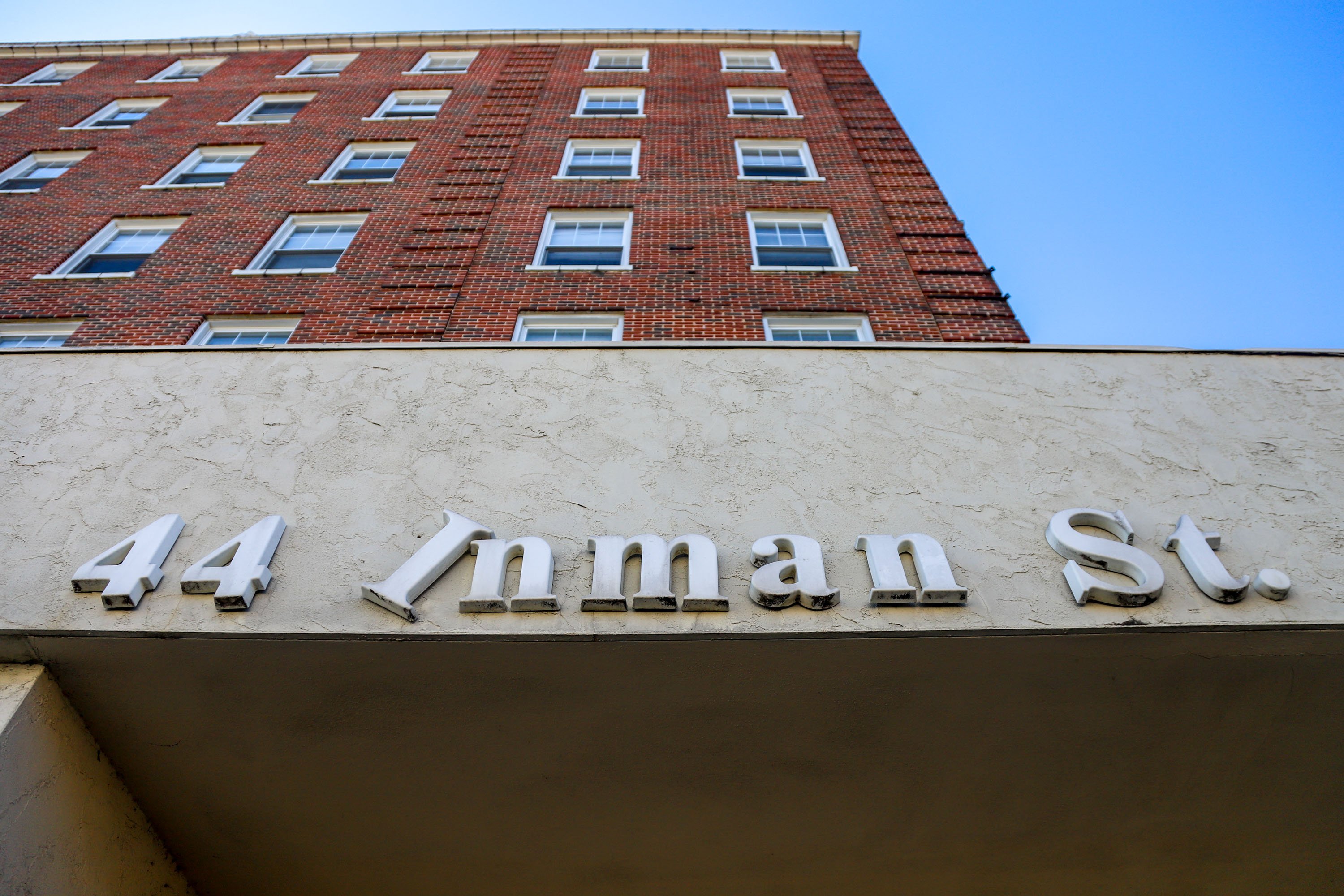
The city of Cleveland’s grant will fund improvements at the 1928-era Cherokee Hotel, which is being converted into city government offices, civic spaces, a restaurant and new digs for other agencies and groups.
“Through the Historic Development Grant Program, we are helping restore and revitalize some of Tennessee’s most historic buildings so that they once again can flourish, attracting further economic opportunity across our state,” Stuart C. McWhorter, commissioner of the state agency, said in the news release.
(READ MORE: Historic Brown’s Tavern in Lookout Valley gets restoration money)
Approved by state lawmakers in April 2021, the program will provide $6.1 million to projects that aim to renovate and preserve historic buildings across the state, according to the release. The program encourages communities and private developers to invest in buildings that have contributed to a community’s history but now sit idle.
This year, the state’s $6.1 million investment is expected to leverage more than $13 million in private investment, state officials said.
“This round of funding will help restore iconic properties — such as county courthouses — as well as activate formerly vacant historic spaces for new and creative uses,” Patrick McIntyre, executive director of the commission and state historic preservation office, said in the release.
BLEDSOE
The Bledsoe County Courthouse stands on the site of the county’s first courthouse, which was completed by 1821, according to a historical way marker on the courthouse lawn. During the Civil War in August 1862, Confederate Gen. Braxton Bragg led his Army of Tennessee north from Chattanooga to invade Kentucky. A Confederate veteran later stated that “Gen. Bragg and his army used the … courthouse as a hospital” in August and September.
Gregg Ridley, the county mayor, said the grant funds will be used for new windows, doors and a roof for the courthouse. The grant requires a 20% match in local funding, Ridley said via email.
The courthouse was listed on the National Register of Historic Places in 1995, according to state records. The courthouse was built with red bricks by the Fall City Construction Co. and completed in 1909, according to county histories. The building was designed by W.K. Brown & Brothers, an architectural firm from Chattanooga in the Classical Revival style.
CLEVELAND
Joe Fivas, Cleveland’s city manager, said the $500,000 grant will help fund ongoing renovations at the Cherokee Hotel, listed on the National Register of Historic Places in 2017 as part of the Cleveland Commercial Historic District.
Formerly the Cleveland Summit apartments, which housed low-income residents from 1972 until early 2021, the building is an example of 20th century commercial architecture with classical influences, according to its register listing. When it was opened March 20, 1928, then-Gov. Henry Horton addressed Cleveland residents who turned out in droves to see and tour the city’s new hotel, along with visitors from Chattanooga and Knoxville, according to a March 21, 1928, article in The Chattanooga Times. When complete, the Cherokee had 75 rooms, each with its own bath, a spacious lobby, mezzanine floor, ladies’ lounge, dining room and coffee shop along with other commercial spaces.
Fivas said restoration on the interior of the hotel is already revealing its past glory, and the half-million dollar grant — with a huge over-match by the city of $14 million — will fund more restorative work at the hotel, enhancing other projects to revamp the downtown area.
When complete, the converted hotel will house a one-stop shop for city services, an event center and a restaurant, he said.
“This work is part of a holistic downtown renovation,” Fivas said in a phone interview.
A streetscaping project for downtown was finished recently, and Johnston Park, on the next block west of the hotel property, has been renovated, Fivas said.
Work to convert the hotel began in 2022 and has gained steam since then, he said. Work is also ongoing at the adjacent, former Roy’s Alternator building to convert it into city council chambers.
“We’re pulling everything together, and we’re seeing a lot of positive investment related to that,” Fivas said.
MEIGS
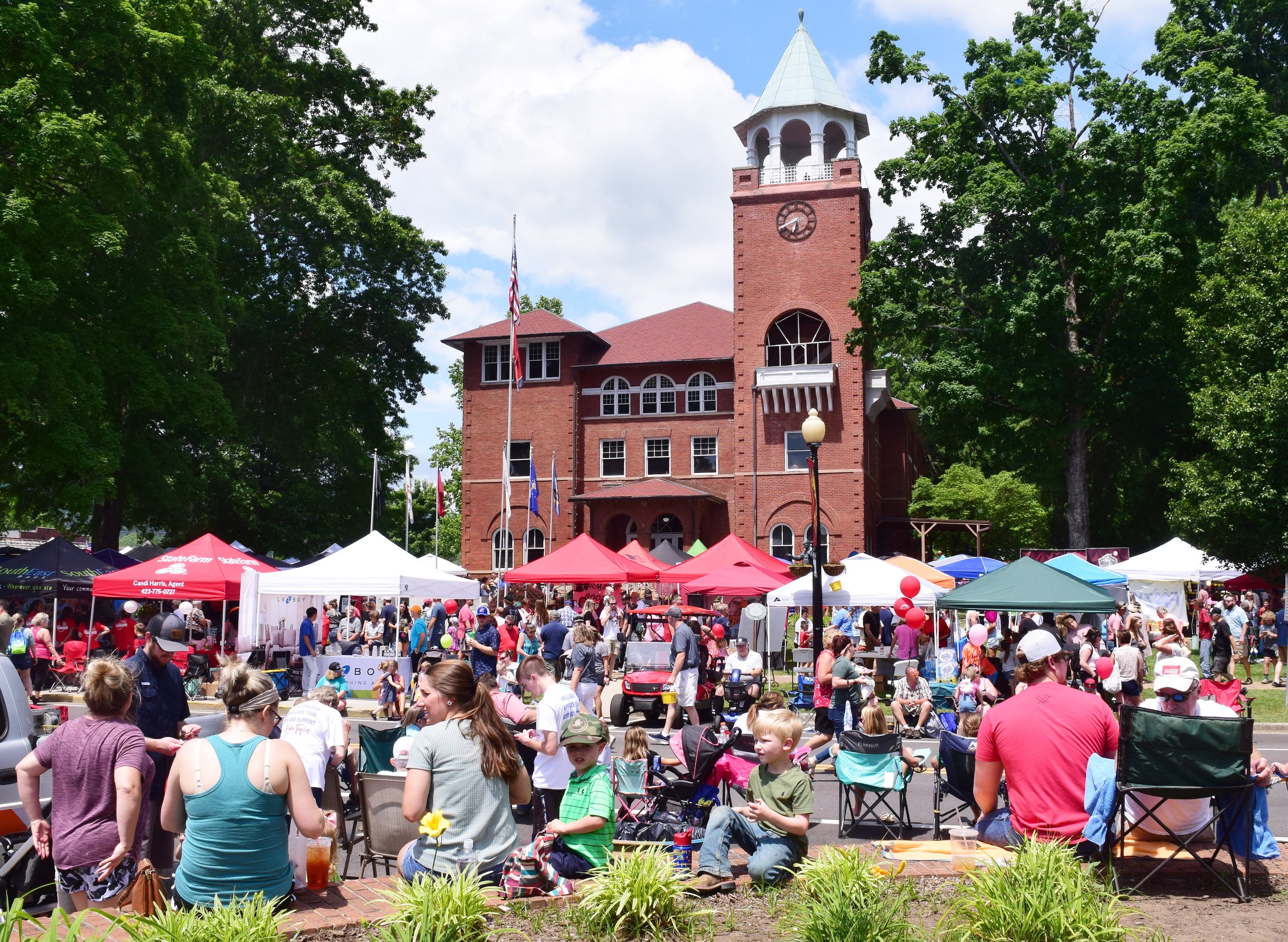
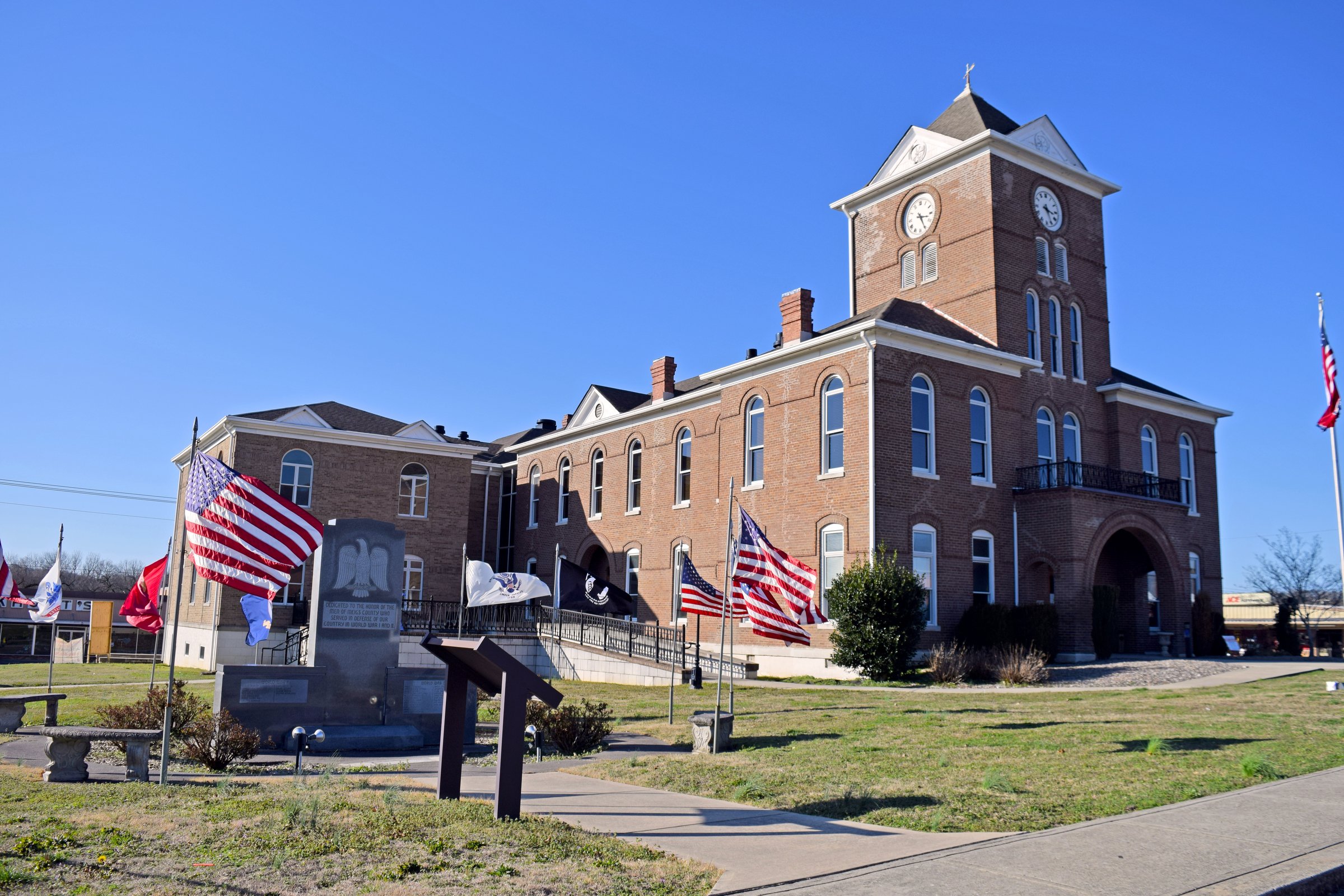
The present Meigs County Courthouse was reopened in 1904 after a major fire destroyed the county’s first courthouse, according to federal historic records. It was listed on the National Register of Historic Places in 1978.
Eddie Jewell, the county’s mayor, said the grant will help further renovations begun over the summer of 2023 that used American Rescue Plan Act funds.
So far, a new roof and guttering have been added and paint has been applied to all the exterior surfaces, including the clock tower, Jewell said in an email. Brick and mortar on the building has been restored, and about 300 bricks have been replaced using original bricks taken from the interior of the clock tower. The removed clock tower bricks were replaced with new ones.
(READ MORE: Tennessee Valley Railroad Museum Grand Junction Depot gets $68,000 upgrade)
“After the exterior walls were repaired and the new paint was applied, the entire building received a pressure wash and all windows were professionally cleaned,” Jewell said. “In my opinion, the Meigs County Courthouse looks better today than it has in many years.”
A third phase of the work funded by the grant requires a 30% local match, Jewell said, and will complete the restoration project with stabilization work to shore up the courthouse’s foundation, replacement of the steps and decorative brick columns on the Highway 58 side of the courthouse and restoration of the original hardwood flooring. All of the common areas of the building will be repainted.
“We are working with an architect to prepare the actual bid spec for this project,” Jewell said. “We anticipate going to bid in the spring of 2025. We have three years to complete the project.”
Jewell noted the city of Decatur, the county seat, recently received a grant for work to add green spaces, banners and way-finding signage that will enhance work by the county on the courthouse square.
RHEA
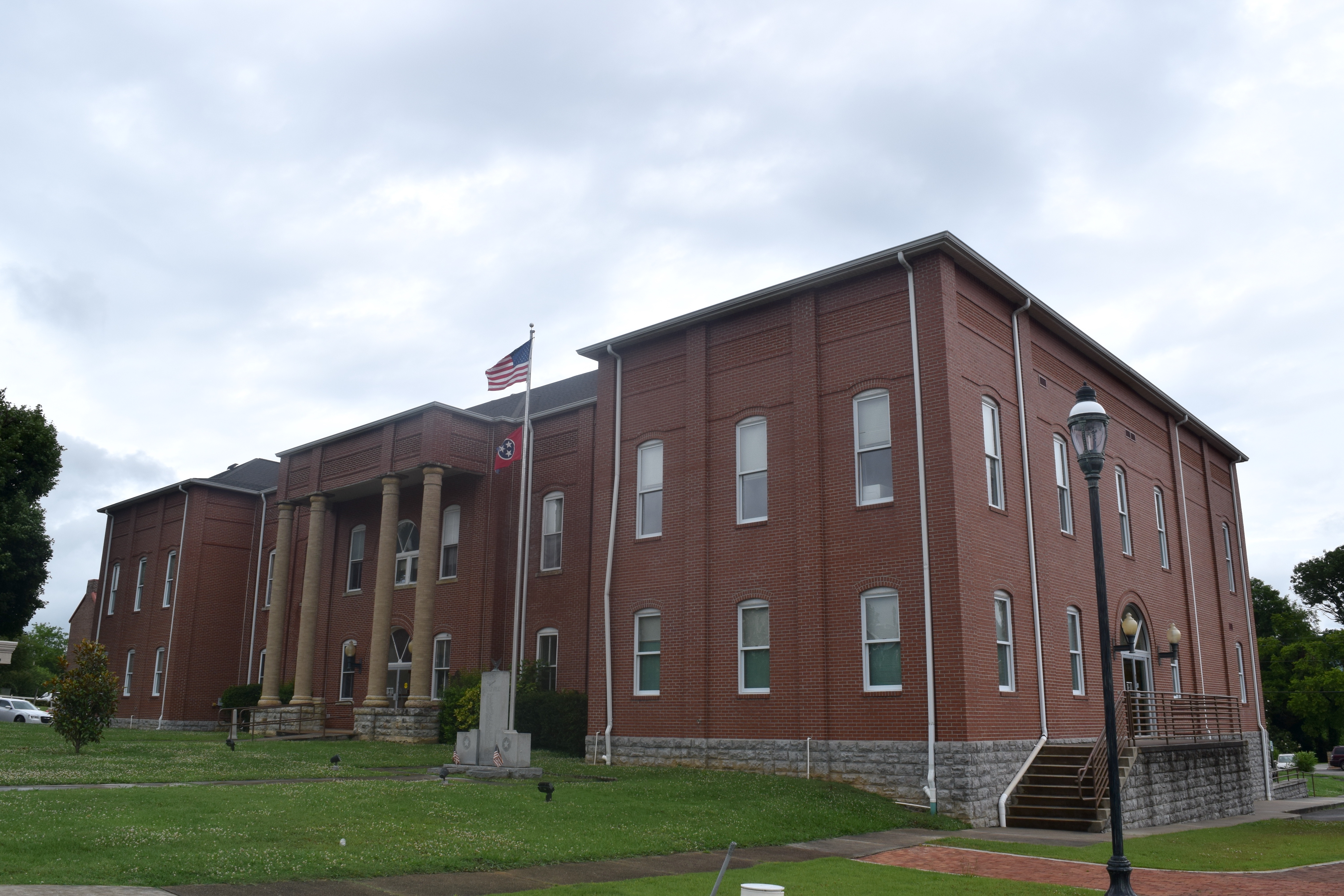
The Rhea County Courthouse was listed on the National Register of Historic Places in 1972, according to state records. From July 10 to July 21, 1925, the courthouse was the stage for the trial of Dayton High School teacher John T. Scopes, who was charged with violating a state law called the Butler Act by teaching that human beings evolved from a “lower order of animals.” The case was prosecuted by William Jennings Bryan.
Clarence Darrow defended Scopes, who was convicted and fined $100, but the Tennessee Supreme Court reversed the decision in 1927 because the judge and not the jury set Scopes’ fine. The Butler Act stood until 1967, when it was repealed by Tennessee lawmakers. The case raised debate on issues such as the separation of church and state, academic freedom and the relationship between science and religion.
The trial was memorialized in the classic 1960 film, “Inherit the Wind,” and is revived annually in the Scopes Trial Play and Festival.
Jim Vincent, the county executive, said the old courthouse is in good shape but shows evidence that it has been serving its citizens every day for more than a century. The $250,000 grant, which requires a match of about $111,000, will push the work forward with hopes of completing current goals by the Scopes Trial’s 100th birthday in 2025.
Aside from its register listing, the Rhea County Courthouse is also one of Tennessee’s 31 National Landmarks, Vincent noted. The only other national landmark in the region still in existence is the Moccasin Bend national archaeological district in Chattanooga. Also listed as a national landmark, the Delta Queen riverboat, first moored on Chattanooga’s Northshore in 2008, was sold and removed in 2015.
“Everything has to remain period-proper,” Vincent said in a phone interview.
Work so far includes restoration of the famous Scopes Trial courtroom and renovation of the building’s four restrooms to be Americans with Disabilities Act-compliant while keeping their historic look, Vincent said. Wood floors, walls, trim and windows throughout the courthouse will be refinished, and other surfaces will be repainted. Local residents appreciate the help to preserve the county centerpiece, Vincent said.
“The people of Rhea County love that old courthouse,” he said.
Contact Ben Benton at bbenton@timesfreepress.com or 423-757-6569.