
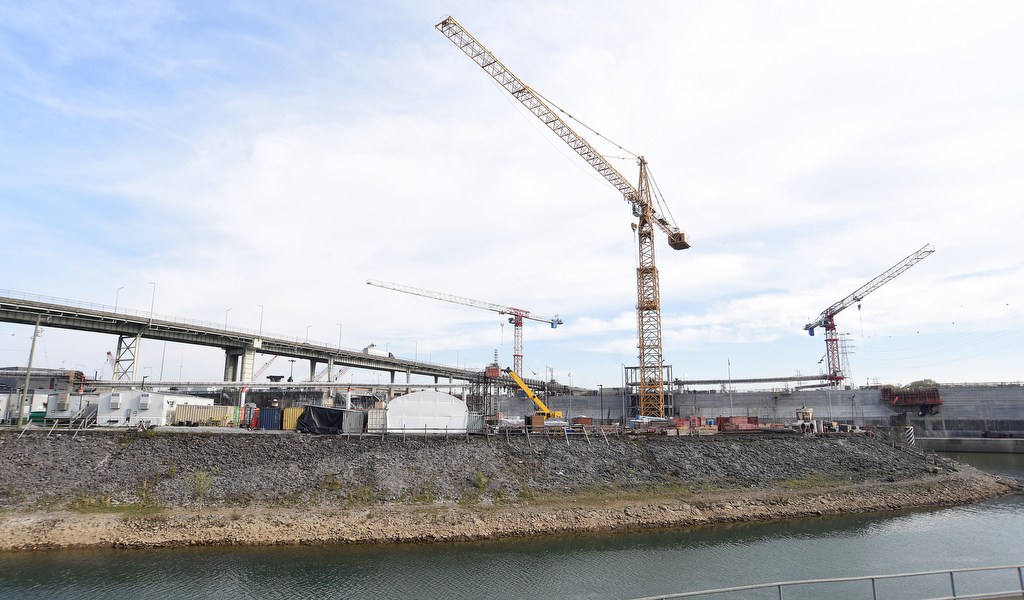
In 1940, President Franklin Delano Roosevelt was present for the official commissioning of the Chickamauga Dam and its lock, a chamber used to raise and lower vessels between different levels of the Tennessee River.
“It was that big of a deal to the nation — one of the first great New Deal projects to reach completion,” Joe Cotton, the manager for a project to replace the lock, said in an interview.
Less than two years later, officials began noticing issues. The stone they used to build the structure has a high concentration of a mineral called dolomite, which creates a gel-like substance when mixed with cement that creates strain across the billions of rocks that makeup the dam.
“When you have stones growing in irregular speeds and directions, the dam starts to grow. It starts to swell, and concrete starts to crack,” said Cotton, who works for the U.S. Army Corps of Engineers. “Concrete is great in compression. Not so much in tension. And when you have things growing at irregular rates and irregular directions, it creates a safety problem.”
(READ MORE: Costs of new Chickamauga Lock triple over time)