
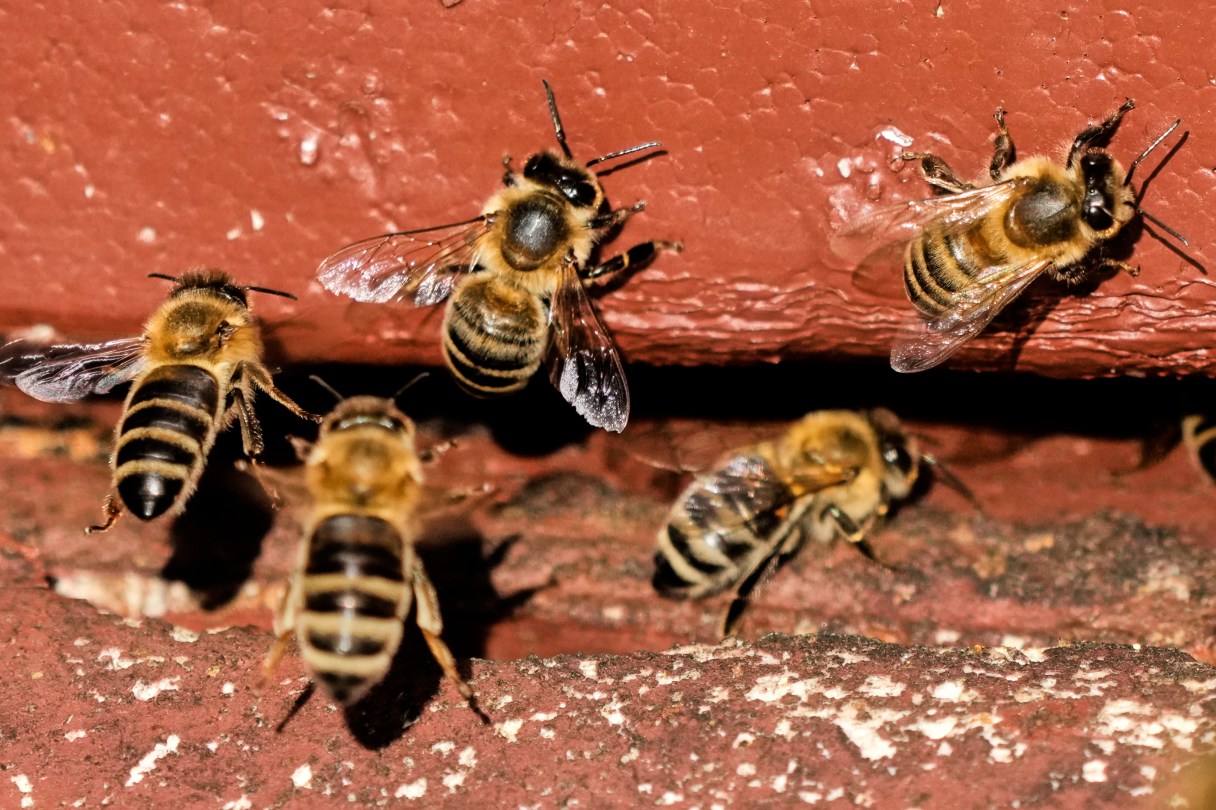
COLOGNE, Germany (AP) — On the eighth annual “World Bee Day,” the bees did not seem bothered.
They should be.
Bees and other pollinators have been on the decline for years, and experts blame a combination of factors: insecticides, parasites, disease, climate change and lack of a diverse food supply. A significant part of the human diet comes from plants pollinated by bees — not just honeybees, but hundreds of species of lesser-known wild bees, many of which are endangered.
In 2018, the U.N. General Assembly sponsored the first “World Bee Day” to bring attention to the bees’ plight. Steps as small as planting a pollinator garden or buying raw honey from local farmers were encouraged.
May 20 was chosen for “World Bee Day” to coincide with the birthday of Anton Janša, an 18th century pioneer in modern beekeeping techniques in his native Slovenia.