
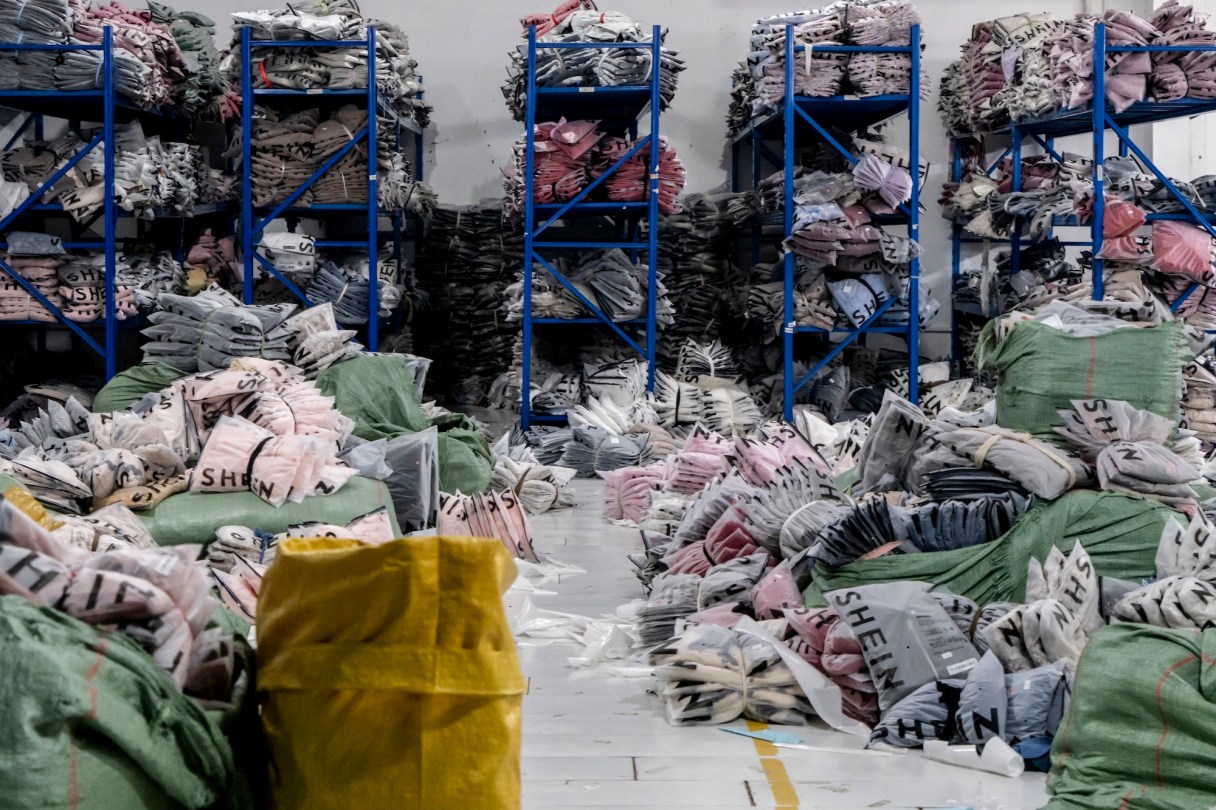
GUANGZHOU, China — Liu Miao has sold clothing on Amazon to wholesale buyers in the United States for the past five years. That trade has come to an abrupt stop.
Liu owns a small factory in Guangzhou, long the center of China’s highly competitive garment industry. He and other factory managers, already dealing with tight profit margins, said last week that the combination of tariffs and President Donald Trump’s new tax on cheap imports had cut deeply into their businesses. Costs along the supply chain are also higher.
The tariffs have made it impossible for Liu to continue selling on Amazon, where he previously made about $1 on every garment but now just 50 cents. And he felt he could not cut his employees’ pay, Liu said, as workers at a labor market crowded past his motorbike, which he had parked on the sidewalk with a dress sample draped over the handlebars.
“You can’t sell anything to the United States right now,” Liu said. “The tariffs are too high.”
Platforms such as Amazon, Shein and Temu brought China’s vast manufacturing supply chain to the world’s doorstep. These online marketplaces made it possible for thousands of Guangzhou’s small factories to reach shoppers in the United States. And since packages worth less than $800 could enter the United States tax-free, the factories and, in turn, the platforms were able to charge very low prices.