
(Editor’s note: Second in a series)
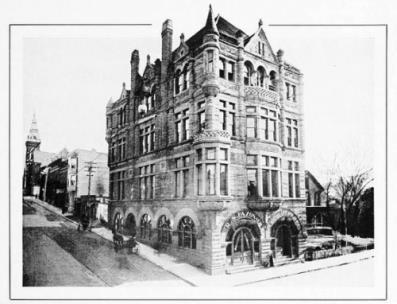
Chattanooga’s excitement at the announcement of the chartering of the Mountain City Club increased as the building rose at the corner of Cherry and Seventh streets. Local residents strolled by regularly to marvel at the beautiful blue sandstone structure and its red-tiled roof. The combination of large, leaded glass and stained-glass windows illuminating the four-story staircase caused the structure to be deemed “exquisite” in several news stories.
By Sept. 28, 1890, membership rose to 125 “prominent citizens” with an additional 12 applications awaiting action at the next board meeting two days later. A new slate of officers consisting of R.M. Barton, president; L.L. Fischer, vice-president; H.O. Ewing, secretary; and Harry F. Probasco, treasurer, busily promoted the business and social club as the “impetus … in our progress towards a metropolis.” The club provided an atmosphere for business enterprises and also filled the “want of a place of entertainment” for clients and business prospects alike.
Most Chattanoogans applauded the club’s organization and growth, but not all agreed. Visiting evangelist Rev. Samuel Jones during a revival denounced the Mountain City Club as a “damnable thing.” Why? He explained that he “suspected” that the members might have access to “alcoholic beverages and inappropriate behaviors” that constituted irreligion, immorality and “damnable” life in general.
The Chattanooga Daily Times responded with an editorial that attempted to educate the religious leader, explaining that club membership was drawn from the professional and business community – “manufacturers, bankers, merchants, lawyers and other citizens who have taken the lead in this city in charitable work … educational affairs and nearly all are members of and contributors” to local churches and synagogues. The editor accused Jones of being “ignorant of the corporation he insolently and falsely denounces as he is of club life and the objects of clubs in general.”