
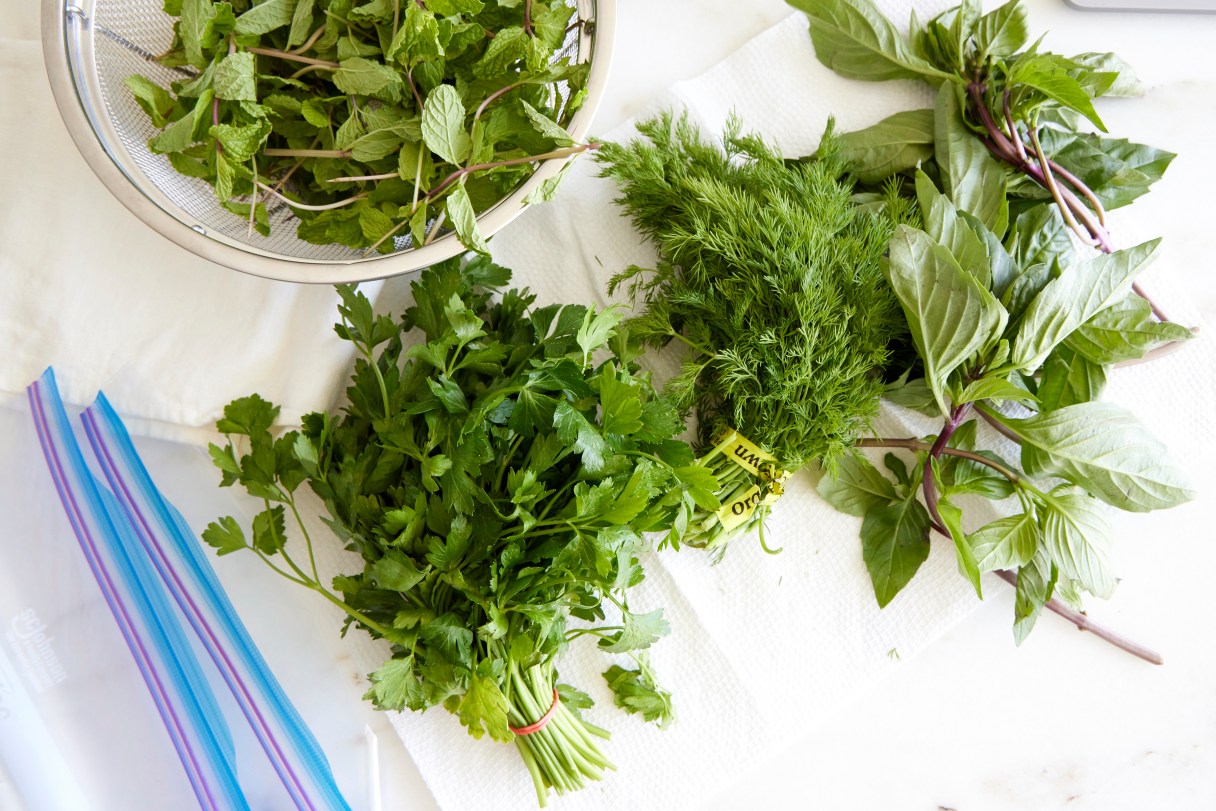
At markets in the spring, abundant, well-priced bunches of herbs can be just as tempting as strawberries and asparagus. But bringing them home often means that one’s best intentions collide with the harsh realities: Herbs can go from sprightly to swampy before you have time to use them up. The simple tips that follow can help you make sure they never go to waste.
1. Choose your herbs wisely. Look for the freshest herbs you can find, which can last longer in the fridge and freezer, suggests Nasim Alikhani, the chef of Sofreh in Brooklyn, New York, and author of the cookbook “Sofreh.” Herbs should be perky and vibrant, with plump, well-hydrated leaves and stems. (Avoid bunches with wilted, limp or waterlogged leaves, or discolored areas.) If possible, skip herbs in small plastic packages: Their condition can be hard to gauge.
2. Prep your herbs for storage right away. Like flowers, herbs can’t wait to be released from their packaging. Once you’re home, spread out the loose herbs and pluck away any wilted or browned leaves that may have been hiding (the adage about rotten apples applies here, too).
“If you have one bit of cilantro leaf that’s been chewed up or damaged in some way, that’s going to be a focal point for bacteria,” said Donald W. Schaffner, a food microbiologist.
Alikhani also likes to rinse her herbs before storing them, which has another advantage: You’ll be more likely to cook with herbs if you know they’re washed and ready to go. But make sure they’re well dried — Alikhani uses her salad spinner, but you can also blot them with paper towels — as “residual moisture will travel with the herbs,” contributing to bacterial growth, Schaffner said.