
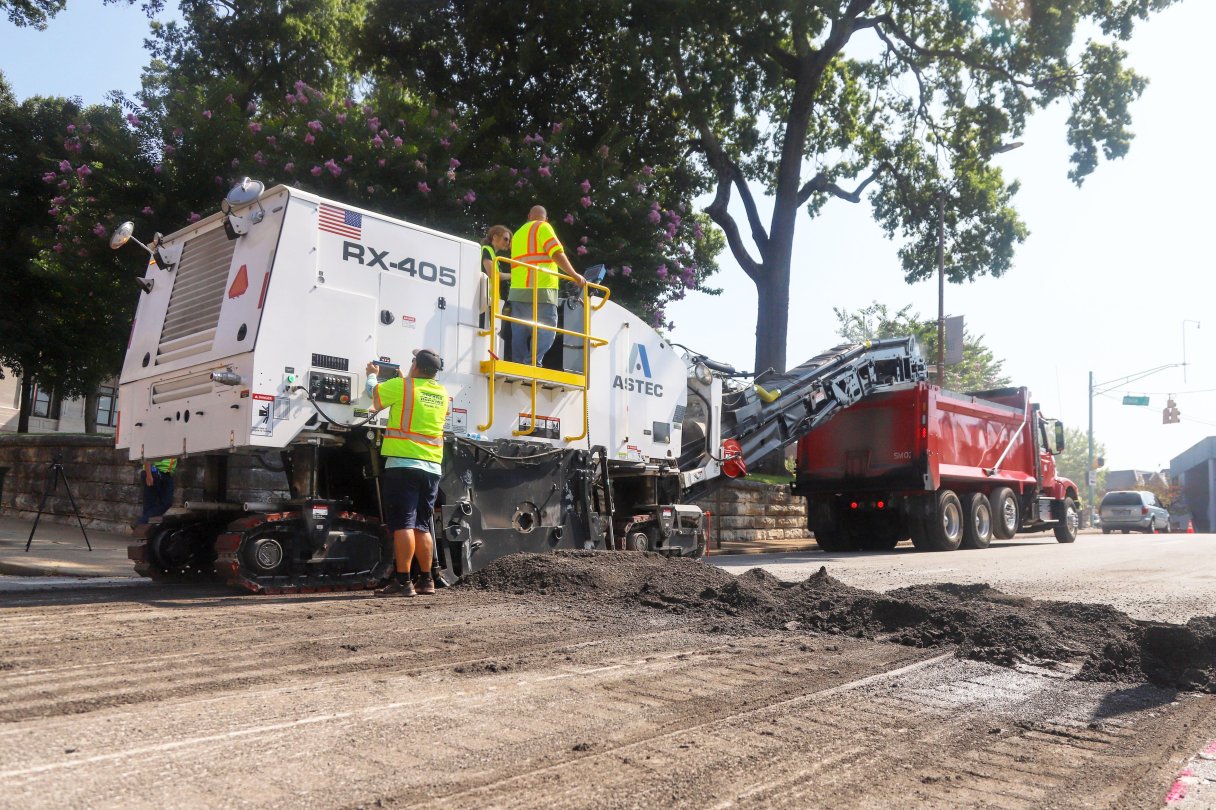
In July, Wacker Chemical Corp. announced it would lay off 90 workers at its polysilicon plant in Bradley County, and a maker of asphalt equipment, Astec, said it would reduce its workforce in Hamilton County by an undisclosed number of jobs.
In August, an Ooltewah-based manufacturer of towing and recovery equipment, Miller Industries, said it would lay off about 150 workers across three of its facilities. That same month, the Tennessee Valley Authority, which supplies power to 10 million people across parts of seven states, revealed that 600 employees accepted a voluntary buyout to resign or retire early amid an effort by the utility to costs. The agency didn’t report where those workers are based.
In September, Volkswagen announced it will pause production of its electric SUV, the ID.4, next month and furlough about 160 workers at its Chattanooga plant as sales of the vehicle fell. That same week, the state’s largest health insurance company, BlueCross BlueShield of Tennessee, said it would cut 95 employees, adding to the 150 workers it plans to lay off at a local subsidiary, Shared Health.
This spate of workforce reductions in the Chattanooga region happens as the country witnesses sluggish job growth, with the Bureau of Labor Statistics reporting that total nonfarm employment rose by just 22,000 for August. The trend also occurs against a backdrop of wider economic uncertainty caused in part by changing trade policies from the federal government, according to local economists.