
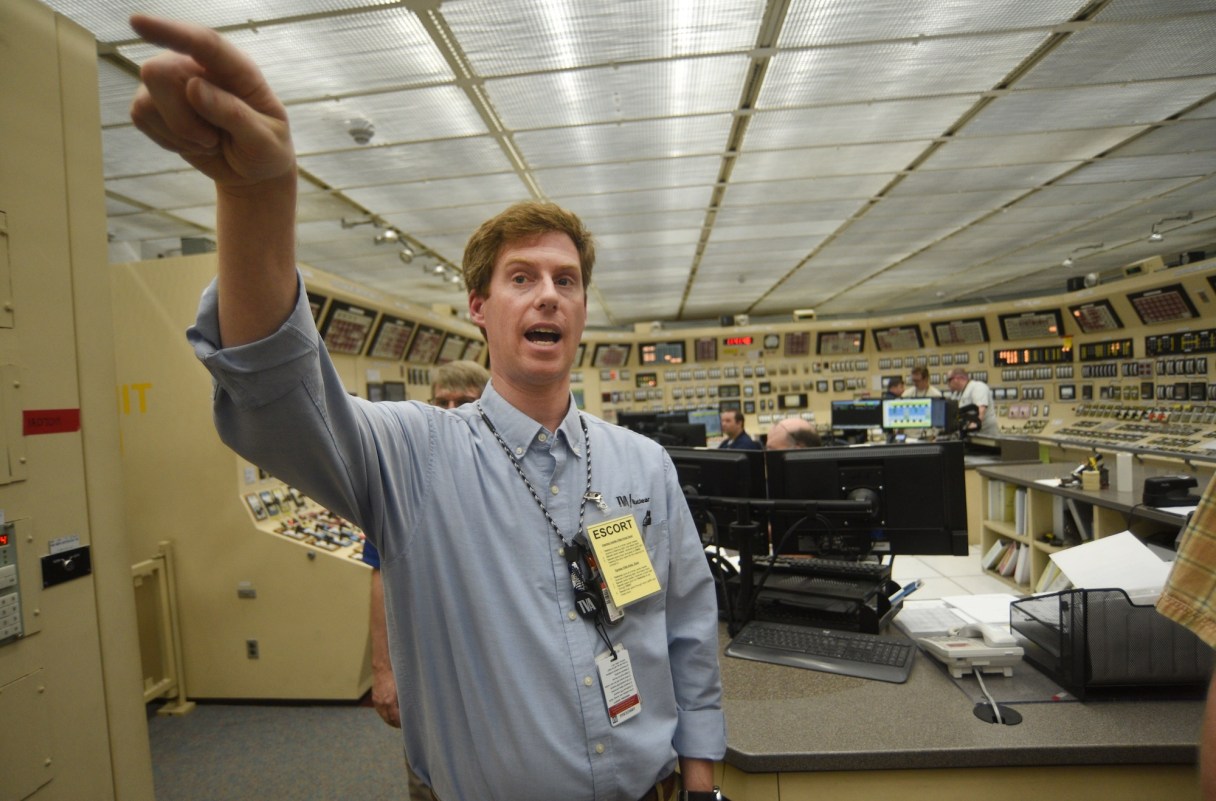

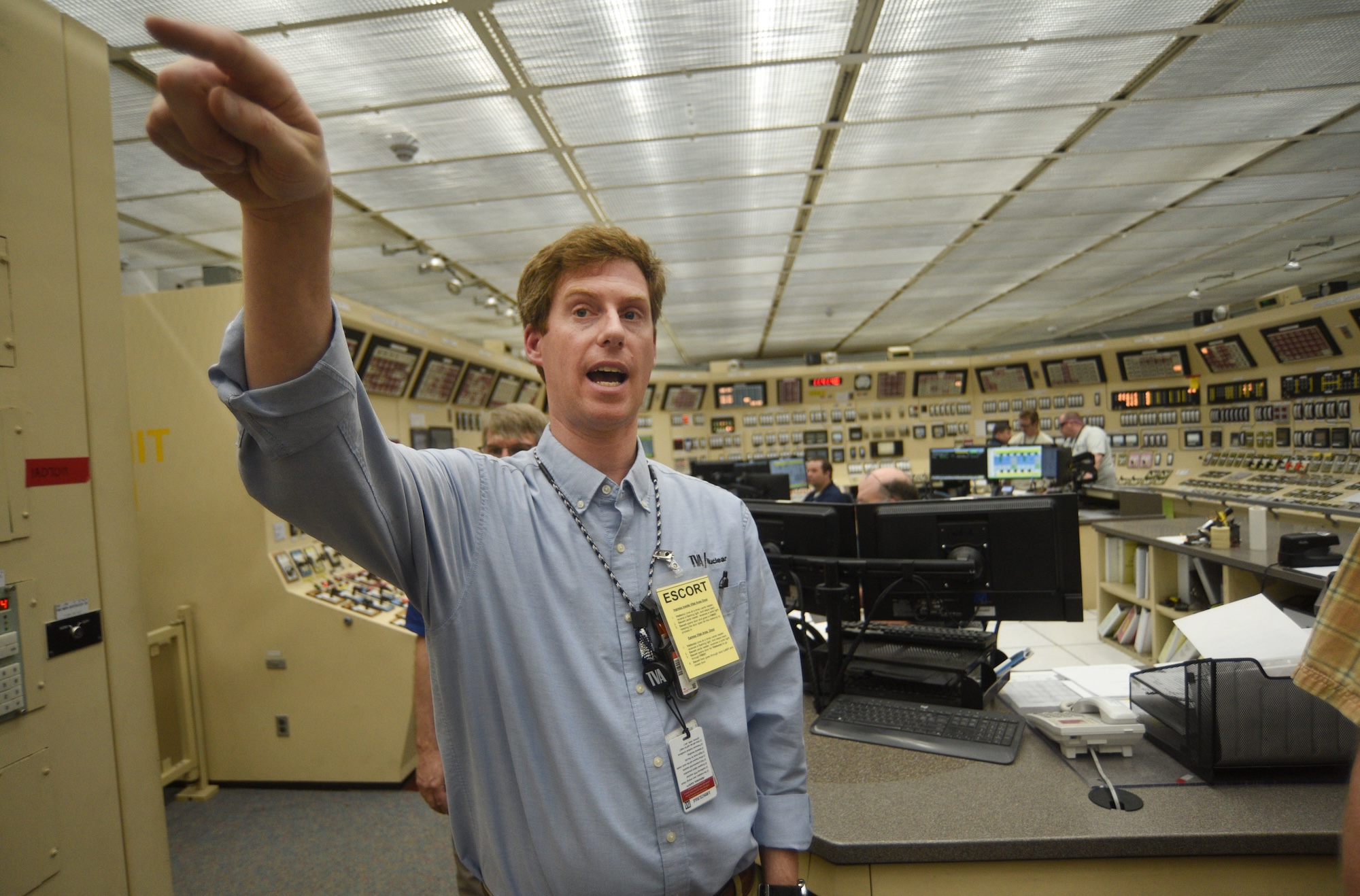
Before a ragtag group of media personnel — journalists from print, radio and TV, as well as podcasters — donned protective glasses and headsets to tour the Sequoyah Nuclear Plant, the Tennessee Valley Authority’s soon-to-be nuclear chief had a brief word.
“There’s no heroes,” Matt Rasmussen told the group Tuesday. “If you feel like you are tired, or you’re feeling overwhelmed, or you’re just stressed when we get out there because you’re going into a new place you’ve never been before, just say, ‘Hey, I need a break.'”
Perhaps this executive was being overly protective of outsiders. It wasn’t like the tour was about to embark to the bottom of the ocean. Rasmussen was addressing an audience in a conference room in Soddy-Daisy.
(READ MORE: Inside Sequoyah nuclear plant with $140M new generator)
But here’s the thing: The water running through the pipes at Sequoyah is under the same pressure as water 2,000 feet below the surface of the ocean. It’s also 550 degrees.
What it’s like to tour a TVA nuclear plant
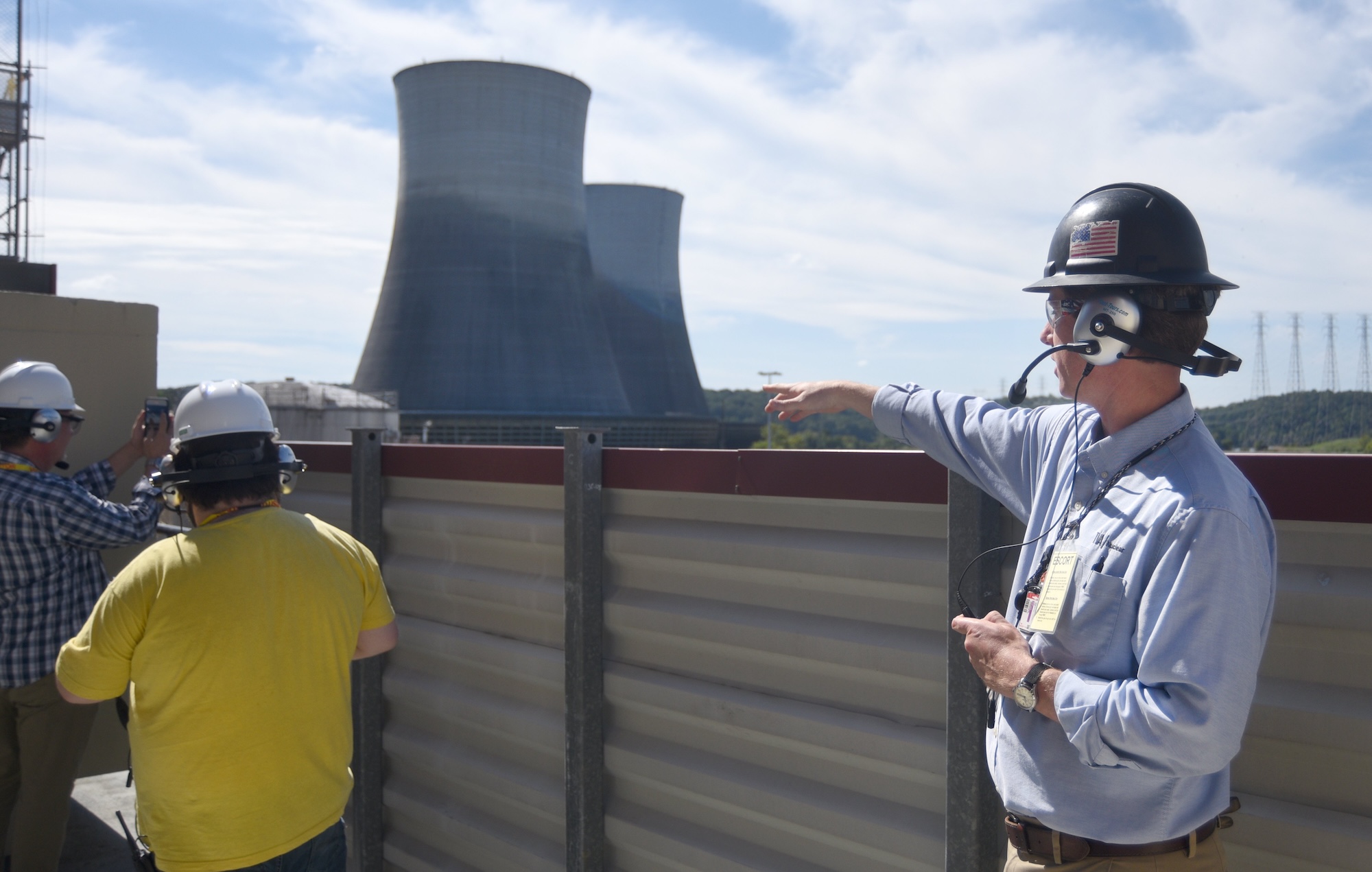
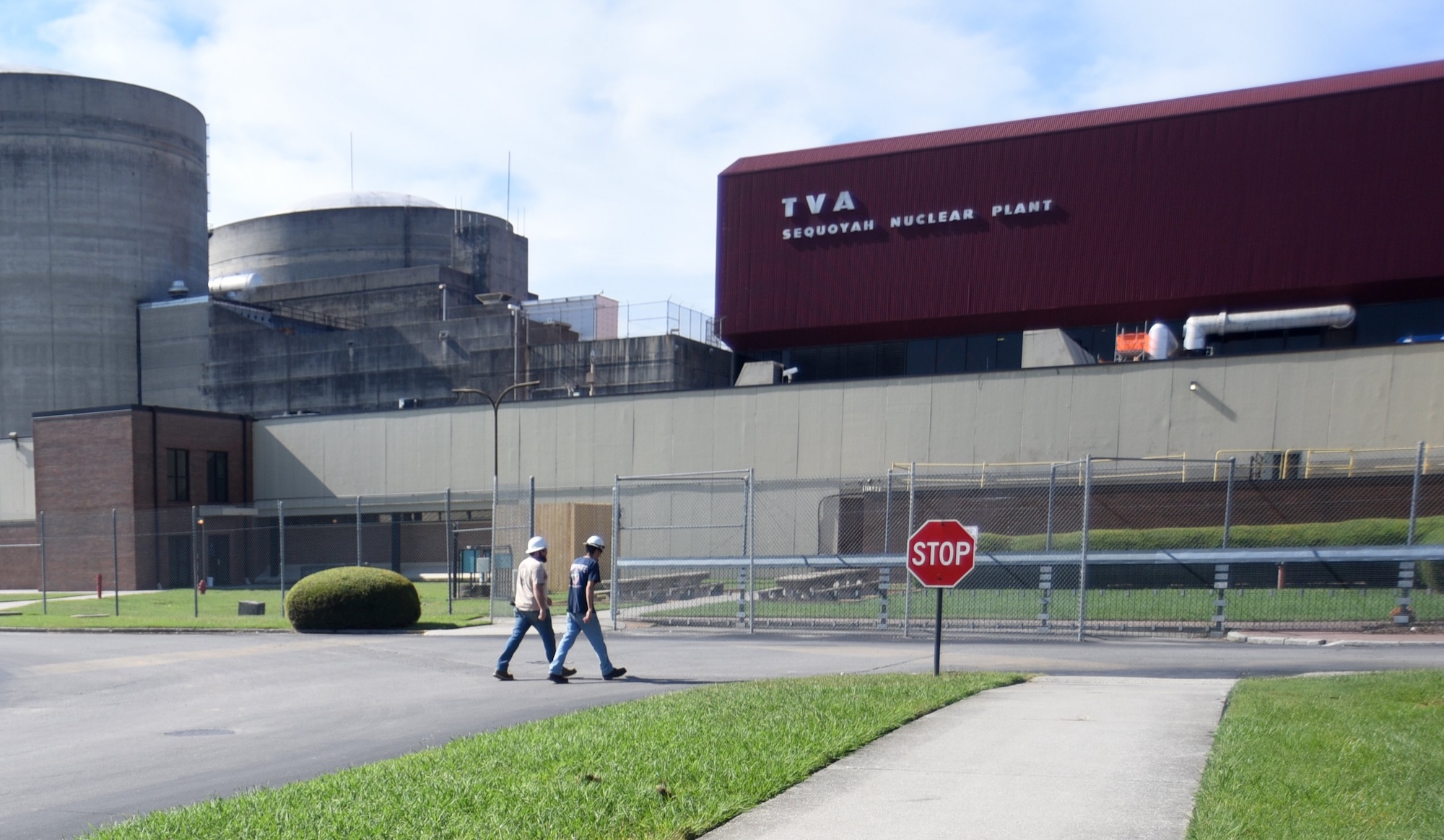
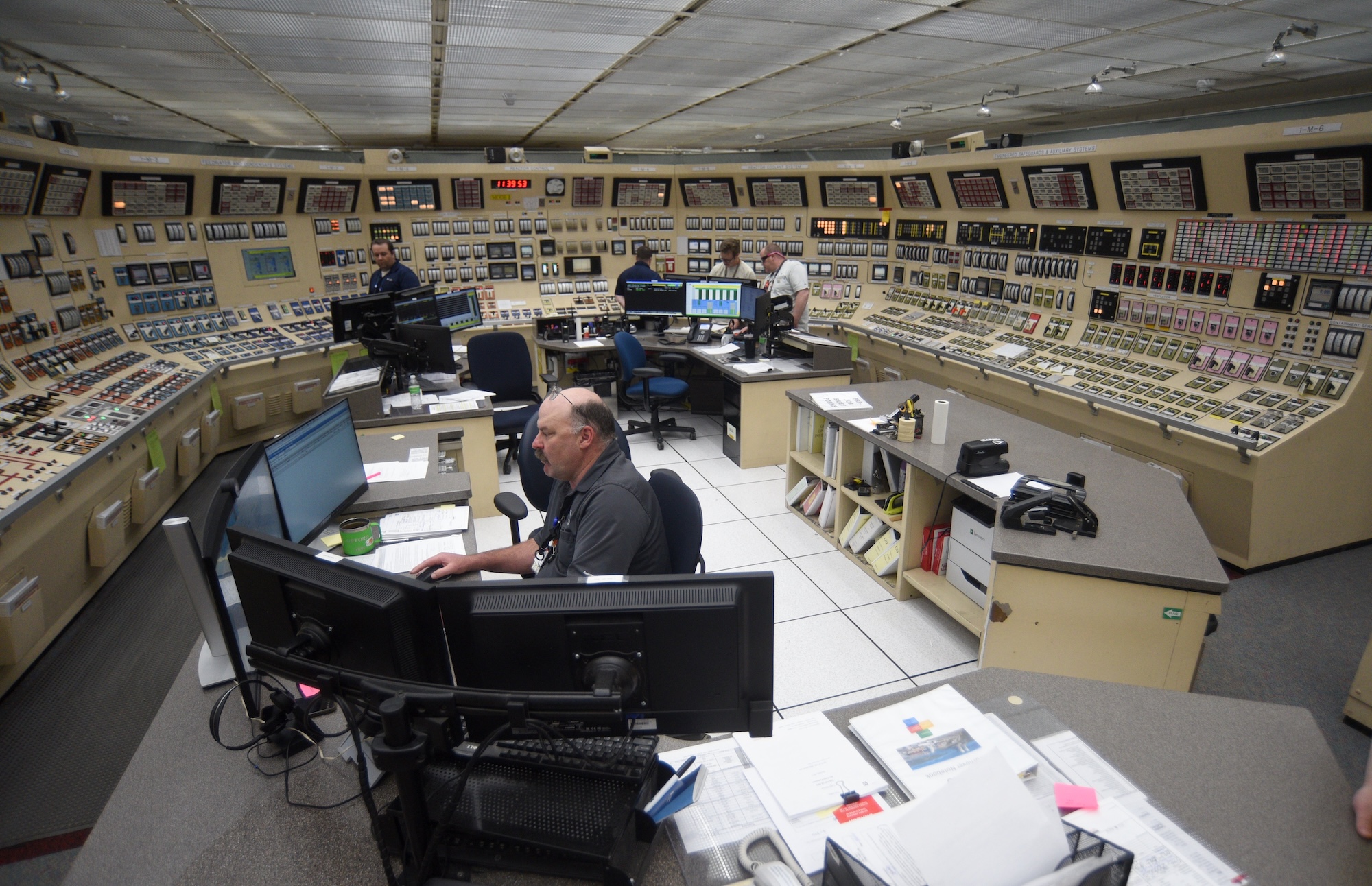
Outside in the switchyard, current flows into transmission lines at a pressure of 500,000 volts, more than 4,000 times the voltage of a wall outlet. Paired with even a tiny current, the voltage could do far more to the human body than just kill it.
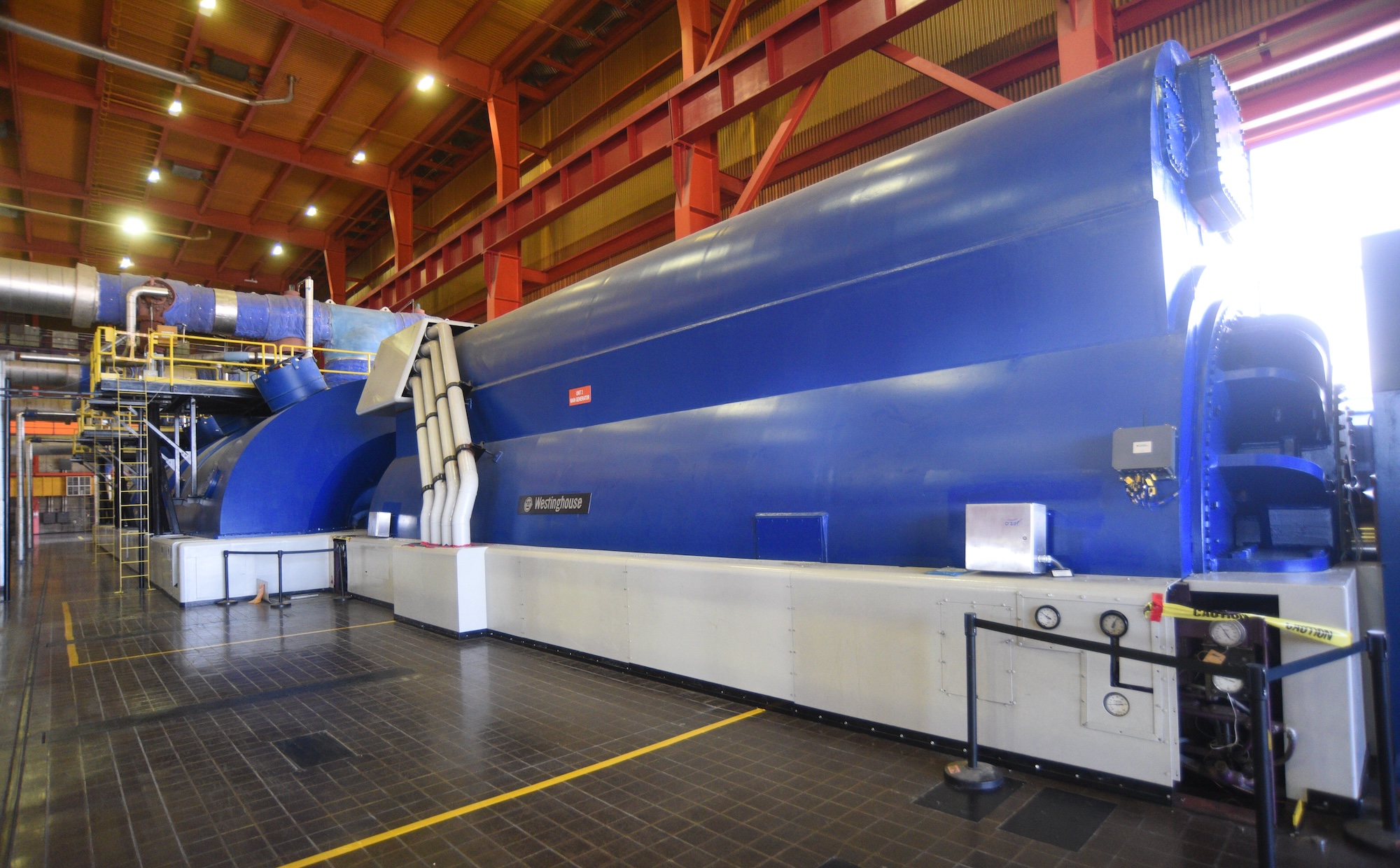
When electric generators the size of train cars are spinning, the lines send enough power across the region for 1.3 million homes.
As the tour wound through the turbine hall where a thermometer read 105 degrees on a relatively cool lower floor on a relatively cool August morning, the foreignness of the environment came into view. Even if the ears are protected from hearing how loud the plant is, the body can feel it. Could this alien place really be in a quiet and mostly rural suburb of Chattanooga?
Staff at the federal company walked reporters through the turbine hall at the Kingston Fossil Plant, a coal-fired behemoth around 70 miles northeast of Sequoyah, in May. The basic electric technology is the same, even if one plant burns coal and the other splits atoms of enriched uranium.
TVA’s own employees will tell you coal plants are dirty places, where visitors walk in with white shoes and walk out with gray shoes. The plants are the most polluting of any generating stations, and their 1,000-foot smokestacks imply an industrial grandeur.
Nuclear plants, by contrast, have cooling towers about half that height that emit clouds.
But if journalists on the Kingston tour thought they’d caught a glimpse of the most commanding plant the nation’s largest public utility has to offer, the presence of numerous armed guards at Sequoyah suggested differently.
PROTECTING THE PLANT
Security personnel with semiautomatic (or even automatic) rifles slung over their shoulders are wall paint at the numerous East Tennessee nuclear facilities owned by the federal government and/or licensed by the U.S. Nuclear Regulatory Commission.
Nowhere is their presence more felt than Oak Ridge, the original company town for the U.S. government’s nuclear weapons program. To see maximum nuclear security in action, go to the Y-12 National Security Complex, the nation’s storehouse of bomb-grade uranium 100 miles northeast of Chattanooga.
Government officials may take reporters on tours of parts of Y-12, but they must show proof of U.S. citizenship, they can’t bring their phone and they certainly cannot enter the so-called “Protected Area” without high-level security clearance.
Like the guards at Y-12, the guards at Sequoyah are authorized to use deadly force to protect nuclear material.
TVA has special agreements with the U.S. Department of Energy, which oversees nuclear weapons, that give the utility access to higher enriched uranium that’s been “downblended” into less powerful fuel, making its nuclear fuel cheaper, Rasmussen said in an interview.
(Like at other commercial nuclear plants, the fuel used in Sequoyah’s reactor is low-enriched uranium, which is not powerful enough to create an atomic bomb. It is radioactive, however, and TVA did not take media inside the nuclear containment structure where the reactor vessel sits.)
After moving through the same security checkpoint where Sequoyah’s 840 full-time employees are cleared every day, reporters could have five or six guns trained on them if need be. The security personnel would do what is needed to protect the plant, TVA spokesperson Scott Fiedler said.
Two guards with rifles slung over their shoulders, which staff repeatedly referred to as “machine guns,” accompanied the group on the tour. The term, often used colloquially, describes a specific military-grade weapon that fires multiple rounds with one pull of the trigger and is typically off-limits to civilians, unlike semiautomatic rifles like the AR-15.
The U.S. Nuclear Regulatory Commission allows certain security officers to use what it calls “enhanced weapons,” including machine guns. TVA eliminated handguns as secondary weapons for officers at its nuclear plants in 2017.
TVA does not disclose specifics about the “capabilities or capacities” of its security officers, Fiedler said in a text, responding to a question about whether their rifles are semiautomatic or automatic.
“TVA Nuclear security personnel are trained and qualified to meet or exceed the robust standards established by federal regulations,” he said. “Our security program is designed to ensure the safety and protection of our facilities, employees and the public.”
The site manager at Y-12 says workers there cease to be normal citizens when they cross the blue line at the gate for work each day. They became national security.
As the utility that has provided electricity to Y-12 and other nuclear facilities since the Manhattan Project, TVA’s history is woven with the notion of energy security as national security.
A COMMUNITY PLANT
Sequoyah and Watts Bar, TVA’s nuclear plant in Rhea County, have identical designs. Only five plants in the U.S. — to borrow the unavoidable jargon — are Westinghouse four-loop designs with ice condenser containment.
What sets Sequoyah apart is the truly local character of its workforce, Rasmussen said.
“The team at Sequoyah, more than any of my other plants, is the most connected to the community,” Rasmussen said. “They all show up to the same high school football games. That’s a little bit unique for our fleet.”
(READ MORE: Erlanger Park reveals logos. Final steel placed for stadium)
Beyond pumps that move 15.2 million pounds of water an hour and generators that create enough power for 700,000 homes every second, it’s the wall hangings at a nuclear plant that tell its story.
On workers’ way out the door each day, a banner spanning the length of the security checkpoint thanks them for working safely.
On a bulletin board in a cafeteria, there are photos of employees’ families. There are kids smiling while eating watermelon or sliding down an inflatable.
“Outside the gates are our loved ones,” the board says. “This is why we work safely.”
Contact business reporter Daniel Dassow at ddassow@timesfreepress.com or 423-757-6318.