
This article originally appeared on Inside Climate News, a nonprofit, non-partisan news organization that covers climate, energy and the environment. Sign up for their newsletter here.
In Knoxville, there’s a minuscule warehouse tucked off the side of the road. Its tiny gravel parking lot is full. In the back of the cramped, wood-paneled building are dozens of aquarium tanks filled with endangered, threatened, imperiled and at-risk fish species.
This is Conservation Fisheries Inc., a nonprofit dedicated to preserving Appalachian freshwater diversity. It began as a graduate school project in the 1980s and has grown into a conservation powerhouse.
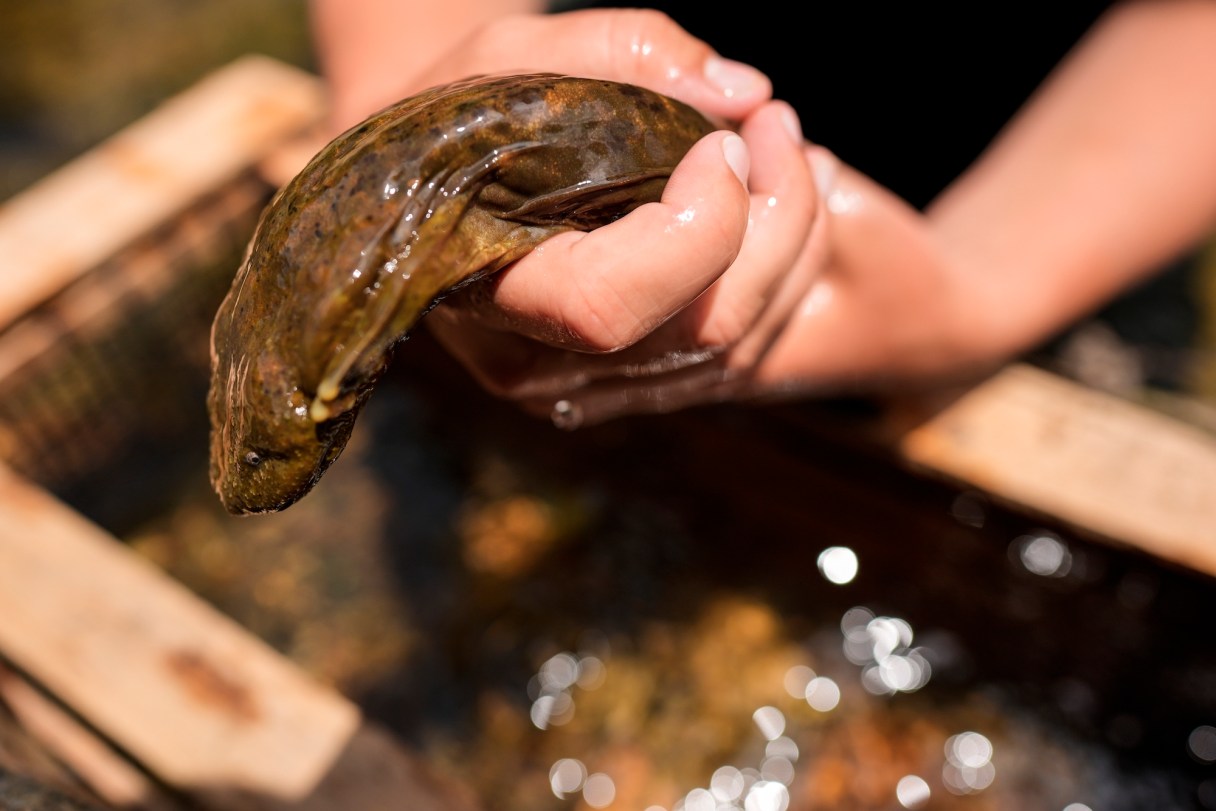
One of the threatened species that the nonprofit works with is the eastern hellbender, colloquially called the “snot otter,” which resides across Appalachia and the Midwest. Hellbenders have been at risk for decades and were proposed for addition to the federal endangered list in 2024. Sedimentation, pollution and habitat disruption are some of the greatest threats to eastern hellbenders — and 2024’s Hurricane Helene exacerbated all of those issues.
In 2025, after the catastrophic damages of the hurricane, Southern Appalachian rivers were deemed the third most endangered waterways in America. Researchers said many of the creatures in and around those waterways — with territories stretching into the Midwest and Southwest — are threatened, endangered or imperiled.