
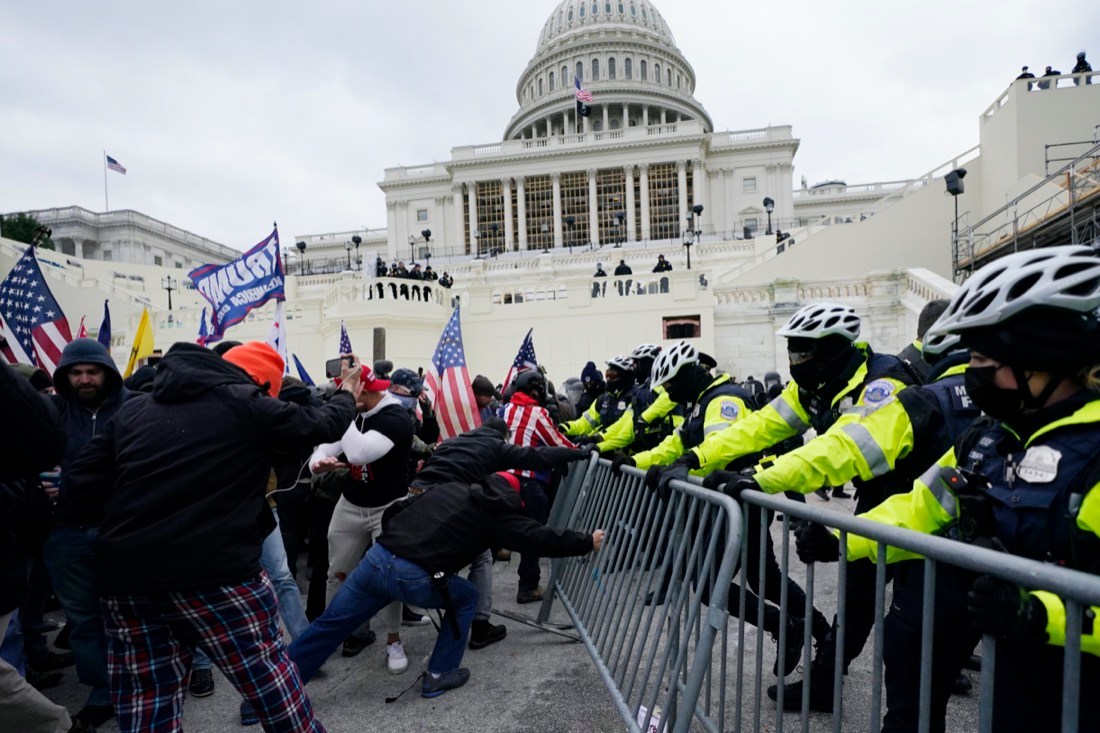
A violent insurrection, fueled by hate and littered with the symbols of white supremacy, is more than a “wake-up call.” It’s a fire alarm.
Our democratic ideals, already fragile and inequitably realized, seemed impossibly distant in the past several weeks. The inauguration was a tonic, a sign that “democracy has prevailed,” but it should not obscure the reality that the road before us will not be smooth.
As we examine the myriad causes and explore what’s ahead, one response, among many others, must be a hard look at the state of civic education in this country. Congress can help lead this effort, starting with the passage of the Educating for Democracy Act.
We have not for many years – or perhaps ever – invested sufficiently in the civic health and education of our citizenry. The reasons are complex and varied: competing priorities, politicization and hyperpolarization, and the relative disinvestment in public education and higher education overall. But the fact is that over the course of nearly six decades, the prioritization of a few subjects (STEM and English language arts, especially) has led to a neglect of American history and civics. Where some gains have been made in high-quality civic education, they’ve been too often co-curricular and inequitably distributed.
Our expectations for what students should learn have been set far too low. It is one thing to teach that there are three branches of government and what each one does. It is more ambitious to expect every young American to know how to select good information, to reason with people who may disagree about complex problems, to influence a range of institutions effectively – and to uphold the core values of our republic.