
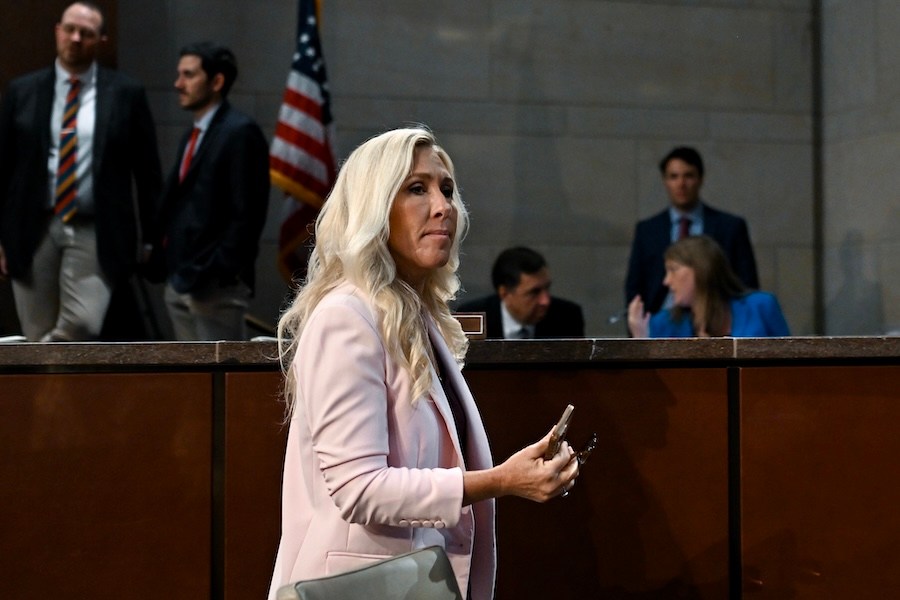
WASHINGTON — Rep. Marjorie Taylor Greene of Georgia, an avatar of MAGA politics on Capitol Hill, this week became the first Republican in Congress to describe the situation in the Gaza Strip as a “genocide,” breaking sharply with her party in an indication of growing skepticism on the right about Israel’s conduct of the war.
“It’s the most truthful and easiest thing to say that Oct. 7 in Israel was horrific and all hostages must be returned, but so is the genocide, humanitarian crisis, and starvation happening in Gaza,” Greene said in a social media post Monday evening.
Her comments drew a clear contrast with the vast majority of Republicans in Congress, who have made unqualified support for Israel a hallmark of their foreign policy approach. Many of them, including Greene in the past, have attacked Democrats who have criticized Israel as antisemitic and sympathetic to terrorists. The vast majority of Republicans have not budged from that stance.
But Greene’s unvarnished language spoke to a simmering rift on the right just as President Donald Trump on Monday acknowledged the starvation in Gaza after largely deflecting on the issue for months. Trump broke with Israeli President Benjamin Netanyahu, who has said there is no starvation in the war-torn enclave.
In recent weeks, Greene and some other right-wing Republicans have grown more outspoken in opposing what is happening in the Middle East, particularly after Trump bombed Iran, enraging some in his “America first” base. The skepticism is not limited to Greene or to Capitol Hill, and appears to be gaining ground particularly among a younger generation less reflexively supportive of Israel.