
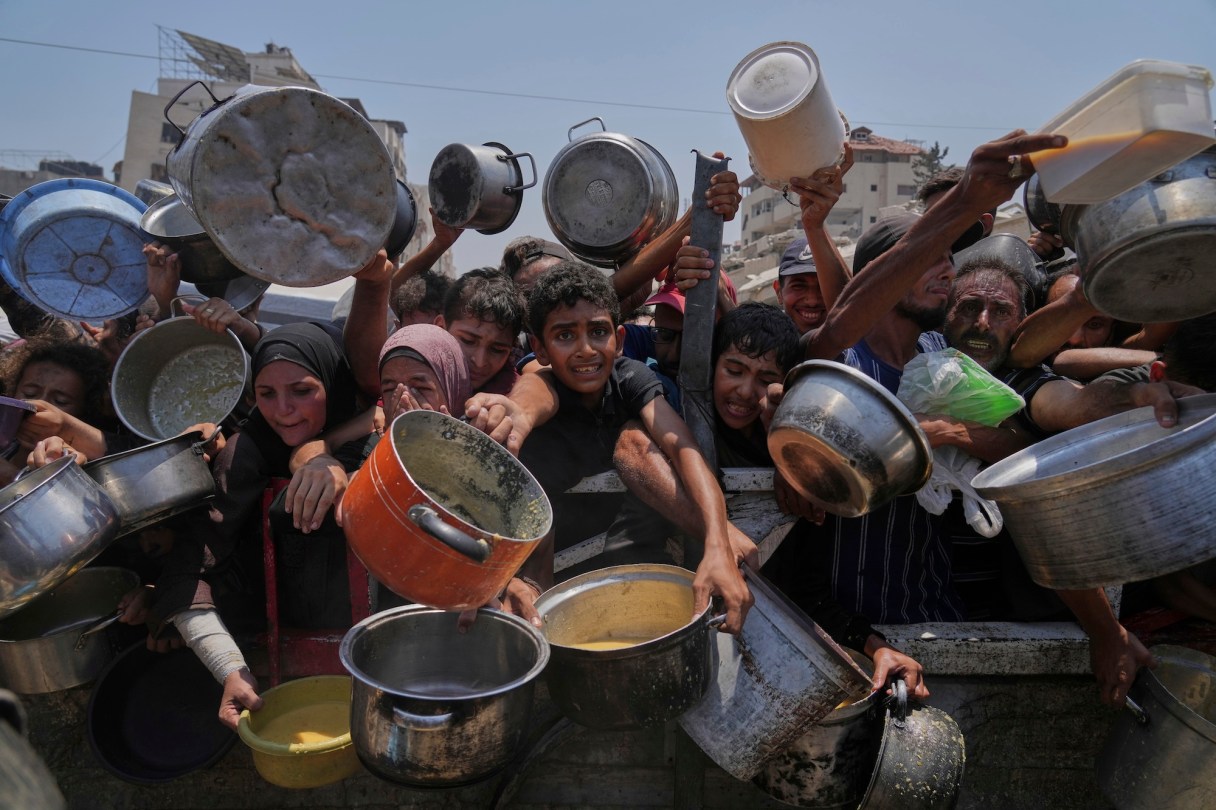
The hunger in the Gaza Strip is an urgent moral crisis. Its 2 million people lack adequate food, and at least 16 children under 5 have died of hunger-related causes in the past couple of weeks. Israel’s often reckless administration of its war and occupation have helped create this emergency, and it has a unique power to alleviate it. It must do so.
How the situation has come to this is a matter of intense dispute, of course. The best solution, for Palestinians and Israelis alike, includes a return of the hostages, an end to the war and a new Gaza government. While that outcome remains out of reach, Gaza residents need to eat.
Israel bears the greatest responsibility for the lack of food because its military controls so much of Gaza, including its borders. The excuses offered by the government of Prime Minister Benjamin Netanyahu — that the aid organizations are incompetent and Hamas diverts the aid — are unpersuasive. Even some Israeli military officials have questioned this rationale.
The core problem instead stems from a push by far-right members of Netanyahu’s government to cut off aid from international groups. Israel did so early this year. In their place, Israel and the United States established the Gaza Humanitarian Foundation and said it would handle the job. Netanyahu and his ministers claimed the switch was necessary because Hamas had corrupted the previous system by hoarding supplies for its fighters and selling aid at a profit, but that earlier system was clearly more effective than the new one.
The Gaza Humanitarian Foundation has operated only four distribution centers for Gaza’s entire population, compared with more than 400 that the United Nations and other aid groups previously operated. Hundreds of Gaza residents have died during frantic melees at the four distribution sites, sometimes killed by gunfire from Israeli troops.