
This story was originally published in the Nashville Banner. Sign up for their newsletter at nashvillebanner.com/newsletters. The story is part of the Nashville Banner’s ZIP Code Project. The yearlong community engagement effort assigns Banner staffers to various ZIP codes across the city, where they spend significant time listening to residents and elevating stories directly from the community.
In September, Metro Social Services held a first of its kind food pop-up in North Nashville at Galilee Missionary Baptist Church.
Instead of asking people to come to their Donelson office for a food giveaway, they took 300 boxes of basic pantry items provided by Second Harvest Food Bank directly into a neighborhood that experiences severe lack of access to affordable and healthy food.
The event began at 9 a.m. on a Saturday. Around 6 a.m., people in need began lining up. By 9:15 a.m., all of the boxes were gone.
“I’ve been with Metro Social Services for 33 years and I’ve never had a feeling of being overwhelmed before now,” Executive Director Renee’ Pratt said. “I hate to admit that as a leader and as a director, but when I just don’t have an answer and I don’t know how I’m going to be able to fix it, yes, it can be quite overwhelming.”
According to Pratt, the high turnout offered a glimpse into a worsening hunger problem, which her office and others across the city are trying to solve, especially in areas like North Nashville, where low access to grocery stores and socioeconomic barriers exacerbate the issue.
That growing need became apparent to Pratt last year when her office hosted a food giveaway and people bussed and drove from across Middle Tennessee, not just Davidson County, to similarly wait in line at 5 a.m. to receive a box of basic pantry staples.
“We recognized that more people were coming into the office and they were hungry,” Pratt said. “We’re getting more calls for food baskets and for assistance with paying for food. We’re finding many middle class Americans now are contacting us because they’re concerned about how they’re going to feed their family.”
“It’s getting worse at every level,” she added.
So much worse, in fact, that Pratt delayed her own retirement because of what she sees as an unprecedented food crisis.
“I can’t do it. I pulled it off the table,” Pratt said of her planned December retirement. “This is not a good time to make major changes. We need to kind of stabilize, buckle down. … People don’t realize how bad it already is and how much worse it’s going to get. Because right now it’s not as visible to them, but it’s impacting more people and getting much worse for the people who have already been struggling.”
North Nashville is a neighborhood that has experienced long-term systemic disinvestment, which began with the state’s installation of Interstate 40 in the neighborhood in the 1960s. Over time, this contributed directly to higher rates of poverty, and the closure of essential neighborhood businesses, including grocery and corner stores that once sustained the community. And now, factors like the rapidly increasing cost of groceries and recent federal cuts to food assistance are worsening acute hunger here and across the country.
Now Pratt and others are trying to juggle the influx in immediate need while others grapple with long-term solutions to the perennial issue of food deserts.
“If not, and things keep going the way they are, then what? Are we going to start soup lines like in the era of the Great Depression?” Pratt asked.
“What the hell are people going to do?”
Making food accessible
In a single hour on Tuesday afternoon, customers came to the North Nashville Save A Lot on Clarksville Pike, which is directly across the street from the city’s new bus hub, on foot, in cars, on bikes and, in one instance, in a mobility scooter. One mom with her two adolescent children said she walked to the store from her apartment on Rosa L Parks Boulevard, but was waiting on an Uber to take them home with their groceries.
Another mother, Bridgett Welch, drove to the store where she said she shops frequently, though the selection and prices make it impossible to rely on just one store.
“Most people who live in this community rely on food stamps so we have to kind of bargain shop around and make that stretch,” Welch said, noting that she may come to Save A Lot for something like meat or a specific sale, but she often drives as far as Dickerson Road to buy other items from different stores, depending on sales.
With few options, the community feels the sting when one store closes, even temporarily.
Last year, the load-bearing Save A Lot was unreliable because of a manager who routinely failed to order new inventory. Since then, that person was replaced and the store has remained well-stocked, but the only other neighborhood grocery store, and the only accessible one for many area residents, a Kroger, is currently out of commission.
(READ MORE: Lawmakers working in Chattanooga’s poorest ZIP codes seek support)
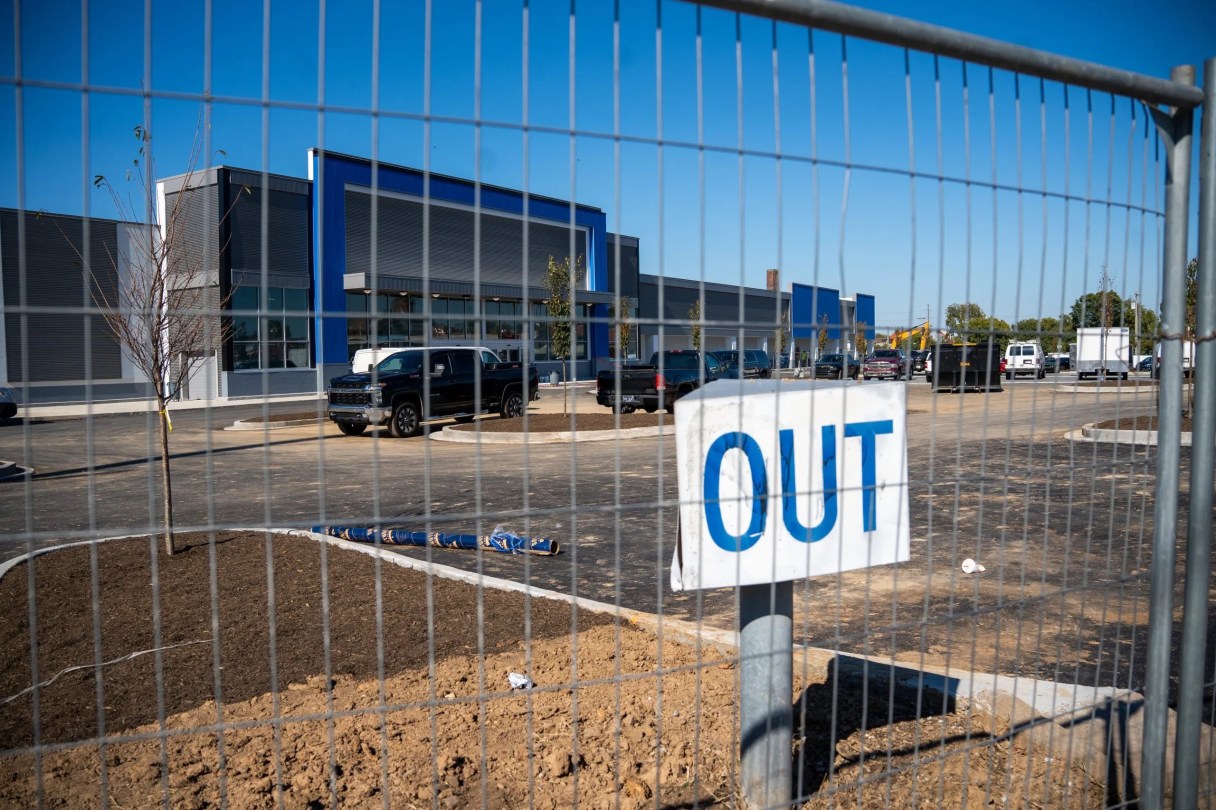
In April, the Kroger on the corner of Rosa L Parks Boulevard and Monroe Street closed for renovations and an expansion. The grocer had planned to close in May to add a Starbucks and make other improvements. Instead, they shut down unexpectedly early in mid-April, straining those who rely on it and have nowhere else to go without transportation.
Six months later, the parking lot remains fenced off, except for the gas station and drive-thru pharmacy, the formerly brown brick building has been painted millennial grey.
“There’s nowhere I can get to on my own,” Patricia Cato, a nearby resident without a car, told the Banner in September.
Currently, Cato relies on rides from people at her church to grocery shop for herself and her cat in other parts of town, usually every three to four weeks. She subsidizes those trips by going to convenience stores, like Walgreens, within walking distance.
“But there’s not much there,” Cato said, also noting increased prices on what food is available at the grocery store alternatives and her concern about safety when walking around Metro Center.
Cato knows she could take the bus to another grocery store, but that makes a round trip to the store for what few items she can physically carry at once take upwards of two hours.
“Hopefully Kroger just reopens soon and I can stop asking for rides,” Cato added.
According to a report from the Nashville Mayor’s Office, more than a quarter of Nashville residents — or about 198,000 people — live in a food desert and about 39,000 of those also live below the poverty line.
Most of North Nashville and Bordeaux are considered urban food deserts, meaning that there is a 20 percent or higher poverty rate by census tract and at least a third of the population lives more than half a mile away from a supermarket or grocery store.
The Monroe Kroger and one nearly three miles away in Bordeaux, are the primary sources of groceries for much of North Nashville. Because of the distance and current closure, many people rely on a smattering of corner stores, a Dollar General and the Save A Lot on Clarksville and 24th Avenue North.
People in North Nashville have been finding alternative ways to feed themselves and others for generations.
Carlos Partee, who grew up in 37208 and still lives around Buchanan, recalls his community relying on Potts, an independent grocery store formerly located on D.B. Todd Boulevard for most of their grocery shopping when he was a kid. Shopping at corner stores and buying plates from people’s houses often bridged the gaps.
Now in his 30s, Partee reluctantly has to leave his community to shop.
“We’re hoping someone who wants to actually help the community, or someone within the community, can come in and give us somewhere to get groceries without having to go to some other part of town, but right now, that’s what I have to do,” Partee said. “And whatever solution we get, people are going to have to support them, so we don’t lose it.”
Partee also noted that only having access to corner stores harms the community’s nutritional habits.
Seeking solutions
The mayor’s office launched an initiative this year to try and address food deserts in places like North Nashville, Antioch, Napier and Madison, putting out a request for projects that could help fill the need for reliable access to groceries in these areas.
Senior Director of Economic and Community Development Jamarri Brown lives in Bordeaux, where the nearest and only full-sized grocery store is a Kroger on Clarksville Pike across from the library. He said it’s a nice neighborhood and he has access to a car, but he recognized it would be about an hour walk each way if he needed to get groceries without a vehicle.
“So that’s obviously pretty apparent to me that there’s an issue there,” Brown said.
In response to the call out this summer, Brown said the city received more than 30 proposals for addressing these issues. While the city and analysts hired for a blind assessment of the projects are still combing through the detailed plans from farmers, nonprofits and grocery stores, he said there are some promising ideas.
“We heard from the people you want to hear from,” Brown said.
One of the groups that submitted a proposal is the Independent Grocers Alliance, or IGA.
To combat food deserts in Atlanta, IGA partnered with the city to launch the Azalea Fresh Market, a municipal grocery store in a repurposed historical building downtown. The two-story store, which just opened in September, now offers competitively priced groceries to an area of Atlanta that previously had no full-service grocery stores.
“So that’s one that I’m following closely, as it’s pretty new and hasn’t been running too long,” Brown said. “But there are several co-ops that are really the model that we hope to try to follow.”
If Nashville could similarly leverage city property, Brown said they could manage costs in the terms of a lease and by reducing some of the overhead groceries face with commercial property, in an effort to keep groceries reasonably priced for the communities that need them most.
‘”Obviously, costs are going up across the board, and if it costs [a grocer] $2 to get it, we can’t ask them to sell it for $1.50,” Brown said.
“There are some barriers to the cost of operating, and one of those is real estate, right?” he added. “So if we can reduce that barrier, then that makes it more advantageous for a grocery store operator to come into a market that they would not normally look at.”
(READ MORE: Food City to close Rossville store in November)
But even if the city can fill these needs with nonprofit or commercial grocers, project approvals, property agreements and development are not going to happen overnight.
“I want to get this right. If we do get to a place where we’re doing 99-year ground leases, that’s something that outlives me,” Brown said. “I don’t want someone saying 50 years from now ‘If that lease had been a little better, we could have had a better outcome.'”
Whatever the solution, Welch — the mother who shops at Save A Lot — said she hopes they put the existing community first, rather than prioritizing new renters and businesses.
She’s concerned that gentrification and better amenities will price North Nashvillians out of their neighborhood.
“They’re pushing out the original community,” Welch said. “And then everyone’s going to go to South Nashville where they don’t have any grocery stores either.”
‘The have and the have-nots’
As the city explores a long-term solution, Pratt, her team and area nonprofits are trying to feed the people who are hungry now and find sustainable ways to feed those who won’t be able to afford groceries, even if they are geographically accessible.
But the number of people who need help has grown as the cost of groceries has increased somewhere from 25-29 percent since 2020, and as the federal government has made sweeping cuts to food assistance programs this year, including cuts to SNAP, which are estimated to remove benefits from 57,000 people in Tennessee alone.
That’s why Pratt launched the food pop-up series this year, which will provide three more pop-ups in North Nashville, and later address other food desert communities across the city, with a $200,000 recurring addition to the social services budget approved by the Metro Council in the final version of this year’s budget.
“We can do so much more when we are able to go into the community, especially where we see this kind of need,” Pratt said of the North Nashville approach.
The 300 boxes provided by Second Harvest had modest, shelf stable food like canned vegetables, pasta and packaged tuna. And Pratt hopes to give more boxes and subsidize those boxes at future pop-ups, including more protein and, possibly, produce.
“But we still don’t have enough for everybody who’s hungry,” Pratt said.
Asked what it would take to scale up her program to meet the needs of everyone hungry in Nashville, Pratt said she’s stumped: “A few months ago, I could give you an answer, but not now.”
Pratt said her office is in constant triage and is trying to budget and reserve meals in a more conservative way than before to brace for further cuts or economic downturn.
“We used to do our strategic plan and have a plan for the next two or three years, even the next six months, but now I’m working with my leadership team saying, ‘Let’s just get through the quarter,'” she added.
It’s hard, she explained, to plan ahead when federal cuts to the USDA are impacting nonprofits’ abilities to provide even the base level goods in those boxes, and instability around cost of goods makes it nearly impossible to guess what it will cost even a few weeks before a pop-up, especially with volatile tariffs and the looming threat of a recession.
And any full scale solution is going to have to come from over her head.
“Unfortunately, it’s very political, and we’re looking at the land of the haves and the have-nots,” Pratt said. “Some decisions have to be made by our governor, by our president, to determine how you’re going to help these Americans survive, because that’s what it’s going to come down to.”
Metro Social Services’ next pop up will take place on Nov. 8 at Greater St. John Missionary Baptist Church beginning at 9 a.m. Nearly 400 food boxes and children’s coats will be available on a first come, first served basis.
This article first appeared on Nashville Banner and is republished here under a Creative Commons Attribution-NoDerivatives 4.0 International License.