
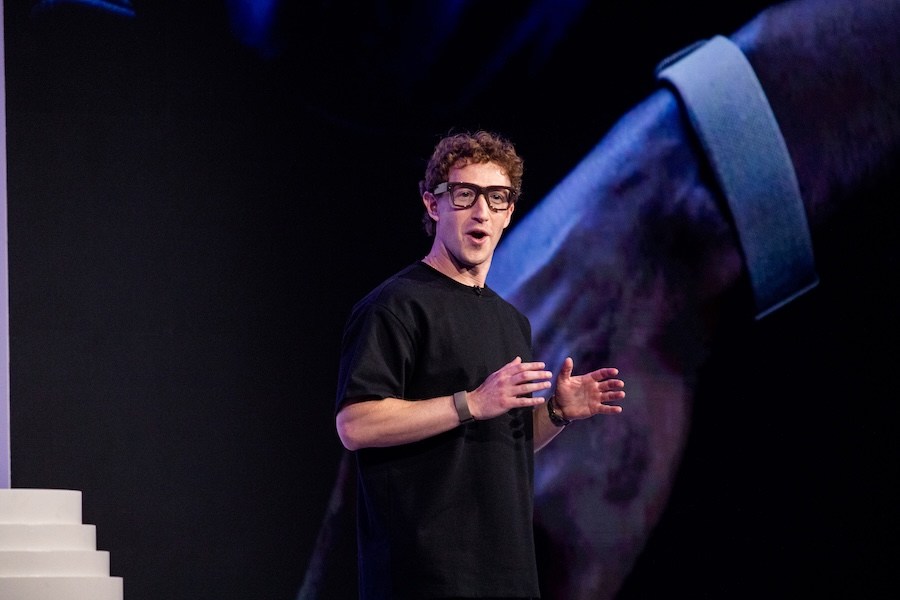
SAN FRANCISCO — Meta said Wednesday that it cut approximately 600 jobs in its artificial intelligence division, according to a memo sent to employees that was relayed to The New York Times, as the company seeks to keep pace with competitors in the furious contest over the technology.
The layoffs were in Meta’s so-called Superintelligence Labs, which is the umbrella name for the company’s AI efforts. The division has around 3,000 employees, though the exact number of workers was unclear.
Mark Zuckerberg, Meta’s chief executive, has been on a hiring spree to stack his company with top AI researchers, including a new chief AI officer, Alexandr Wang, earlier this year. The cuts Wednesday did not affect these newest hires, who have been empowered to develop “superintelligence,” or artificial intelligence that exceeds the human brain.
Instead, the job cuts were aimed at cleaning up the organizational bloat that resulted from three years of building up Meta’s AI efforts too quickly, two people with knowledge of the matter said. The layoffs aimed to help Meta develop AI products more rapidly, they said.
“By reducing the size of our team, fewer conversations will be required to make a decision, and each person will be more load-bearing and have more scope and impact,” Wang wrote in the memo circulated to employees.
The cuts, which were earlier reported by Axios, came at an intensely competitive time for Meta, which has spent the past three years dealing with the rapid onset of AI. After ChatGPT burst onto the scene in 2022, OpenAI, Google and Microsoft hired furiously to build the next generation of AI chatbots and other products.
Meta, which owns Facebook, Instagram and WhatsApp, struggled to keep up with the pack. After early success developing its open-source AI model, called Llama, its progress stagnated. The company went on a fresh hiring spree and made strategic errors, leading to product development issues over the past 18 months.
After a rocky first half of this year, Zuckerberg moved to restart the AI efforts. In June, he invested $14.3 billion in ScaleAI, an artificial intelligence startup that was cofounded by Wang. Zuckerberg then brought ScaleAI’s top talent to Meta’s Superintelligence Labs, including Wang.
Zuckerberg has since spent billions recruiting top researchers from other AI labs and companies, including OpenAI, Google and Microsoft. Meta has dangled pay packages to some that number well into the hundreds of millions of dollars.
In August, Zuckerberg split Meta Superintelligence into four groups. One was called FAIR, which was focused on AI research; a second was working on superintelligence; another on products; and a fourth on infrastructure, such as data centers and other AI hardware.
After that restructuring, employees in the FAIR division scrambled to join Wang’s team, two people with knowledge of the matter said. The core team that Wang leads is made up of outside hires from companies like OpenAI and Google, though he has more recently brought on a few dozen AI researchers from other parts of Meta with specific expertise, they said.
The planned cuts will affect employees at FAIR, the product division and the infrastructure group, according to Wang’s memo. Employees who were laid off received emails by 10 a.m. Eastern Standard Time, and the company plans to try to find other positions internally for those affected.
No cuts were made to TBD, the team building superintelligence and managing Meta’s large language models, which drive chatbots and other AI products, the people with knowledge of the situation said. The company is still hiring AI researchers in the TBD unit, which is managed by Wang, the people said.
Meta executives have emphasized that the cuts do not mean they are retrenching on AI efforts and that superintelligence remains among Zuckerberg’s top priorities for the company.
In a sign of the escalating competition in AI, Meta on Saturday also said it would cut off access to non-Meta chatbots like OpenAI’s ChatGPT on WhatsApp beginning next year. That means WhatsApp’s 3 billion users will no longer be able to use ChatGPT in the messaging app.
In a statement, a Meta spokesperson said the company made the change because OpenAI and other companies were using the business messaging feature beyond the intended scope of customer service. OpenAI disputed Meta’s assertion.
On Wednesday, Kevin Weil, OpenAI’s vice president of science, posted on social media that it was “hard to believe Meta is shutting off 1-800-CHATGPT, which has many millions of happy users. If you’re one of them, you can migrate to our app, website, and browser to preserve your conversations.”
This article originally appeared in The New York Times.