
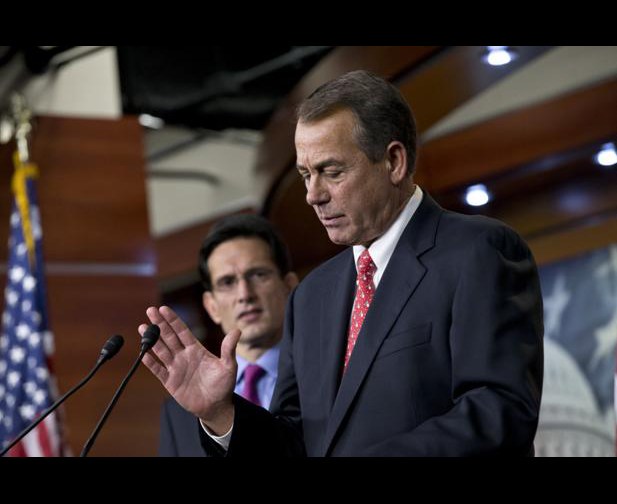
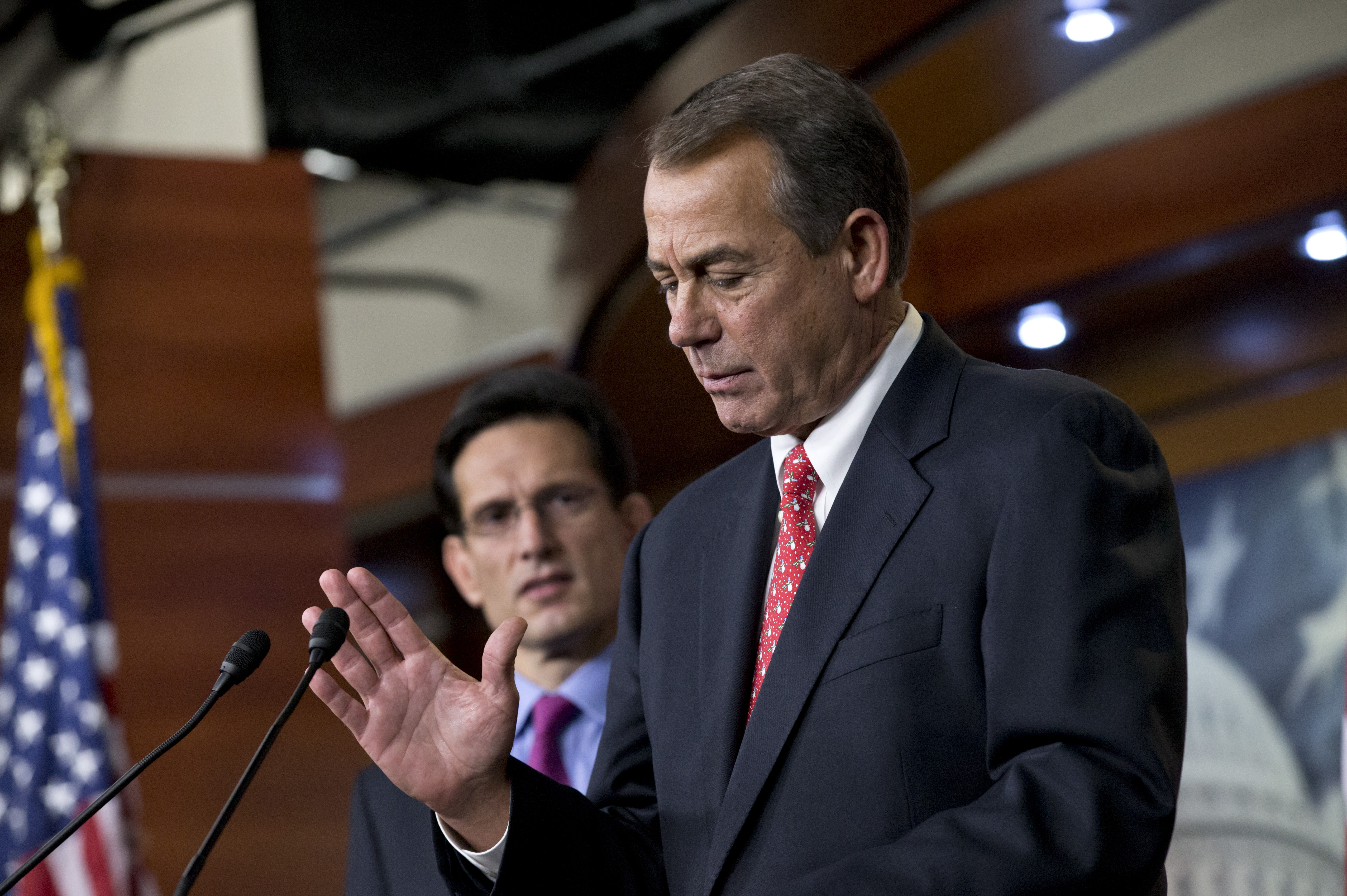
 House Speaker John Boehner, R-Ohio, joined by House Majority Leader Eric Cantor, R-Va., left, speaks to reporters about the fiscal cliff negotiations at the Capitol in Washington. Lawmakers probably could enact a compromise quickly and easily if Republican leaders let Democrats provide most of the votes. By trying to pass his plan with GOP votes alone, Boehner could afford to lose only two dozen of the 241 House Republicans. His private head-count found nearly twice that many defectors, party insiders say, forcing Boehner to give up without seeking a formal vote.
WASHINGTON – In case the public weren’t frustrated enough over Congress’ failure to resolve the “fiscal cliff,” consider this: lawmakers probably could enact a compromise quickly and easily if Republican leaders let Democrats provide most of the votes.
That would give Democrats a bigger voice in the bargain, of course, which the Republican-led House is loath to do. That’s why about 10 percent of the House’s members – staunch anti-tax conservatives – were able to thwart Speaker John Boehner’s bid to pass a narrowly crafted bill that might have strengthened his bargaining hand.
By trying to pass his plan with GOP votes alone, Boehner could afford to lose only two dozen of the 241 House Republicans. His private headcount found nearly twice that many defectors, party insiders say, forcing Boehner to give up without seeking a formal vote. The miscalculation left negotiations in disarray as the Dec. 31 deadline nears.
The House’s 192 Democrats essentially sat on the sidelines, bit players in last week’s House drama.
House speakers traditionally advance major legislation only if most of their party’s members support it. It’s called the “majority of the majority” rule of thumb. But past speakers, including Democrat Nancy Pelosi and Republican Dennis Hastert, have ignored the rule at times.