
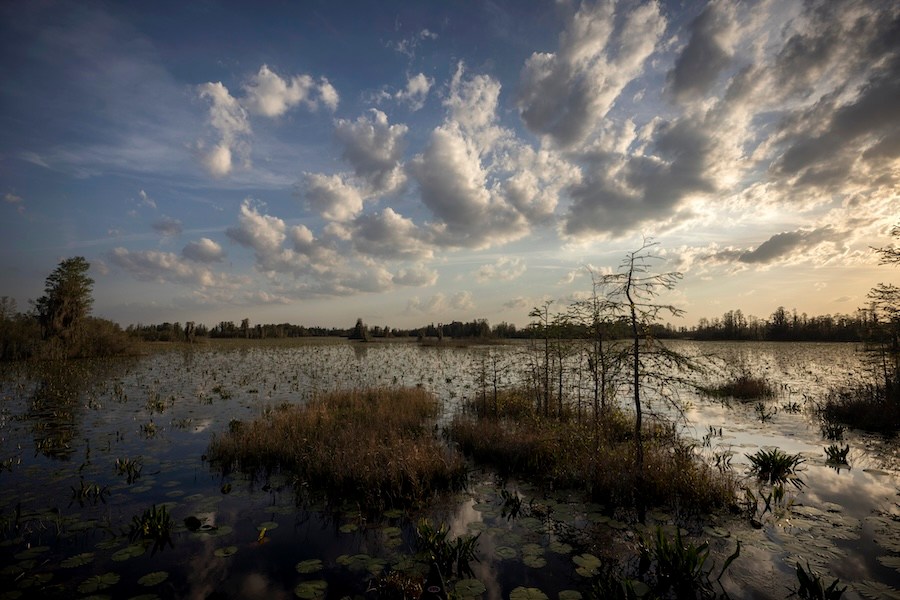
Many scientists feared a now-scuttled plan to mine next to the Okefenokee Swamp would alter the water levels of the refuge.
The mining company itself disputed those claims, arguing the water it planned to pump from the underlying aquifer would have a negligible impact on the swamp. By releasing preliminary permits for the mine in early 2023, the Georgia Environmental Protection Division seemed to agree.
Now, a new study published last week raises questions about the company and the agency’s conclusions, and the impact any future mining proposals could have on the pristine wetland.
University of Georgia researchers have found that the Okefenokee is more closely tied to the vast aquifer beneath it, suggesting changes in or around the swamp could affect groundwater supplies relied on by millions of people.
The findings were published Dec. 9 in the peer-reviewed scientific journal “Environmental Research: Water.”