
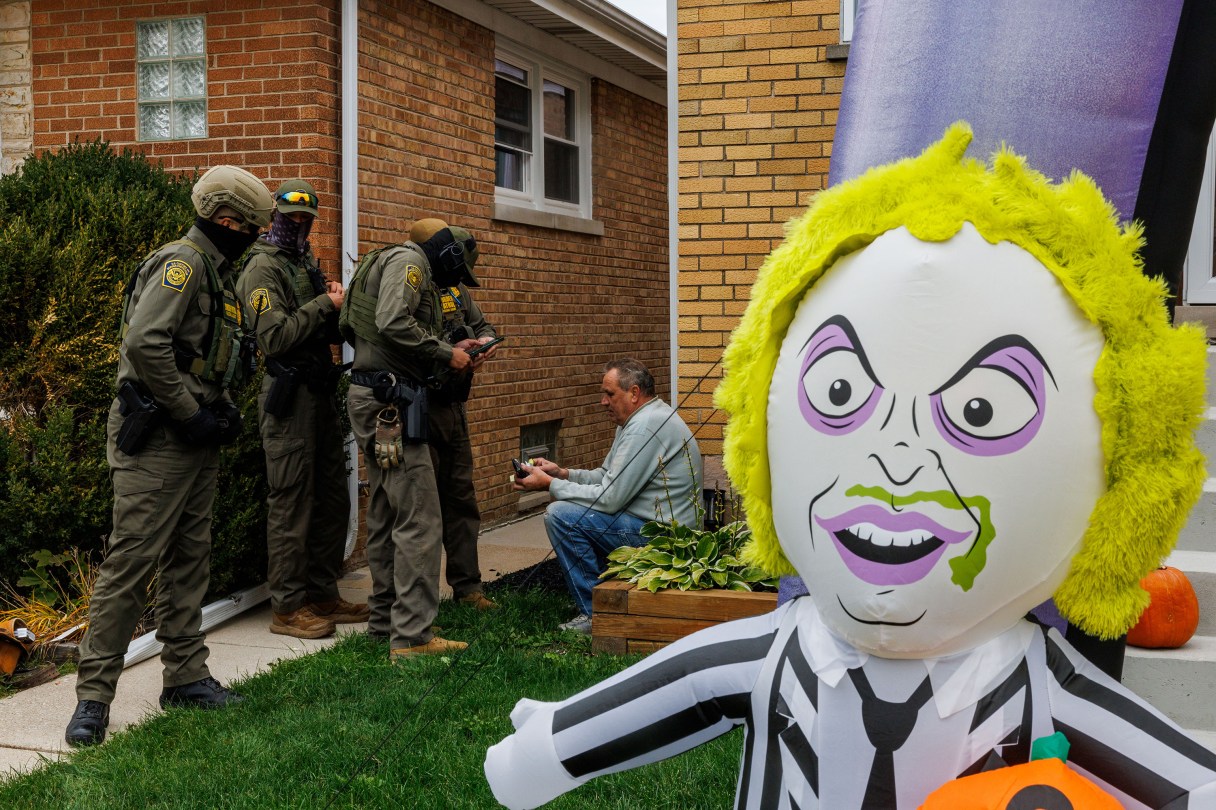
In my leafy Chicago suburb, on Oct. 31, our normally bustling evening of trick-or-treating was eerily quiet. Federal immigration agents’ aggressive and terrifying actions on Halloween meant hundreds of children stayed home, their families too petrified to escort their pint-size dinosaurs and superheroes door to door.
Federal agents are traumatizing a generation already scarred by COVID-19. Community raids have prompted school lockdowns and nervous texts from students as helicopters hover above, teaching students troubling lessons about government. Through more than a decade of research, I’ve seen just how deeply young people internalize lessons from moments such as these — often far more than adults expect.
As a former social studies teacher and now professor of education, I am deeply alarmed by the civic lessons our youth are learning. In a political landscape in which teachers are increasingly reluctant to offer basic instruction about American government, the scenes on the ground are filling the void.
Students are learning that protesters exercising their First Amendment rights will be tear-gassed. They are learning that U.S. citizens will be detained. They are learning that federal agents will operate above the law and that government officials will make false claims about their activities.
When I teach my students — future social studies teachers — about different ways to approach their instruction, I introduce them to one method scholars call “Lived Civics,” which honors the political knowledge young people hold based on their experiences, which often contradicts the idealized lessons about democracy taught in schools.