
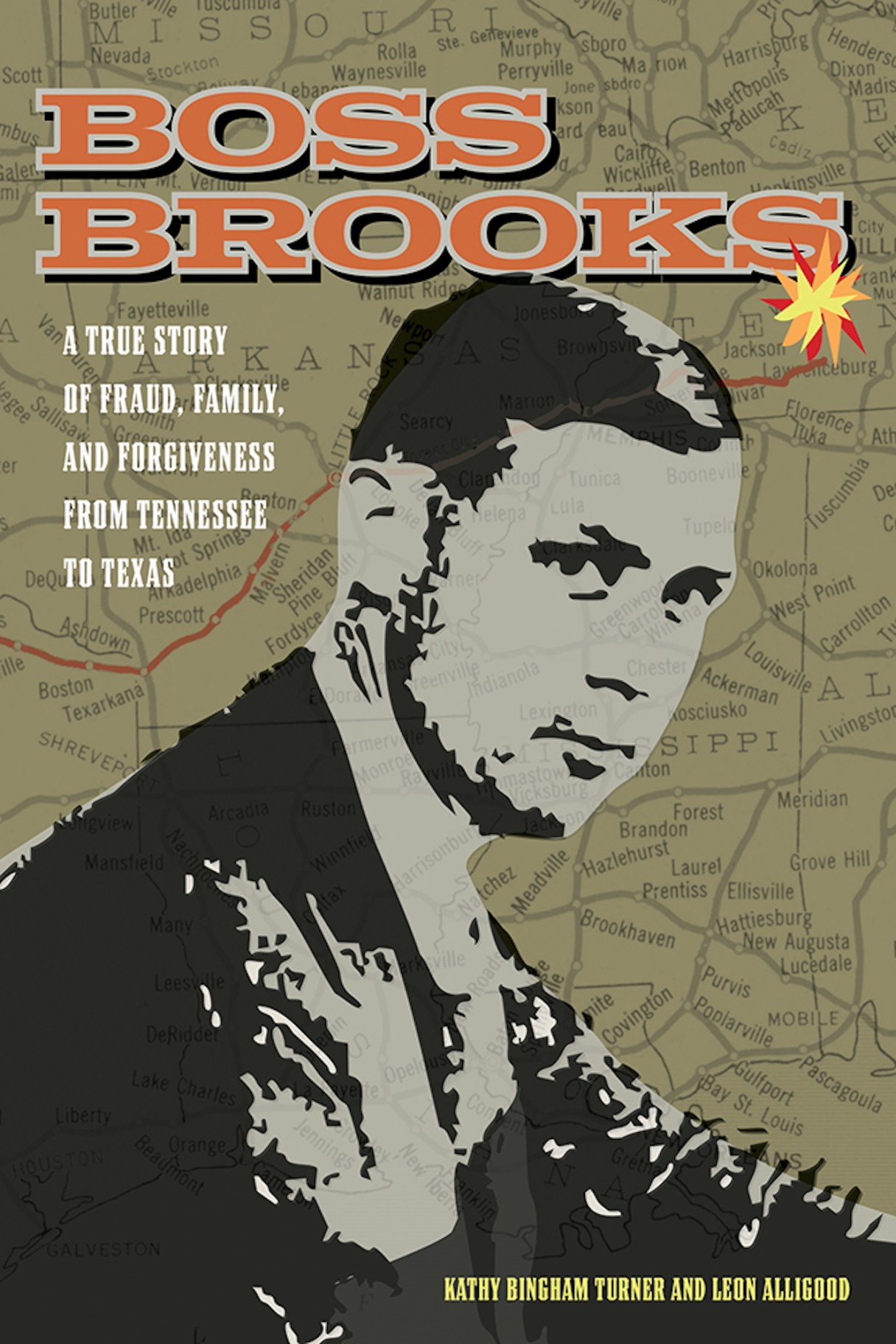
“Boss Brooks: A True Story of Fraud, Family, and Forgiveness from Tennessee to Texas” By Kathy Bingham Turner and Leon Alligood (University of Tennessee Press, 232 pages, $24.95)
“Boss Brooks” belongs firmly in the truth-is-stranger-than-fiction canon. It is a decidedly untidy Southern story that is both sensational — a banker fakes his own death using a corpse stolen on a dark winter night — and quietly devastating, especially for the family he left behind.
At the center of the book is its namesake, Lytle Boss Bingham, who, in 1931, was a part-time farmer and full-time head cashier for the Hardin County Bank in tiny Saltillo, Tennessee. A family man who shared three kids with his wife, Mary, Boss, as he was known, was a trusted community member and man about town. But a capable banker he apparently was not. After making a series of decisions that left his own account overdrawn and the bank insolvent, Boss knew he faced both financial ruin and potential prosecution if he did not disappear. The decision he made next fractured two families across nearly a century.
Kathy Bingham Turner, Boss’ granddaughter who is now retired after a career as a corporate human resources director at The Tennessean and beyond, spent years researching what she and co-author Leon Alligood characterize as “The Lie,” a carefully orchestrated deception involving friends, family and a community willing to believe the story it was told.

The opening scene in Shady Grove Cemetery is cinematic but restrained. The authors don’t so much sensationalize the act of grave snatching as grapple with it, asking readers how otherwise decent people could convince themselves to engage in something so profoundly twisted. That moral unease is part of the book’s steady undercurrent. Despite stealing a body and setting it alight in his car to fake his own death — and then subsequently leaving his family, of course — Boss is neither fully condemned nor exonerated.