
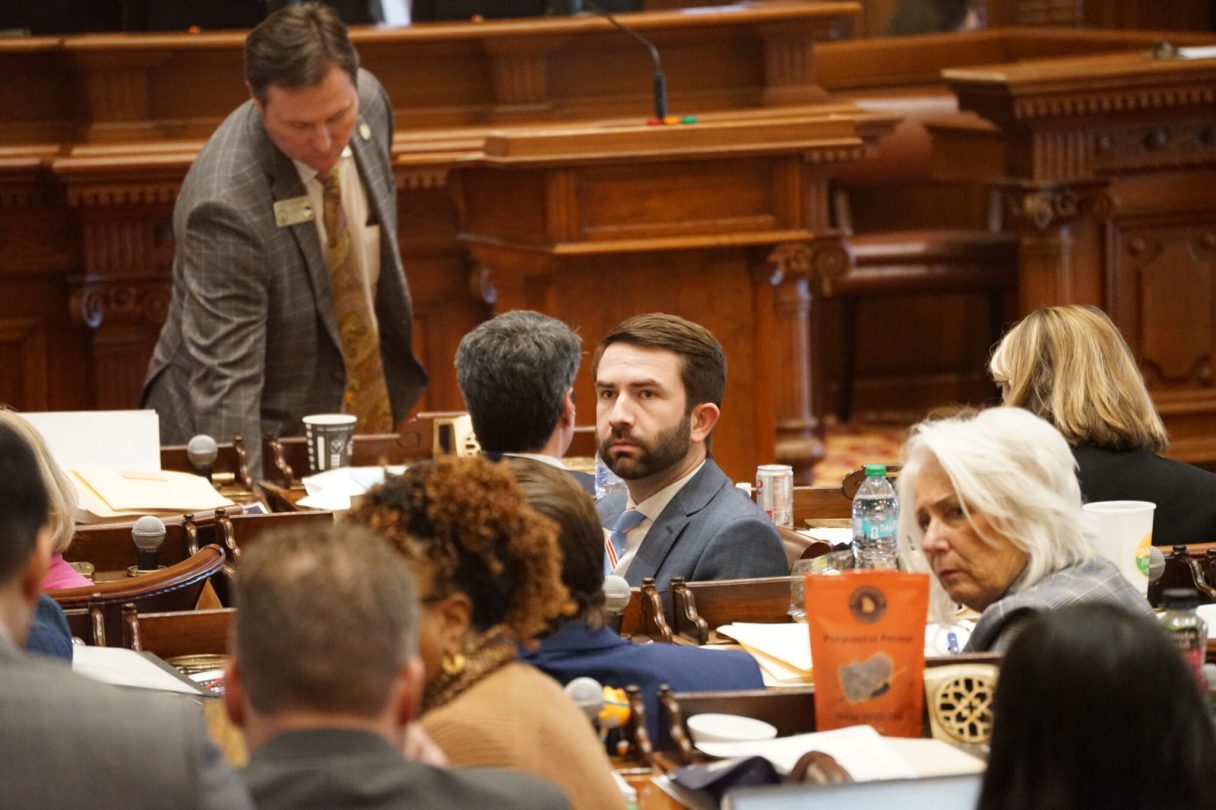
The Georgia House of Representatives passed a measure Wednesday that could allow property owners to sue city and county governments if they fail to enforce state laws related to homelessness, public safety and immigration.
House Bill 295, sponsored by Athens Republican Rep. Houston Gaines, passed with a 98-75 vote, clearing the lower chamber just ahead of a key legislative deadline. It now moves to the Senate for consideration.
The bill targets local governments that may have “pervasive, systemic or organized” practices that decline to enforce laws against illegal public camping, loitering, drug possession, shoplifting or the state’s ban on “sanctuary policies” that limit cities from working with federal immigration authorities. If cities or counties are found liable, property owners can sue for financial harm from lost property value.
“If a local government refuses to do its job, we’re going to hit that local government in the pocketbook and put the money back in the hands of the property owners who have been harmed,” Gaines, who is also a candidate for the 10th Congressional District, said during floor debate.
Todd Edwards, director of governmental affairs for the Association of County Commissioners of Georgia, said the organization has noticed a “disturbing trend.” There has been a wave of bills in recent years that waive local governments’ sovereign immunity, which is a standard that generally protects government entities from being sued. Edwards said he sees Gaines’ bill as part of that trend.