
Thursday, October 29, 2026Oct 29

This story is free to read.

Why Pakistan has emerged as a mediator between US and Iran

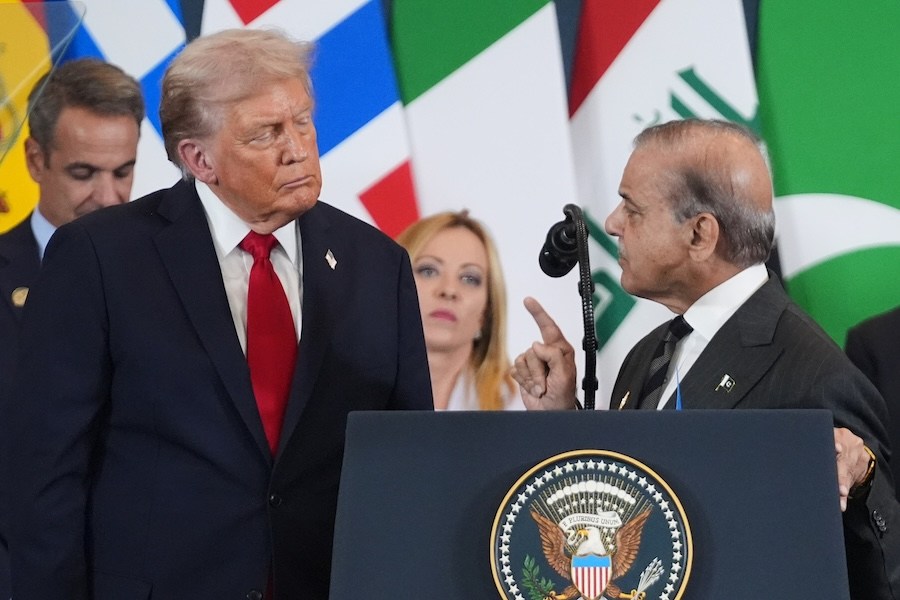
FILE - President Donald Trump, left, listens as Pakistan's Prime Minister Shehbaz Sharif speaks during a summit to support ending the more than two-year Israel-Hamas war in Gaza after a breakthrough ceasefire deal, on Oct. 13, 2025, in Sharm El Sheikh, Egypt. (AP Photo/Evan Vucci, File)
FILE - President Donald Trump, left, listens as Pakistan's Prime Minister Shehbaz Sharif speaks during a summit to support ending the more than two-year Israel-Hamas war in Gaza after a breakthrough ceasefire deal, on Oct. 13, 2025, in Sharm El Sheikh, Egypt. (AP Photo/Evan Vucci, File) FILE - President Donald Trump, left, listens as Pakistan's Prime Minister Shehbaz Sharif speaks during a summit to support ending the more than two-year Israel-Hamas war in Gaza after a breakthrough ceasefire deal, on Oct. 13, 2025, in Sharm El Sheikh, Egypt. (AP Photo/Evan Vucci, File)

ISLAMABAD (AP) — As fears of a wider regional conflict escalate following U.S. and Israeli strikes on Iran that began in late February, Pakistan has emerged as an unexpected mediator, offering to help bring Washington and Tehran to the negotiating table.

Islamabad isn’t often called on to act as an intermediary in high-stakes diplomacy, but it’s stepped into the role this time for a number of reasons, both because it has relatively good ties with both Washington and Tehran and because it has a lot at stake in seeing the war resolved.

Pakistani government officials have said that their public peace effort follows weeks of quiet diplomacy, though they have provided few details. They have also said that Islamabad stands ready to host talks between representatives from the U.S. and Iran.

Here’s what to know about Pakistan’s mediation effort:

Pakistan helped US deliver 15-point plan to Iran