
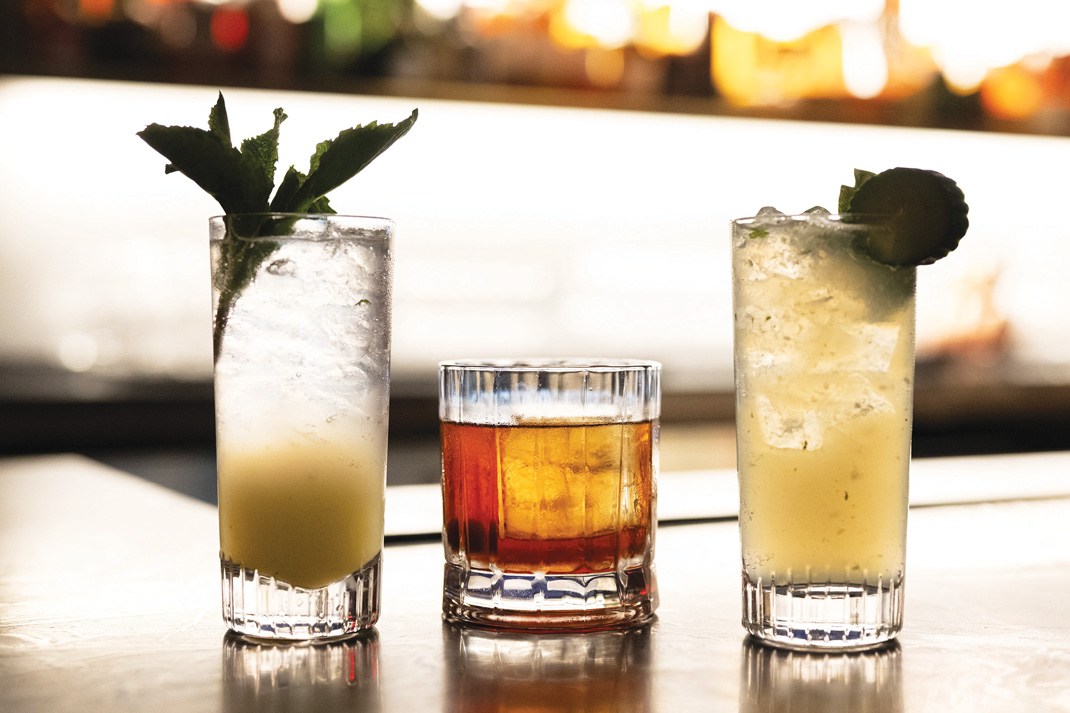

Whether a Chattanooga hospitality brand has 1,500 employees, like Vision Hospitality Group, or only a handful of employees, like Plant Power Cafe and Juice Bar, the sector needs people who like people.
“If you can’t communicate with people, work with people that see things differently, look at it from their point of view and try to find the win-win, you’re going to fail in hospitality,” said O’Mally Foster, chief people officer at Vision, which owns more than 40 hotels in nine states.
Interpersonal skills have taken a hit after the pandemic and thanks to our technological devices, Vision has struggled to find employees who communicate well with others, Foster said.
In the restaurant space, Plant Power Cafe and Juice Bar is working to keep community intact despite changes, including by introducing new lounge and bar nights on Fridays and Saturday.
“Every time I turn around, someone is coming with a new idea for a restaurant, even kiosks taking orders for the customers,” said Aurellia Alexandre, who opened the vegan spot on Lee Highway in 2016. “But we’re kind of old-fashioned. We like talking to our customers and getting to know them.”
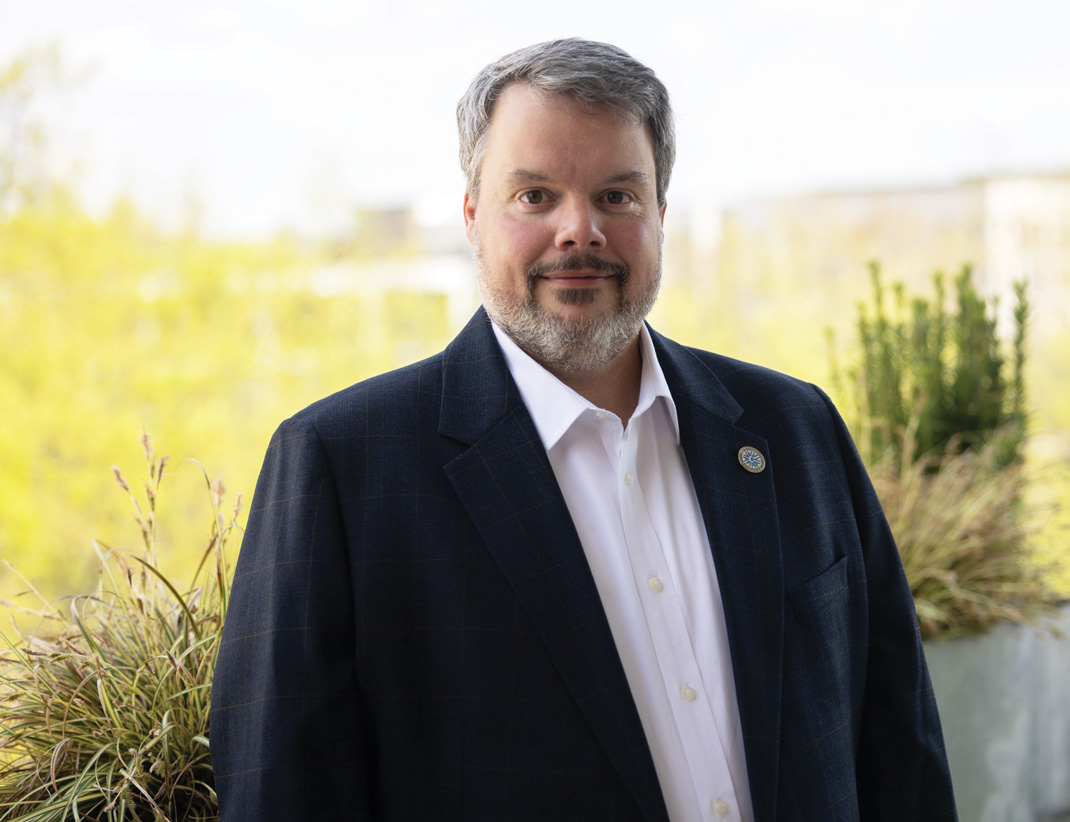
O’Mally Foster, Chief People Officer at Vision Hospitality Group
How are you using technology to improve your business?
We have a thing internally called Vision View, which is our internal electronic communication tool. Our industry is plagued with phishing attempts. So CEO Mitch Patel and I worked together and came up with a great idea. I said, “Why don’t we create a video that you’re actually talking to the team and saying, ‘Look, I’m Mitch Patel. I’m not gonna call you and ask you to go get gift cards’?” It’s helped us utilize technology to fight the criminals who are using technology right now.
How has the culture changed at Vision since you’ve been there?
It’s only strengthened. We now have an internal platform we call The Hub, where every Vision associate can go and communicate. If somebody does something now in Colorado, you see people in Florida or Kentucky or here in Tennessee going, “Great job. Keep up the great work. I’m so proud of you for hitting that anniversary.” So it’s not just strictly coming from Chattanooga. It’s coming from the entire organization. A good side effect from COVID was we had to learn how to be much more connected from a distance. It is so amazing to see how the technology has helped us.
How much are the culture changes targeted at reducing turnover?
It’s bigger than that. If you truly have a culture that somebody understands and believes in, that is where people want to gravitate to, and then they don’t leave. A byproduct of that is lower risk of losing someone, but turnover is inevitable. The greater piece is that it attracts the right people to the organization, and to me, that’s the more important thing. We are one team with one vision. Our culture guides us through that. Our values help to keep and maintain that culture.
What sets HR work in hospitality apart from HR work in other sectors?
In hospitality, everything that we do is exactly mirrored with what happens at our properties. It’s all based on hospitality. We don’t have a toaster that somebody walks out the door with. They’re walking away with an experience. So if they had a long check in because somebody didn’t show up, if they had a dirty room and had to wait on it to be cleaned because someone didn’t show up, the experience is what makes it so different. From an HR perspective, we always have to be thinking about the internal customer perspective the same as our external customer perspective.
What is a major challenge for you right now?
Our challenge that we are finding more and more now is where people are really lacking the skills to have personable interactions and know how to deal with people and how to work with people. We can train someone to do what we do, but the part that you can’t train is how people interact with people who see things differently. That used to be something that people learned, because in class, you weren’t looking on a tablet, or you weren’t talking to a screen; you were interacting constantly, because that’s the only way you communicated.
How are you all addressing the challenge of finding young people who are good at interpersonal communication?
That’s the $50 million question. Everyone struggles with that in our industry. It is a constant focus for us. You just have to keep digging, and you have to keep staying on top of that, because if you don’t, somebody else is going to find them. It’s hard for us to just get a lump of coal to find out if there’s a diamond in there.
We’re looking at different ways to do interviews. We now have platforms where they’ll send texts to people. We’re really focusing on training our managers to understand, you can’t just have one approach. You have to have a multi-faceted approach to talk and get people in the door, because it’s a changing environment.
How is AI changing your job?
When we do training materials, I may take a bloated piece of training that came from the outside world and say, how can I make this much more digestible and much more consolidated to help me get that information out to someone who may need to hear this information, but not in the quantity that I have? People learn in snippets now. AI has helped to facilitate that much quicker. It is so nice to be able to take that tool and say, help me create this for them.
What advice do you have for a young person going into hospitality?
Really honing in on their skills of interpersonal relationships. They don’t have to go take coursework on this, but truly just with their friends, with their family members, with whoever they feel connected with, to really ask, how do I communicate? I think this would be beneficial to any company, but specifically for us, is learning who you are, knowing who you are, and being able to utilize what strengths you have to better connect with people. I don’t want every manager out there to be robotic and identical.
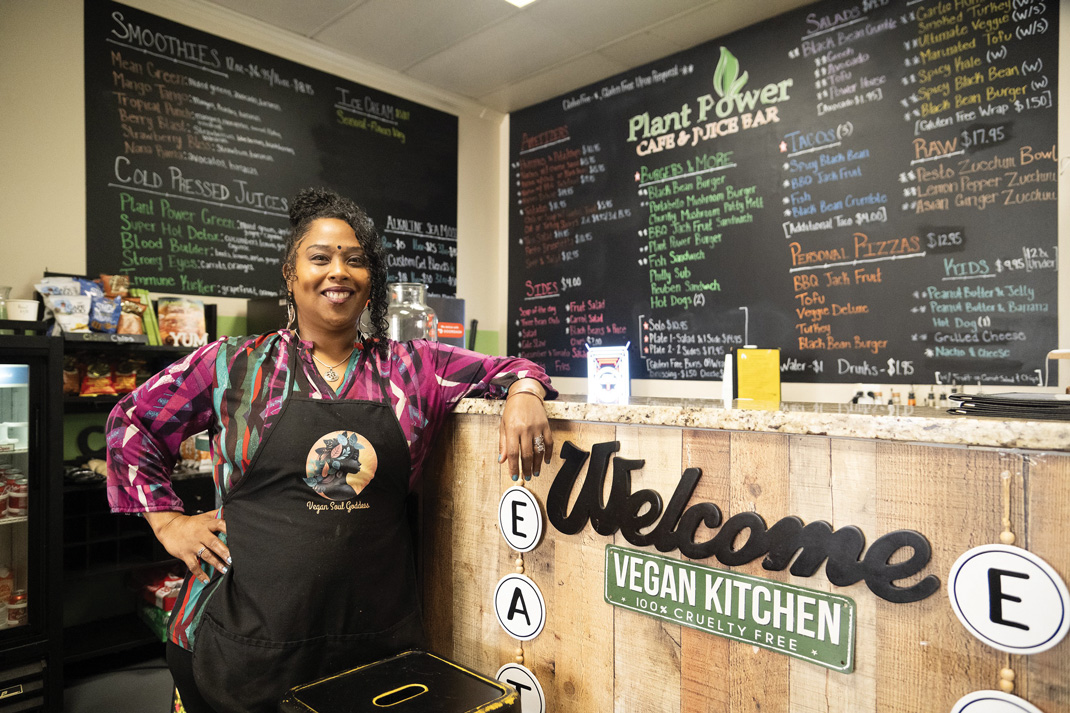
Aurellia Alexandre, Owner of Plant Power Cafe and Juice Bar
What sets Plant Power apart as a vegan restaurant?
When I created the restaurant, it was to get the majority of the people to come in and not be pushing vegan food away. Everybody thinks vegan food tastes plain, tastes like a piece of paper. When I opened up the restaurant, I said, let’s create a menu that’ll be good for everyone. We have the biggest vegan menu in Chattanooga.
You’ve mentioned you may be putting products in grocery stores soon. What’s that going to look like?
When it goes into the store, it’ll be under the Vegan Soul Goddess title, and we’ll be trying to put our barbecue jackfruit in there, and our black bean burgers, some of the major things that the customers really enjoy, along with our dressings that we make in house so we can share it. It could be statewide. Hopefully, sometime next year, if not the end of this year, we’ll have at least one product inside the grocery stores.
Has the surge in takeout and pick-up been a major change for you?
It has, because we use DoorDash. A lot of people are just not wanting to come out. They like the convenience of the food coming to them. I have noticed an increase in that market. Then a lot of people still call in and they pick up their order and take it home and enjoy it at home. I think the majority of our customers do that.
How do you feel about fewer people eating in-person?
We can go either way. We enjoy our customers coming in and getting their responses and talking to them as they eat their food. We kind of miss getting that hands-on review.
I also miss them coming in because we’re not only just a restaurant, but a place of education. A lot of people come in after their doctors tell them they need to go plant-based. We miss being able to communicate and talk to those customers one-on-one to see how we can assist them personally.
What challenges come with maintaining the largest vegan menu in the area?
It can be costly. And then on top of that, we’re putting specials on top of the regular menu. Every time we brought a special in, customers would say, you need to keep that on the menu. It got to the point where every special became a regular menu item, and it got larger and larger. We have no more space on the blackboard. Now we have another little light-up board in front of the cash register.
What piece of advice do you have for a younger person who’s interested in starting a restaurant?
I just jumped into it. I would tell a younger version of me to get more mentorship, to get more information. There were a lot of things I didn’t know until midway through the first year, like I’m supposed to do this with taxes and how to get an LLC. Before jumping into something, do your research and get mentorship, because it’ll help you along the way.
Do you have plans for celebrating your 10th anniversary this year?
I have to talk to the family, because it’s run by the family. They’ve been here 10 years, too. This is a milestone, so I need to talk with them and see what we plan to do.
READ MORE
* Playbook 2026: How Chattanooga’s business leaders are preparing for what comes next
* Next frontier: Technology affecting all facets of business in the Scenic City
* Changing checkout: After several sluggish years, Chattanooga retailers are seeing growth
* Production line: The Scenic City continues to build on its manufacturing past
* Shifting gears: Chattanooga’s automotive sector sees challenges but continues to innovate
* Center stage: Chattanooga entertainment options are major economic driver
* Breaking ground: Chattanooga developers harness new tech to build Scenic City of tomorrow
* Coverage area: Technology driving Chattanooga’s insurance industry but human element still key
* Critical care: Chattanooga health care industry at the forefront of advances in medicine