
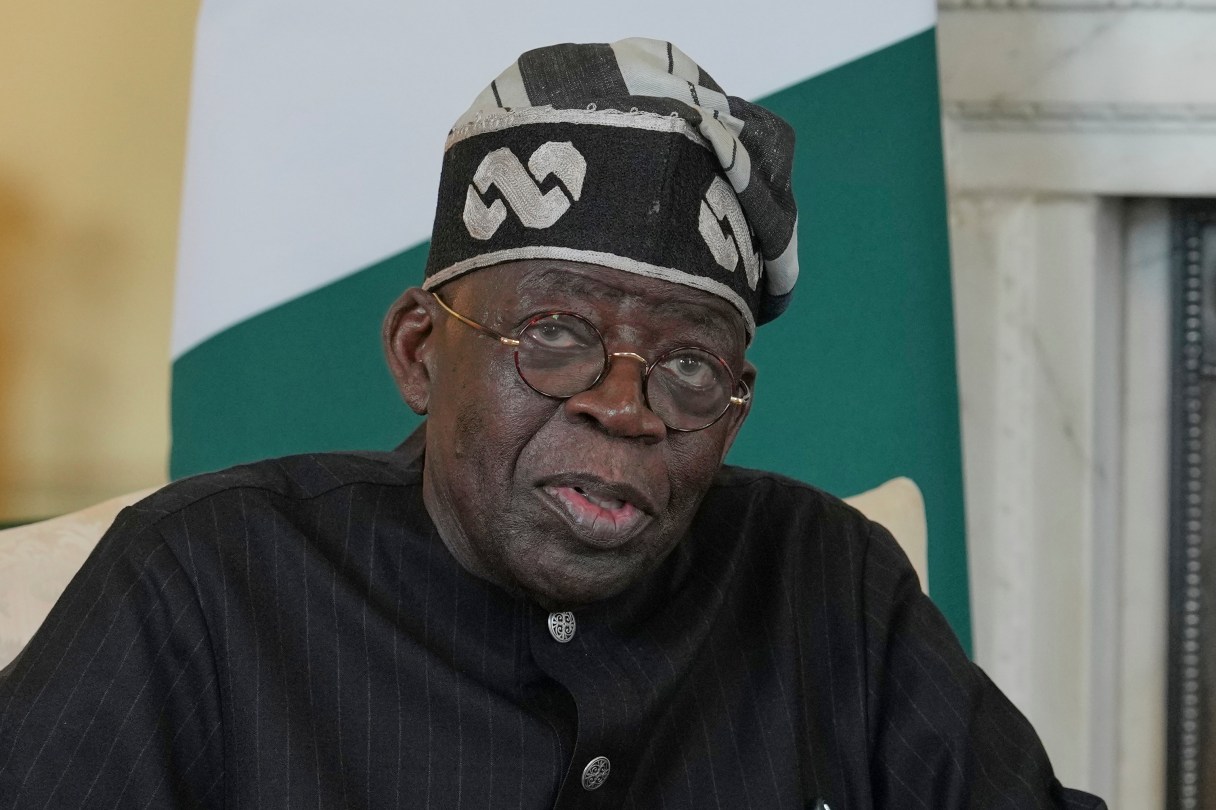
WASHINGTON (AP) — U.S. and Nigerian forces killed a leader of the Islamic State group in Nigeria in a mission carried out Friday, U.S. President Donald Trump said.
Trump announced the joint operation in Africa’s most populous country in a late-night social media post. He said Abu Bakr al-Mainuki was second-in-command of the Islamic State group globally and “thought he could hide in Africa, but little did he know we had sources who kept us informed on what he was doing.”
Al-Mainuki was viewed as the key figure in IS organizing and finance, and had been plotting attacks against the United States and its interests, according to an official who spoke on condition of anonymity because they were not authorized to share sensitive information.
Nigerian President Bola Tinubu confirmed the operation and said Al-Mainuki was killed alongside “several of his lieutenants, during a strike on his compound in the Lake Chad Basin.”
The joint operation is the latest by both countries since their new security partnership that kicked off last year after Trump claimed Christians were being targeted in Nigeria’s security crisis and threatened U.S. military intervention. Residents and security analysts have said Nigeria’s security crisis affects both Christians, predominant in the south, and Muslims, who are the majority in the north.