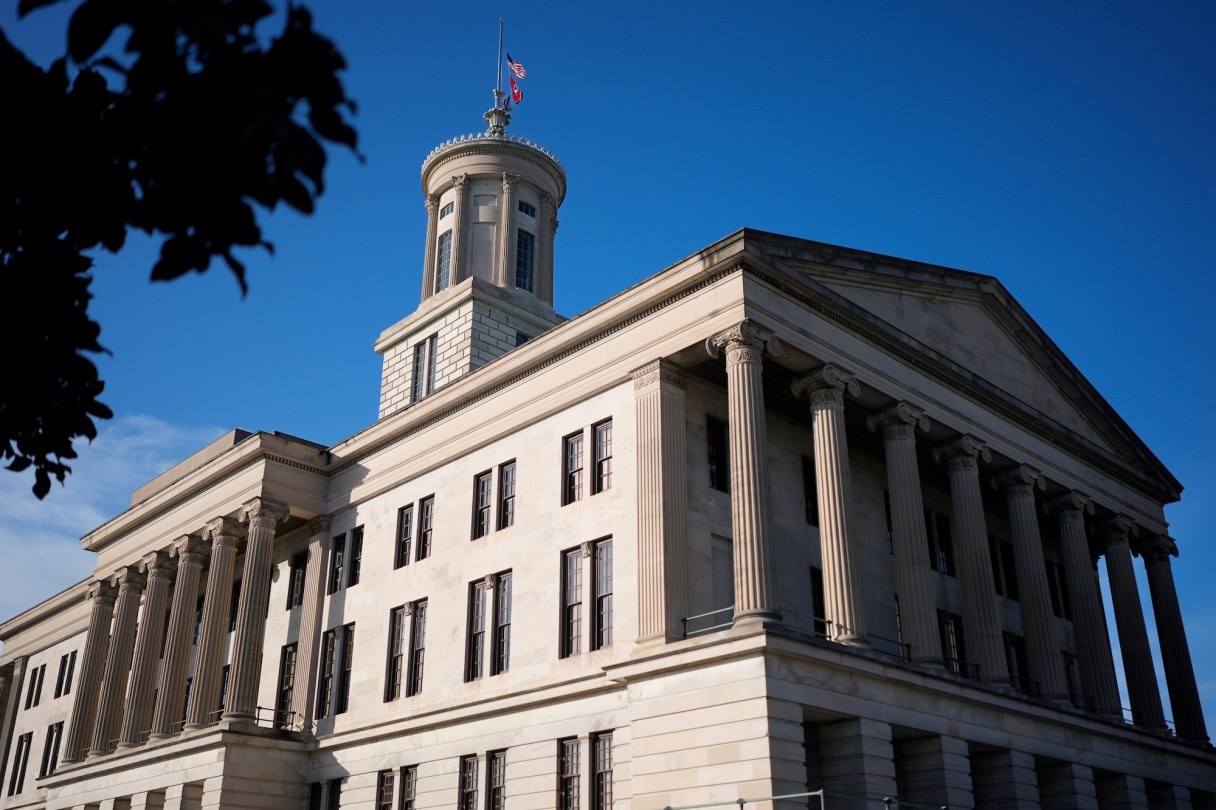
As America marks 250 years, Tennessee has an opportunity to reflect on its role in shaping our nation’s civic story and what comes next. At ThinkTennessee’s second annual Policy Forum on Sept. 9, we’ll celebrate that history while looking ahead to the challenges and opportunities facing our state.
Before Tennessee became known for music or as the Volunteer State, it helped reshape American democracy. The era of Tennessee’s Andrew Jackson introduced the enduring — if long unrealized — idea that government should serve ordinary citizens, not just the wealthy.
Nearly a century later, Tennessee cast the deciding vote to ratify the 19th Amendment, securing women’s right to vote. In the decades that followed, Cordell Hull laid the foundation for the United Nations, Tennessee’s cities became training grounds for the leaders of the Civil Rights Movement, and Howard Baker modeled principled, bipartisan leadership during Watergate. Time and again, Tennessee has helped expand electoral participation, strengthen our democracy and shape our nation’s civic story.
Today, Tennessee stands at another defining moment. Our state is preparing to elect its first new governor in eight years amid unprecedented growth. Rising housing costs, growing demands on transportation and energy infrastructure, workforce shortages and rapid demographic change will shape Tennessee’s future for decades.
Meeting this moment requires more than partisan talking points. It requires thoughtful civic dialogue, rigorous analysis and leaders willing to learn from one another. Those require institutions that intentionally bring together people with different perspectives before decisions are made.
Last year’s inaugural forum demonstrated the appetite for that kind of engagement, bringing nearly 400 Tennesseans together for a full day of policy conversations.
This year’s forum reflects the reality that Tennessee’s biggest challenges are deeply connected. Housing affects access to education. Transportation determines access to jobs. Childcare influences workforce participation. Energy shapes our economic competitiveness.
The day will open with economist Marianne Wanamaker’s look at the economic and demographic trends reshaping Tennessee, followed by a conversation among county mayors about leading through historic transition. With more than 30 new county mayors taking office this year, it is a timely discussion.
The forum’s lunchtime session will feature Tennessee State Museum Executive Director Ashley Howell, author Elaine Weiss (“The Woman’s Hour: The Great Fight to Win the Vote”), and National Civil Rights Museum President Russ Wigginton in conversation on where our state’s history has brought us and how we build on it. The event will close with former U.S. Reps. Jim Cooper and Zach Wamp, a Democrat and a Republican who spent eight years serving Tennessee together in Washington, in a conversation about finding common ground across partisan divides.
Good public policy isn’t produced in isolation. It is strengthened when people with different experiences, expertise and perspectives come together to test ideas, challenge assumptions and find common ground. At ThinkTennessee, we believe creating that civic space is one of our most important responsibilities. We hope you’ll join us on Sept. 9.
______
Erin Hafkenschiel is the president of ThinkTennessee.