
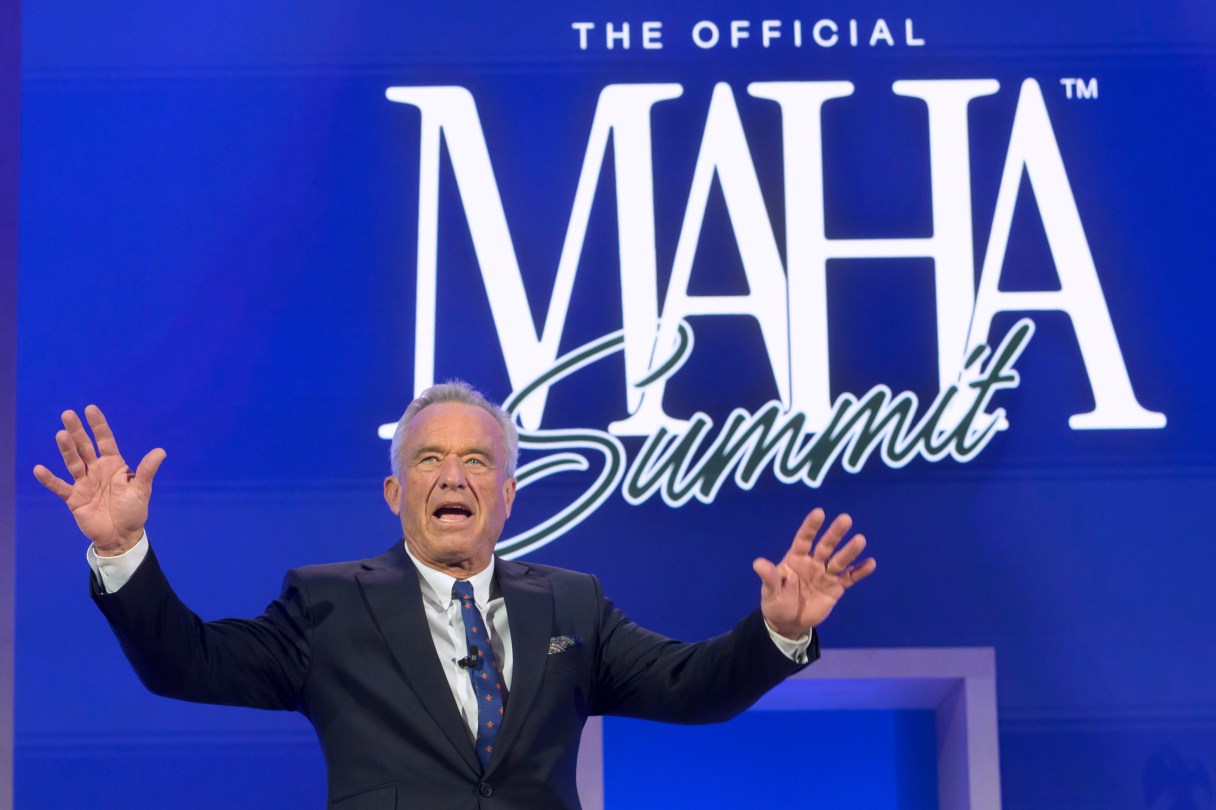
“Bobby Unleashed” is the West Wing’s midterms motto, according to reporting by Politico. But what exactly is Health Secretary Robert F. Kennedy Jr. being unleashed to do? Because the biggest MAHA policy reforms have run into that familiar Washington foe: old-fashioned bureaucracy. And while many Americans still do want to “Make America Healthy Again,” there are now plenty of other concerns competing for voters’ attention.
Since the start of the year, Kennedy has visited 19 states, touting his “take back your health” campaign and rallying with GOP governors and members of Congress.
Meanwhile, MAHA retains broad appeal. More than four in 10 Americans support it, according to KFF polling. Many of its core tenets — including concern about chemical additives in foods — generate upwards of 75% approval.
That’s because America’s health crisis is one of the few things you don’t have to take an expert’s word for; you can see it with your own eyes. You can look at the back of a package of something as simple as sweet potato fries and see a dozen or more unpronounceable ingredients.
Even among voters who explicitly identify as “non-MAHA,” a majority support the following MAHA pillars: cleaner diets and more fitness (82%); reducing exposure to harmful chemicals (76%); and limiting the influence of pharmaceutical companies (56%).