
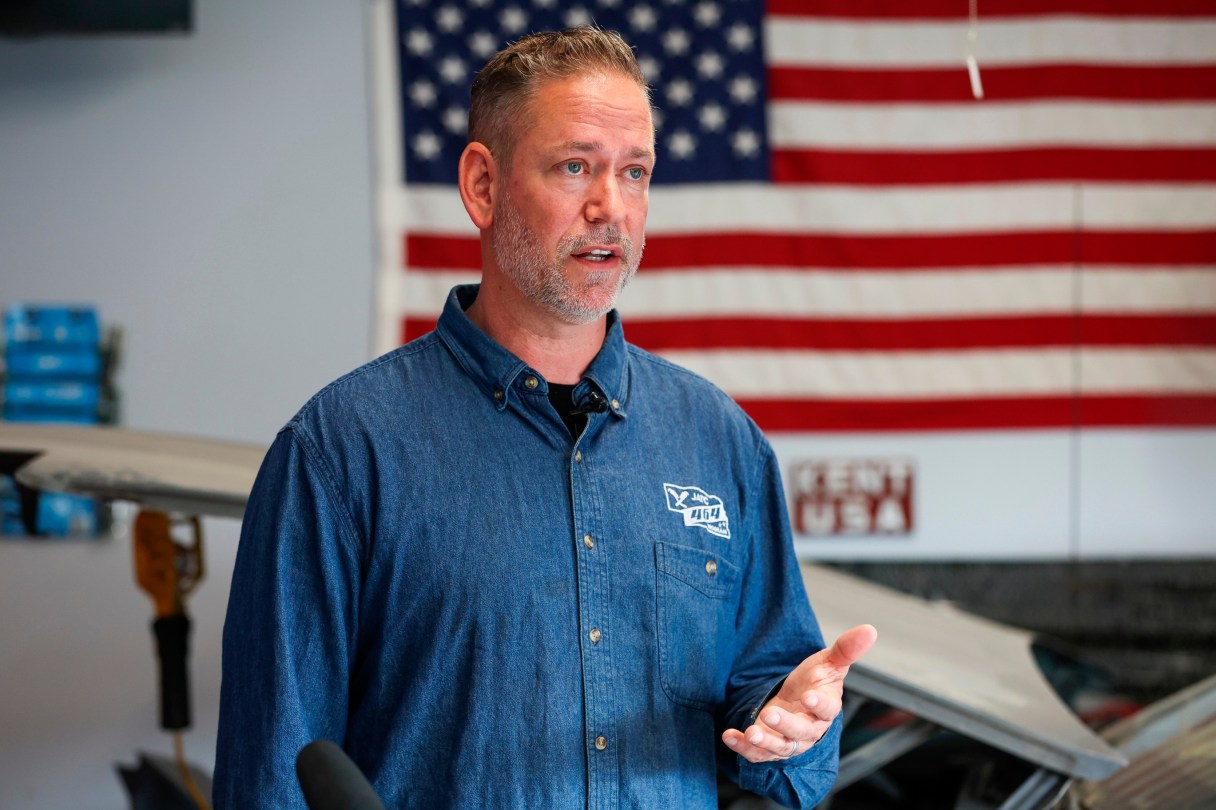
Sam Forstag recently joined a text chain to better keep up with a few friends. There’s nothing unusual about that, except Forstag’s texting buddies are a group of Democratic candidates for the U.S. House who share one unusual characteristic: They have spent years in blue-collar jobs.
November’s election will test whether Democrats can address one of their greatest electoral challenges — winning over more working-class voters — by nominating more working-class candidates. Improving among voters without a four-year college degree is crucial to expanding Democrats’ prospects this year and beyond. Working-class white voters represent an outsized share of eligible voters in about two-thirds of the House seats, and most of the Senate seats, that Democrats hope to flip.
The “blue-collar brigade,” as the candidates on the text chain call themselves, includes Forstag, who works as a smoke jumper fighting wildfires and is now running for an open House seat in western Montana. Bob Brooks, who is looking to unseat a first-term Republican in northeast Pennsylvania, worked for 20 years as a firefighter before becoming a union official.
Their common conviction, Forstag said in a recent interview, is that the best way to recover ground among working-class voters who have moved away from the party, especially in the President Donald Trump era, “is by running people from the groups we just lost who can speak to the problems of the people in them.”
Democrats this year have also nominated Rebecca Cooke, who has worked as a waitress, for a competitive House seat in Wisconsin and picked Troy Jackson, a former logger, as their Senate nominee against Republican Susan Collins in Maine (after oyster farmer Graham Platner was swamped by scandal). In Nebraska, the party has coalesced behind independent Senate candidate Dan Osborn, who spent years as a mechanic and union official.