
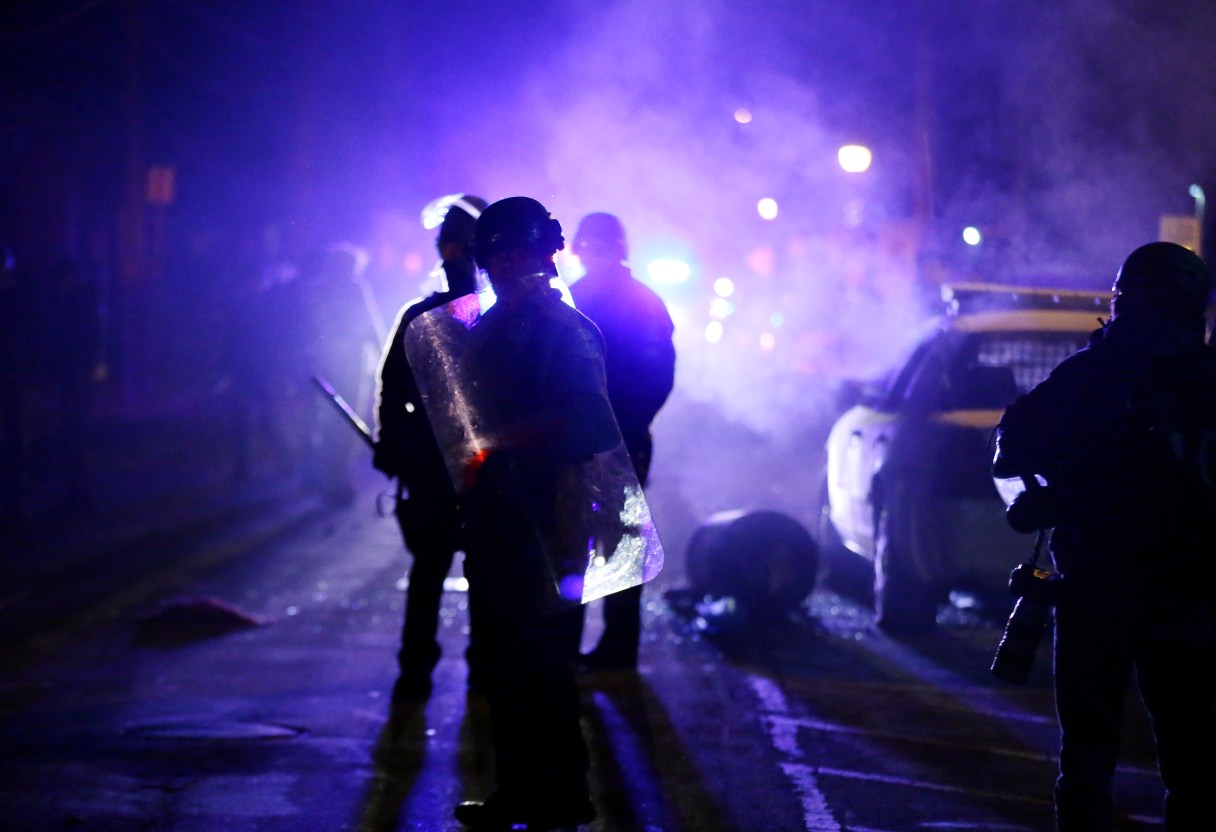
WASHINGTON (AP) – The police response to unrest in Ferguson, Missouri, last summer offers lessons in how not to handle mass demonstrations, according to a Justice Department report that warns such problems could happen in other places roiled by mistrust between law enforcement and the community.
The report fleshes out a draft version made public in June, creating a portrait of poor community-police relations, ineffective communication among the more than 50 law enforcement agencies that responded, police orders that infringed on First Amendment rights, and military-style tactics that antagonized demonstrators.
The final version, which is to be released on Thursday, was obtained in advance by The Associated Press.
The report focuses on the regional police response in the 17 days that followed the Aug. 9, 2014, shooting of Michael Brown, an unarmed black 18-year-old, by a white police officer. In a detailed chronology, it tracks missteps that began almost immediately after the shooting when police wrongly assumed that crowds would quickly dissipate and failed to grasp community angst over the hours-long presence of Brown’s body beneath white sheets in the street.
It details more flaws over the next two weeks, including the improper use of police dogs, armored vehicles and snipers to monitor crowds; the decision by some officers to remove their nameplates; arbitrary orders to demonstrators to keep moving after five seconds; and poor communication among agencies that led to confusion about which policy to follow and who was in charge. Even as rumors spread, police failed to use social media to distribute correct information that could have eased concerns, according to the report.