
Tuesday, November 10, 2026Nov 10

Georgia governor says he will veto religious exemption bill

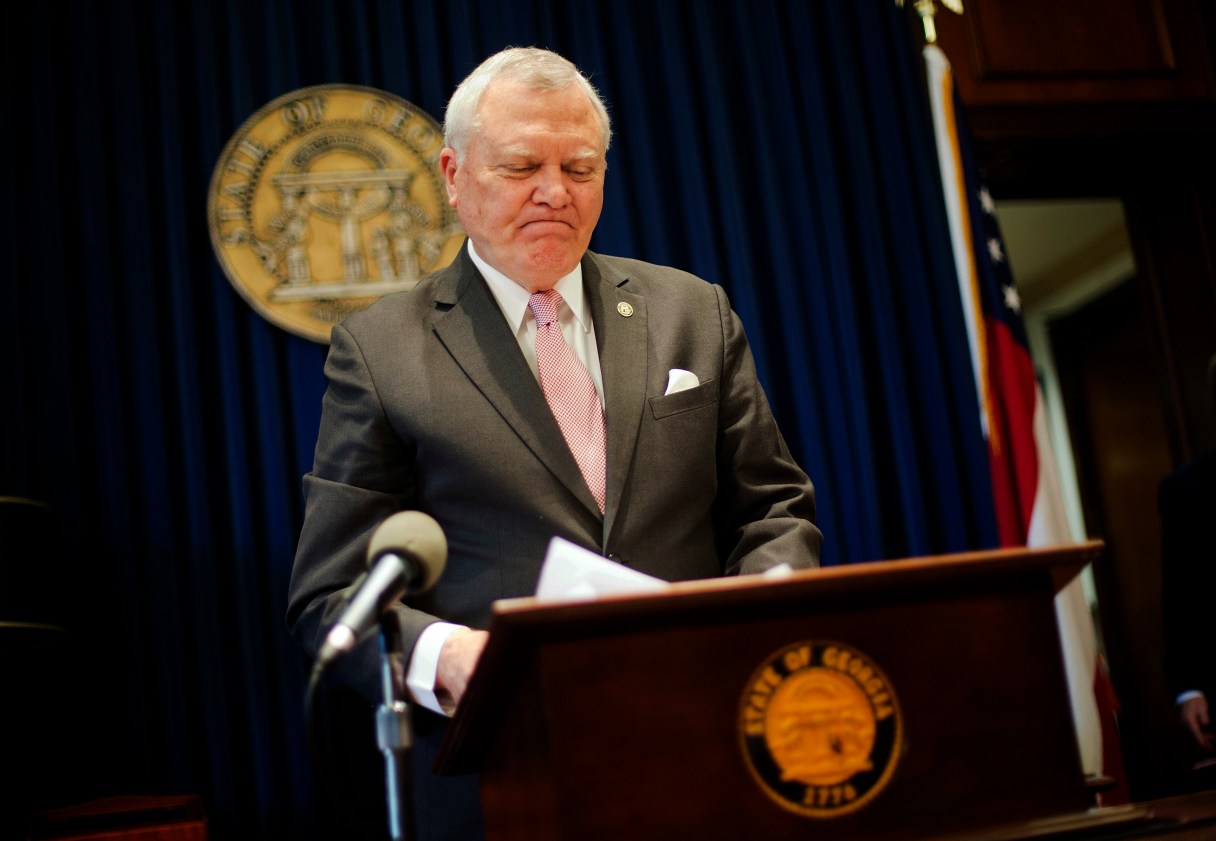
Georgia Gov. Nathan Deal speaks during a news conference as he announces he has vetoed legislation allowing clergy to refuse performing gay marriage and protecting people who refuse to attend the ceremonies Monday, March 28, 2016, in Atlanta. The Republican rejected the bill on Monday, saying "I have examined the protections that this bill proposes to provide to the faith based community and I can find no examples of any of those circumstances occurring in our state." (AP Photo/David Goldman)
Georgia Gov. Nathan Deal speaks during a news conference as he announces he has vetoed legislation allowing clergy to refuse performing gay marriage and protecting people who refuse to attend the ceremonies Monday, March 28, 2016, in Atlanta. The Republican rejected the bill on Monday, saying "I have examined the protections that this bill proposes to provide to the faith based community and I can find no examples of any of those circumstances occurring in our state." (AP Photo/David Goldman) Georgia Gov. Nathan Deal speaks during a news conference as he announces he has vetoed legislation allowing clergy to refuse performing gay marriage and protecting people who refuse to attend the ceremonies Monday, March 28, 2016, in Atlanta. The Republican rejected the bill on Monday, saying "I have examined the protections that this bill proposes to provide to the faith based community and I can find no examples of any of those circumstances occurring in our state." (AP Photo/David Goldman)

ATLANTA (AP) – Georgia Gov. Nathan Deal on Monday said he will veto legislation shielding opponents of same-sex marriage, after a groundswell of opposition from companies threatening to boycott the state if it became law.

The Republican announced his decision during a news conference in his office at the Georgia Capitol, saying, “I have examined the protections that this bill proposes to provide to the faith based community and I can find no examples of any of those circumstances occurring in our state.”

Deal added, “I do not think that we have to discriminate against anyone to protect the faith-based community in Georgia.”

Republican majorities passed the bill to broadly protect people whose actions were rooted in their religion. It also would have protected clergy who won’t perform gay marriages and people who won’t attend a wedding for religious reasons.

Churches and affiliated religious groups could have used their faith as an argument for refusing to serve or hire someone.