
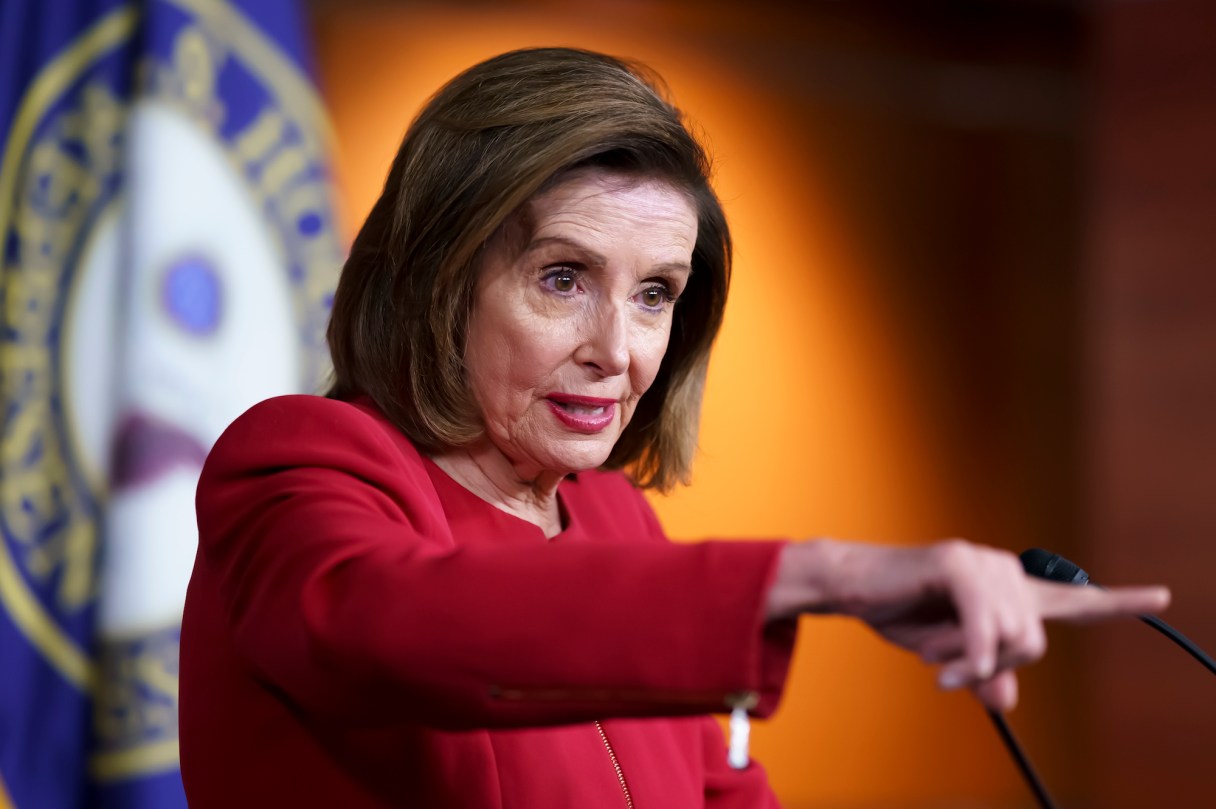
Responding to Democrats in her party who are troubled by the massive $3.5 trillion spending bill that would forever transform America into a debtor nation, Speaker Nancy Pelosi asked a question: “Where would you cut?”
Her question carries with it a conceit held by many contemporary politicians that every government program is sacred and must not be touched. Even suggesting that a decrease in the rate of spending increases can get a member trashed by those with vested or ideological interests in big government. Every government program – sometimes immediately, but inevitably – attracts people with personal or political interests in maintaining it. The programs become like barnacles on a ship, useless, but difficult to remove.
Where to cut? I have long promoted the idea that what is needed is an outside auditor to come to Washington, D.C., and review every program and agency, recommending which ones to keep and more importantly identifying which ones have outlived their usefulness, or were never useful.
While awaiting that day, which likely will never come, I accept Pelosi’s challenge. It isn’t difficult to find places to cut. Virtually everyone knows that entitlement programs must be reformed. Instead, Pelosi and many of her fellow Democrats want to expand them, addicting more people to Washington, apparently hoping that out of gratitude they will always vote for Democrats, making America a virtual one-party nation.
Last March, two reports on the economy were published, but because of the global pandemic they were mostly ignored by the media. One was from the nonpartisan Congressional Budget Office (CBO). In its 2021 Long-Term Budget Outlook, the U.S. received its lowest ranking ever, just 20th in the world in overall economic freedom. It said the reason was a dramatic decline in fiscal health. We are worse in that ranking than 150 other countries. CBO concluded that because of overspending, the national debt has already eclipsed the size of the economy, and if it continues, we will reach 202% of GDP by 2051. If ever there was a case for “we can’t go on like this,” this is it.