
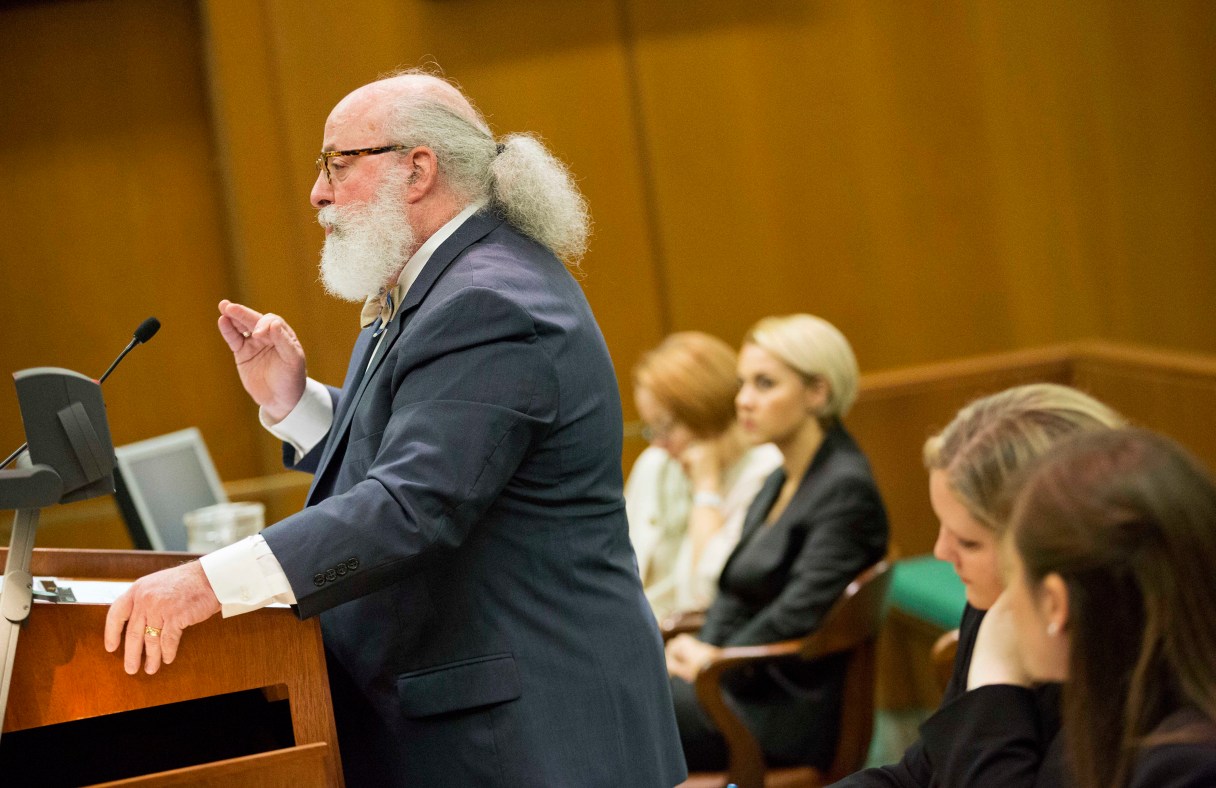
ATLANTA (AP) – A Georgia court heard arguments Thursday about whether the state violated a Ku Klux Klan group’s constitutional rights by refusing its application to a highway cleanup program and whether a recent U.S. Supreme Court decision applies in the case.
The north Georgia KKK group applied to join the state’s Adopt-A-Highway program in May 2012, hoping to clean up along part of Route 515 in the Appalachian Mountains. The state Department of Transportation, which runs the program, denied the application. The department said its program was aimed at “civic-minded organizations in good standing.”
The American Civil Liberties Union Foundation sued on behalf of the KKK group in September 2012, arguing that the state violated the group’s right to free speech.
Fulton County Superior Court Judge Shawn Ellen LaGrua agreed and ruled in the group’s favor in November, saying the KKK’s group’s application was treated differently than others and that “viewpoint-based discrimination” is not allowed under the Georgia Constitution.
The state appealed, and the Georgia Court of Appeals heard arguments in the case Thursday. The judges made it clear that they are very interested in hearing arguments from both sides as to whether a U.S. Supreme Court decision in a Texas case issued last month applies in this case.