
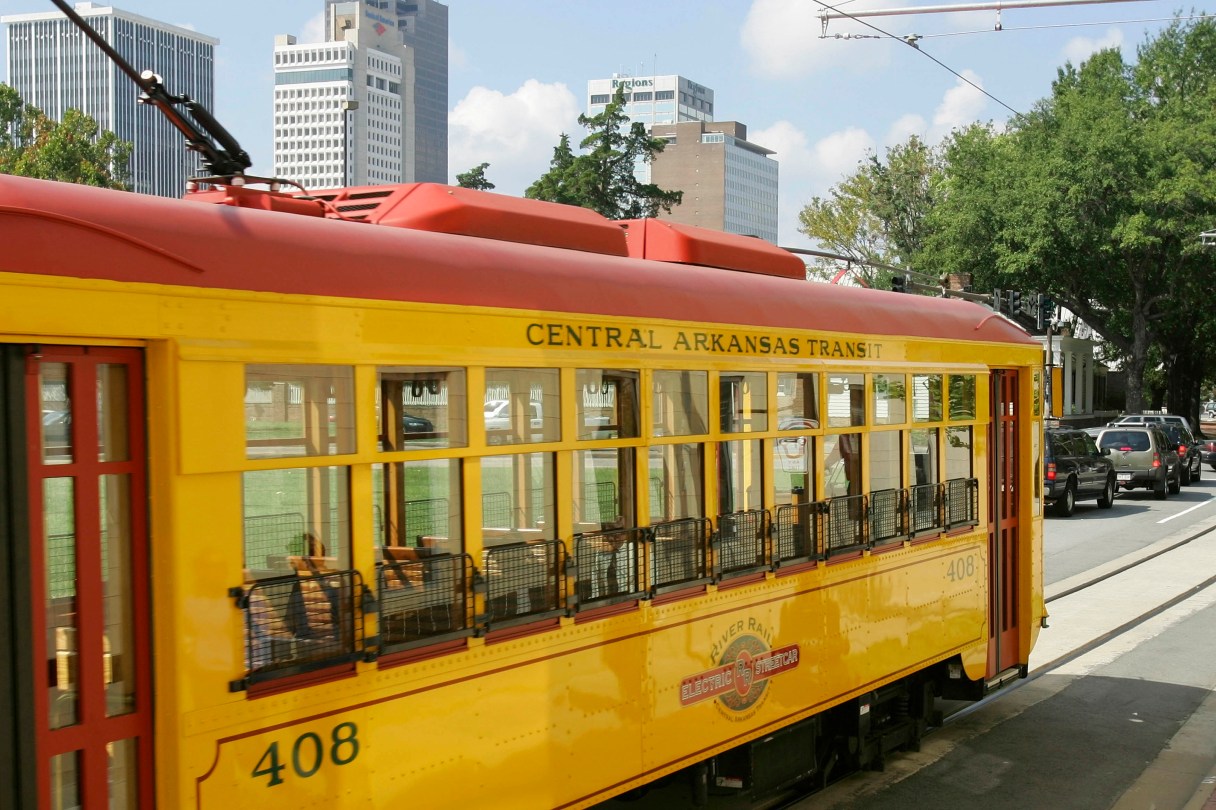
LITTLE ROCK, Ark. (AP) – As Oklahoma City prepares to break ground on its first streetcar line in seven decades, and as other cities adjust to having them again, authors of a federally backed study suggest their routes move people with a purpose – not just target the tourist trade.
In a recent analysis covering five cities, researchers at the Mineta Transportation Institute in San Jose, California, found streetcar systems fare best when used to haul people from Point A to Point B. Routes in Little Rock and Tampa, Florida, which cater to tourists, fared worse in key areas than lines in Memphis, Tennessee; Portland, Oregon, and Seattle.
“They’re not really going into this thinking of transportation as the primary objective,” said Jeffery Brown, a co-author of the study who directs the master’s program at Florida State University’s Urban and Regional Planning Department. “The streetcar is playing a role for something else, like nostalgia.”
Streetcars were a common sight decades ago, but the automobile age led most communities to scrap their lines, as Oklahoma City did after World War II. Of the five cities studied, the researchers found that all wanted to boost economic development, with Little Rock and Tampa also desiring streetcars for tourism.
But those two systems are practically impractical for commuters: The study found that Tampa’s “TECO” line passes through high-density areas but doesn’t operate during the morning rush hour, and Little Rock’s 12-year-old streetcar system operates on two tight loops in Little Rock and North Little Rock, with a spur to the Clinton Library, but doesn’t run to where many people live.