
Monday, November 9, 2026Nov 9

Dry, windy conditions feed wildfires across the Southeast

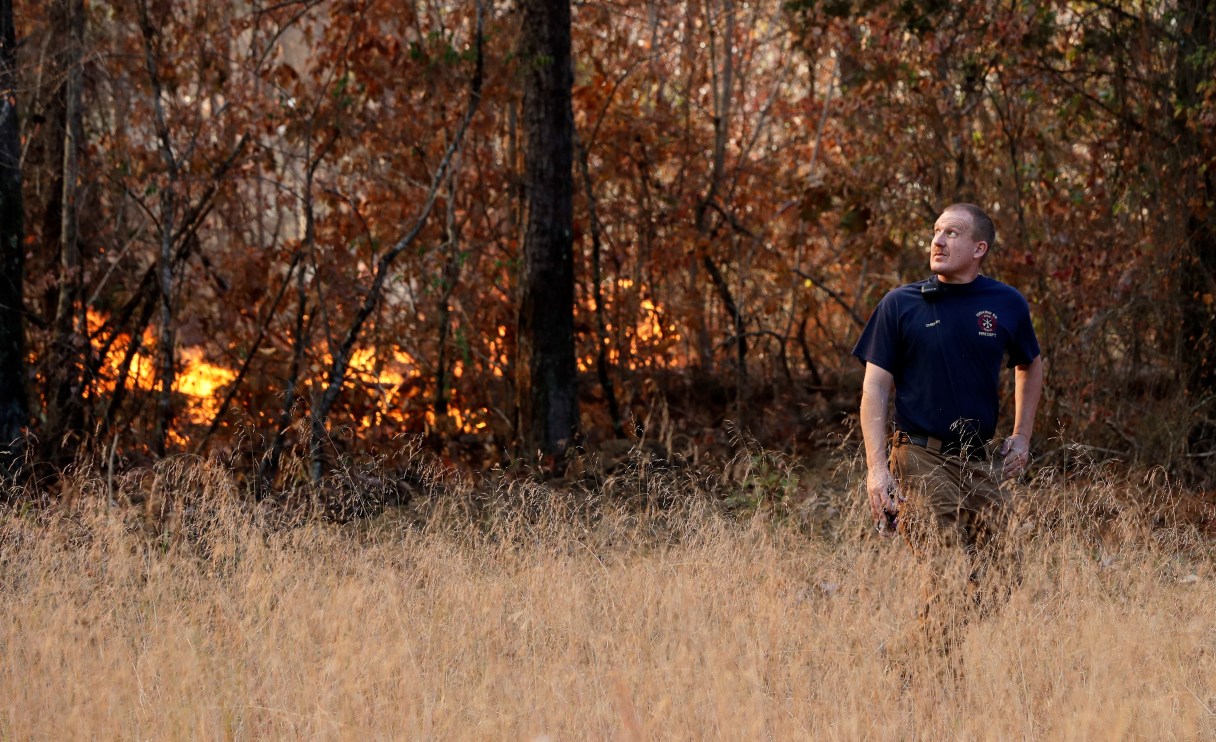
Assistant Chief Brent Masey, of the Highway 58 Fire Department in Harrison, Tenn., looks up as a helicopter carrying fire retardant flies over as Masey keeps watch on a wildfire Thursday, Nov. 10, 2016, in Soddy-Daisy, Tenn. Federal authorities say warmer-than-average temperatures and no rainfall are deepening a drought that's sparking forest fires across the Southeastern U.S. (AP Photo/Mark Humphrey)
Assistant Chief Brent Masey, of the Highway 58 Fire Department in Harrison, Tenn., looks up as a helicopter carrying fire retardant flies over as Masey keeps watch on a wildfire Thursday, Nov. 10, 2016, in Soddy-Daisy, Tenn. Federal authorities say warmer-than-average temperatures and no rainfall are deepening a drought that's sparking forest fires across the Southeastern U.S. (AP Photo/Mark Humphrey) Assistant Chief Brent Masey, of the Highway 58 Fire Department in Harrison, Tenn., looks up as a helicopter carrying fire retardant flies over as Masey keeps watch on a wildfire Thursday, Nov. 10, 2016, in Soddy-Daisy, Tenn. Federal authorities say warmer-than-average temperatures and no rainfall are deepening a drought that's sparking forest fires across the Southeastern U.S. (AP Photo/Mark Humphrey)

ATLANTA (AP) – More than 5,000 firefighters and support staff from around the nation have come to the Southeast, because that’s where the wildfires are right now.

Regional aviation director Shardul Raval of the U.S. Forest Service said Thursday that effort includes about 40 aircraft, and three large air tankers are flying out of Chattanooga, Tennessee.

High winds and temperatures and weeks without rain have combined to spark blaze after blaze in the unusually dry landscape. Numerous teams reported wind-driven fires racing up slopes and down ravines as they struggled to protect hundreds of threatened structures.

Thursday’s national drought report shows 41.6 million people in parts of 15 Southern states living in drought conditions. The worst is in Georgia, Alabama, Mississippi and Tennessee, but extreme drought also is spreading into the western Carolinas. Kentucky, Tennessee and North Carolina all have fierce fires.