
Wednesday, November 11, 2026Nov 11

London’s police force puts more armed officers on streets

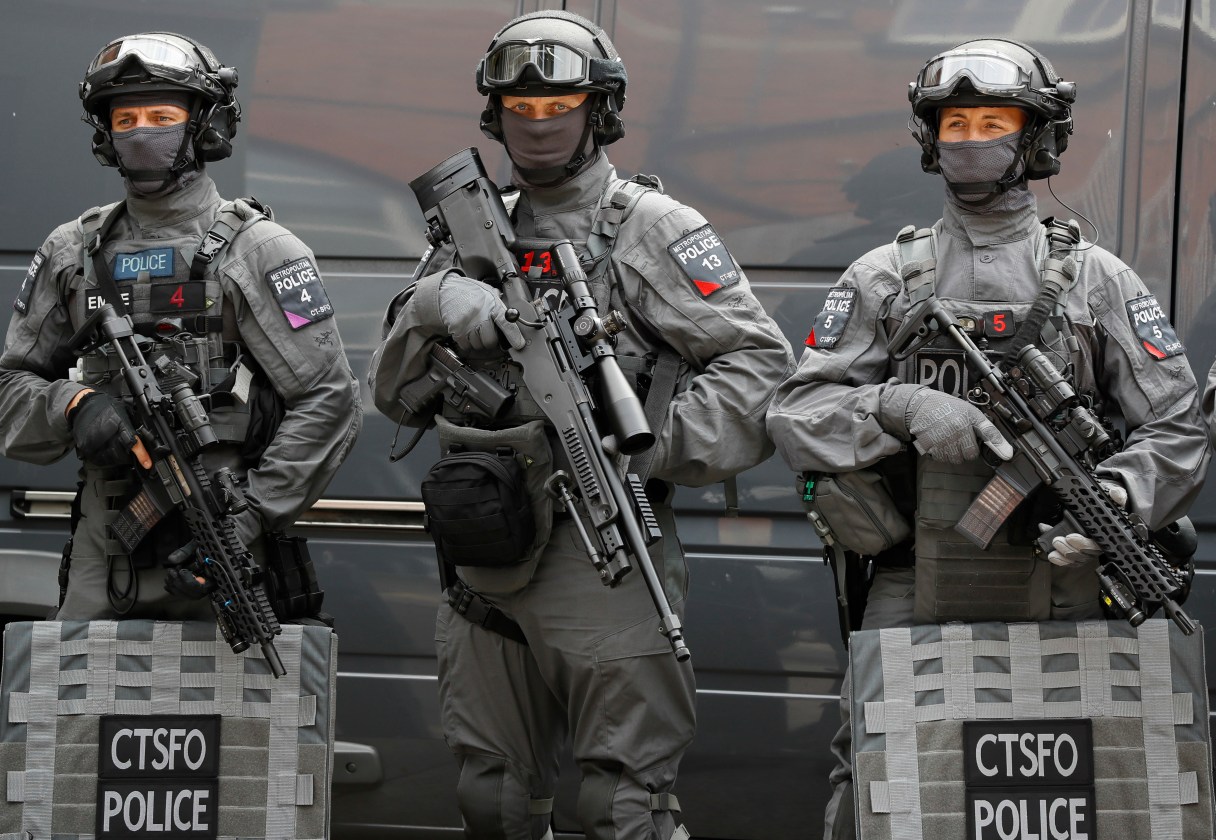
Police counter terrorism officers pose during a media opportunity in London, Wednesday, Aug. 3, 2016. London's police force is putting more armed officers on the streets 'to protect against the threat of terrorism.'' The increase in the number of officers follows attacks in France, Belgium and Germany. (AP Photo/Kirsty Wigglesworth)
Police counter terrorism officers pose during a media opportunity in London, Wednesday, Aug. 3, 2016. London's police force is putting more armed officers on the streets 'to protect against the threat of terrorism.'' The increase in the number of officers follows attacks in France, Belgium and Germany. (AP Photo/Kirsty Wigglesworth) Police counter terrorism officers pose during a media opportunity in London, Wednesday, Aug. 3, 2016. London's police force is putting more armed officers on the streets 'to protect against the threat of terrorism.'' The increase in the number of officers follows attacks in France, Belgium and Germany. (AP Photo/Kirsty Wigglesworth)

LONDON (AP) – London’s police force is putting more armed officers on the streets – a visible response to attacks by Islamic State-inspired groups in Europe.

Metropolitan Police chief Bernard Hogan-Howe said Wednesday he’s increasing the number and the visibility of the officers “to protect the public from all manner of threats.”

“In some of our big iconic locations, we’ve already got armed patrols – if you look at Parliament, Downing Street – so it’s not entirely new,” he said. “I think people understand that where you are going to have people as enemies who’ve got guns, we’ve got to have guns.”

Londoners are proud that most police do not carry guns, and the fundamental principle remains unchanged. Even with the changes, most of London’s 31,000 police officers will not be armed.

But the recent attacks underscore the challenge police face in responding to situations in which may be outgunned. Their deployment came after Hogan-Howe warned recently an attack in Britain was a case of “when, not if.”