
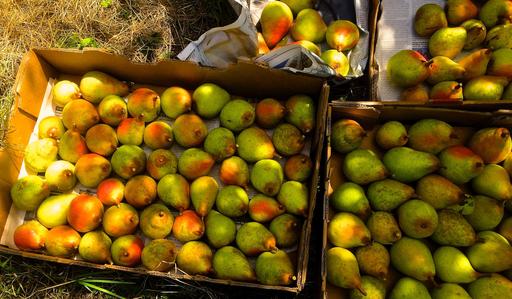
 Landfill diversion is an important element in reducing food waste. You can compost kitchen leftovers for better crop production or donate surplus crops to a local food co-op, like these Bartlett pears shown here. (Dean Fosdick via AP)
Tips for minimizing food waste:
* Think landfill diversion. Compost your leftovers for better crop or garden production, or mix them with animal feed. Freeze or can surplus garden produce or donate it to a food bank.* There is value in sizing. Buy things that won’t spoil in quantity.* Check your garbage. Cook dishes that have proven popular and don’t end up being thrown out.* Buy often and buy fresh. Eat as much as you can before it goes bad. Shop your refrigerator before purchasing more.* Practice portion control. Share rather than discard leftovers. Ask for a sample when dining out if you’re uncertain about ordering something. Don’t rush through meals.* Plan “cook-it-up” menus. Check expiration dates and move older food products toward the front of your shelves so they can be used first.
Remember how it was when you were a kid sitting at the kitchen table and your mother served up a healthy helping of rutabagas? Gross, right?
You slipped them to the family dog or spooned them into a napkin to get them out of sight. But there was no fooling Mom. Your failed sleight-of-hand resulted in a guilt trip and membership in the Clean Your Plate Club.
Fast-forward to today and you’ll find that wasting food has costly consequences extending well beyond your plate.
“Getting food from the farm to our fork eats up 10 percent of the total U.S. energy budget, uses 50 percent of U.S. land and swallows 80 percent of all freshwater consumed in the United States. Yet 40 percent of food in the United States goes uneaten,” according to the Natural Resources Defense Council.