
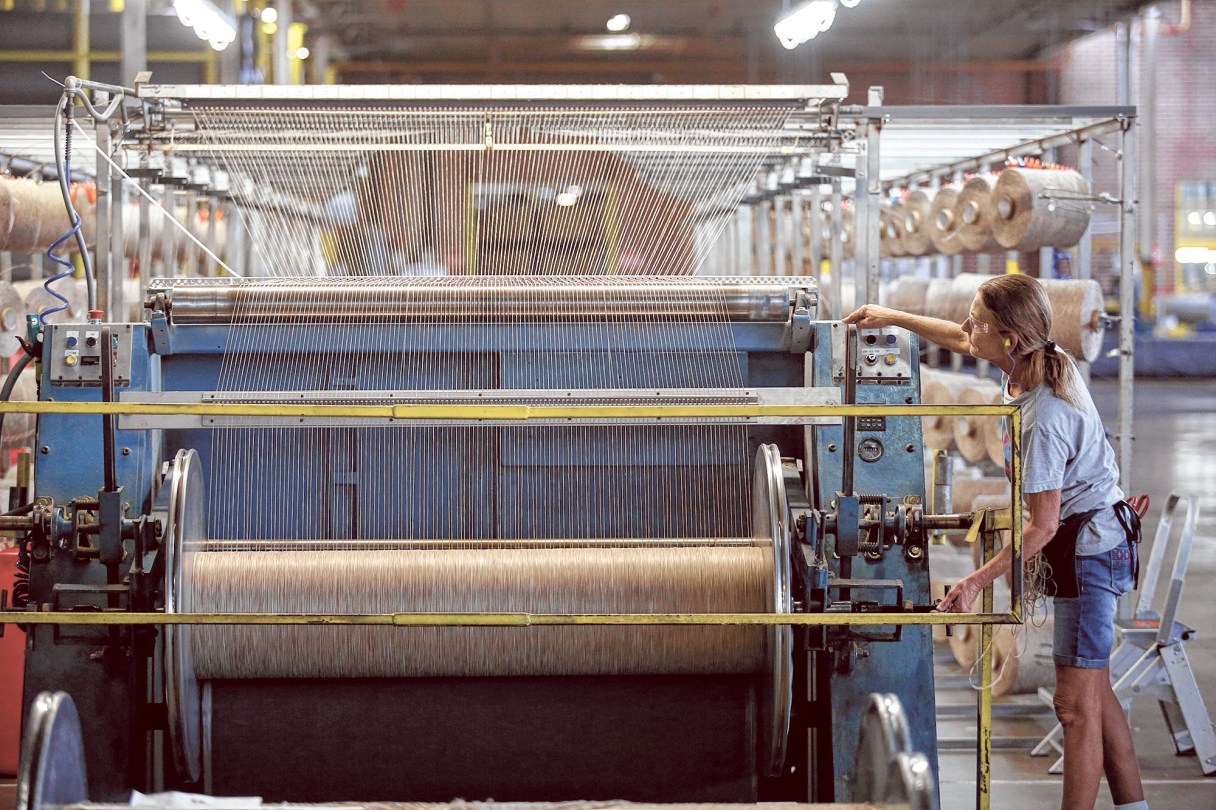
America’s carpet capital is making a comeback.
Dalton, Ga., one of the hardest hit metro areas in the country during the Great Recession and its aftermath, led all mid-South metropolitan cities in the rate of job growth last year.
But just to the north, the employment outlook was not as bright in the Scenic City. The Chattanooga area lagged behind all other metro areas in the region in the rate of new jobs added in 2014.
The six-county Chattanooga metro area added 1,000 net jobs last year — the fifth consecutive year of local job growth. But Chattanooga’s 0.4 percent employment growth in 2014 trailed all other metro areas in the mid-South, according to the U.S. Bureau of Labor Statistics. Chattanooga’s employment total last year remained 8,700 jobs below the peak reached in 2007.
 Jobs increased in Chattanooga 0.4 percent, adding 1,000 jobs to 238,800.
Last year, employment in the Dalton area grew more than 10 times as fast as the rate in Chattanooga, rising 4.4 percent, or 2,800 jobs. Those trying to hire more workers in the Dalton area say the pace of hiring continues to improve in 2015.
“Right now, there is a flood of opportunities and not enough qualified people to take them,” said Michelle Gray, office manager for the staffing TiDra Inc. in Dalton. “In the spring, it’s what I call the “silly season” with so much demand for workers.”
On Monday from 9 a.m. to 3 p.m. TiDra will host a job fair at the Georgia Department of Labor’s Dalton Career Center on Chattanooga Avenue to hire general workers for Mattex, a Calhoun, Ga., carpet backing maker; Town and Country, a pillow manufacturer in Tunnel Hill, Ga.; DisplayCraft, a custom display equipment maker in Dalton, and NPC South Inc., a carpet maker in Dalton.
Last week, the Georgia Department of Labor reported that the jobless rate in Dalton fell in February to its lowest level in nearly seven years with the addition of 3,600 jobs, or 5.6 percent growth in employment, in the past 12 months.
But despite such improvement, Dalton is still 12,700 jobs behind where it was decade and a half ago and Dalton’s 7.1 percent jobless rate in February remained well above the state and national averages. Dalton shed nearly one of every five jobs from 2006 to 2012 as the housing slump cut floorcovering sales overall and consumers’ shifting preference toward harder surface floors shifted many floorcovering sales from carpet to linoleum , hardwood and vinyl.
Dalton was the worst hit metro area for job losses in the MidSouth during and after the recession. But economic recruiters say that is changing.
“We’re definitely seeing more activity — and there are a lot of prospects in the pipeline,” said Brian Anderson, president of the Dalton/Whitfield Chamber of Commerce, which works to recruit industry to Dalton. “The floorcovering industry, which accounts for 80 percent of our jobs, is changing. But we remain home to the key players.”
Anderson acknowledges that Dalton will have to diversify to regain all of the jobs lost through economic, consumer and technological shifts in its main industry. In the late 1990s, unemployment in Dalton fell below 3 percent and many immigrant and other workers were lured to Dalton to staff the carpet mills.
New technologies today are allowing carpet to be produced with far fewer workers and carpet now accounts for less than half the business of the industry leader, the Calhoun, Ga.-based Mohawk Industries, which derives most of its sales from tile, hardwood and laminate floors.
Bill Kilbride, a former Mohawk executive hired last year to head the Chattanooga Area Chamber of Commerce, saw first hand the economic and employment shifts in Dalton’s carpet industry.
Chattanooga has a more diversified industry and suffered only about a third as big of a percentage loss of jobs from its peak in 2007 to the trough of the recession two years later.
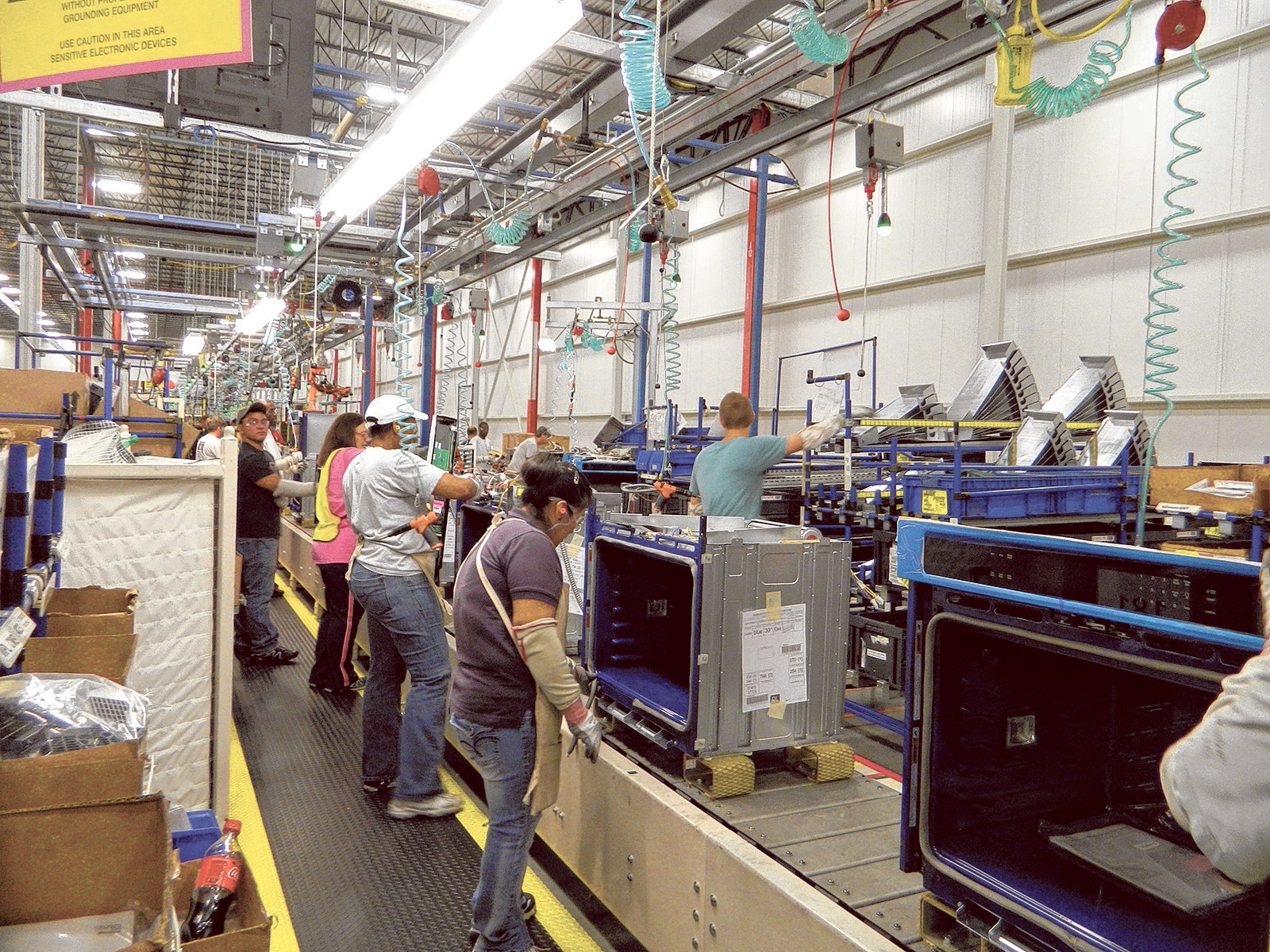 Jobs increased in Cleveland, Tenn., 1.1 percent, adding 500 jobs to 45,400.
“The mission that we are on here in the greater Chattanooga area is to continue to strive for a diversified employment base so that when the economy does flex we have businesses that are more resilient or affected in different ways and we’re not so dependent upon a single industry,” Kilbride said. “The great thing about Chattanooga is that we continue to have opportunities to grow and diversify. That’s what we continue to pursue and work on every day.”
The Chattanooga Chamber, which is completing its 4-year, $10.2 million “Can Do” campaign in June, easily surpassed its job generation and investment targets for recruiting and growing new business in Chattanooga. Since 2011, The Chamber has worked on $895 million of new projects — nearly double the original $500 million goal — and helped attract 6,952 new jobs — nearly 40 percent more than the “Can Do” target.
But Chattanooga’s comeback has not been as strong as other Southern metro area, even with the addition of three of the biggest recruitment prizes in the South over the past seven years.
Volkswagen decided in 2008 to build a $1 billion auto assembly plant in Chattanooga to make the Passat and announced plans last year for a $600 million addition to also make a Sports Utility Vehicle by 2018. Volkswagen expects to employ up to 4,000 employees once the addition is complete and the plant is projected to support nearly 10,000 other jobs from suppliers and the economic spinoff from the VW facility.
Wacker Chemical is finishing a $2.4 billion polysilicon production plant in Charleston, Tenn., this year that will add 650 jobs. The investment is one of the biggest private industrial projects in Tennessee history.
One of the state’s biggest job generators also came to the Chattanooga area four years ago when Amazon, the world’s biggest Internet retailers, built distribution centers in Chattanooga and Charleston. Those centers will soon grow to include more than 3,000 full-time employees and the staff swells during the Christmas holiday period to more than 5,000 workers.
Such additions during and immediately after the Great Recession cushioned Chattanooga’s economic downturn and kept Chattanooga’s jobless rate below the statewide average during the economic downturn.
But even as the general economy improved, two of Chattanooga’s largest employers cut their job rolls.
The Tennessee Valley Authority cut 2,000 jobs and trimmed use of contract staff as part of its effort to trim $500 million a year in operating expenses to keep electricity rates more in line with neighboring utilities.
In 2013, Volkswagen cut is production staff by more than 500 workers when demand for the Chattanooga-make Passat fell short of projections.
Chattanooga Mayor Andy Berke said he remains optimistic about Chattanooga’s job future, especially with a more innovative economy being sparked by EPB’s fastest-in-the-country Gigabit-per-second Internet service and the development of startup programs and venture capital funds in the city’s new Innovation District downtown.
“The world is watching us and we need to continue to work to do what we can to take advantage of the Gig and the other great assets we have in our city,” he said.
Kilbride said the improving economy and changing technologies are generating lots of opportunities for growth, both from existing and new businesses.
“But it’s a very competitive market,” Kilbride said. “States are doing virtually whatever they can to help attract and build business. We’re trying to be as smart about it as we can. We think we’re being prudent in promoting what makes the most sense for Chattanooga.”
Although Chattanooga and Dalton have yet to regain all of the jobs lost in the recession, metropolitan Cleveland, Tenn., reached a new employment peak in 2012 and has continued to add jobs since.
With major investments from Wacker, Amazon, Whirlpool and others, Bradley County has garnered a total of $3.2 billion of new investment in the past five years. Collectively, the Cleveland/Bradley County Chamber of Commece estimates the 14 existing industries that have expanded since 2010 have or will eventually add 1,906 new jobs.
“The pipeline now for new prospects is as active as any time since I came here in 2009,” said Doug Berry, vice president of economic development for the Cleveland Chamber of Commerce.
Contact Dave Flessner at dflessner@timesfreepress.com or at 757-6340.