
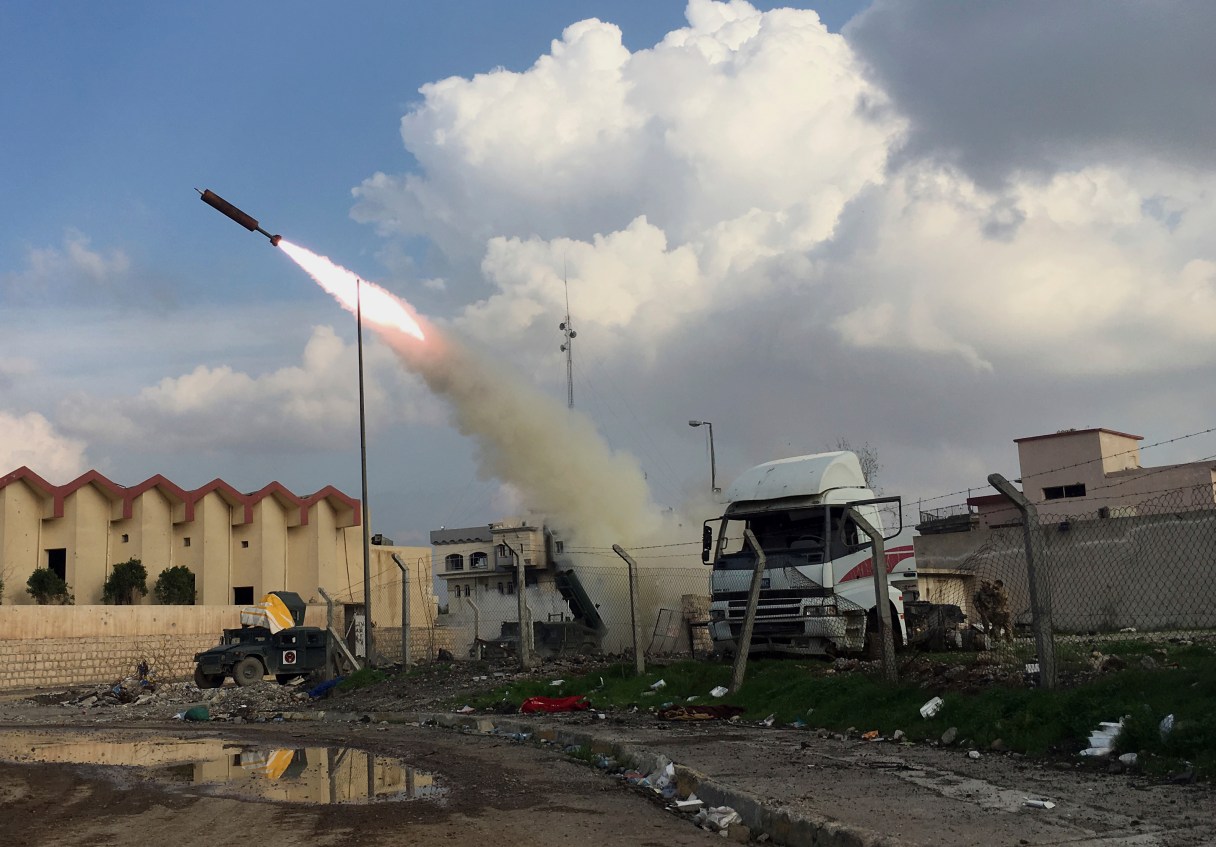
WASHINGTON (AP) – With U.S.-backed Iraqi forces battling to retake Mosul, officials from the 68-nation coalition fighting the Islamic State group are looking for ways to increase the pressure as planning intensifies on the next objective, dislodging the extremists from their self-declared capital in Syria.
Secretary of State Rex Tillerson and Defense Secretary Jim Mattis were hosting Iraq’s prime minister and diplomats from the coalition partners in a Wednesday meeting at the State Department. The aim is to seek new ideas to expand the fight against IS and prepare for the day of its defeat.
But they were not likely to develop a new overall strategy. The Trump administration is refining its approach to the Islamic State group, and that probably will mean a greater military role for the U.S. and its allies, and increased reliance on local militias in Syria. The partnership with Kurdish forces is the source of complex and difficult discussions with Turkey, which sees the militants as a national security threat.
As IS becomes more encircled, the mission will change. Officials expect in the coming months to see the dissipation of surviving fighters into underground cells that could plan and mount attacks throughout the Middle East, South and Central Asia, Europe and the United States.
The officials gathering in Washington also hope to figure out how best to deal with the inevitably messy humanitarian and political aftermath of IS’ defeat on the battlefield. There are widespread fears of chaos, such as what emerged after NATO’s intervention in Libya in 2011, that could further fracture the region’s deep ethnic and religious splits, and complicate the stated goal of preserving the Syrian and Iraqi states.