
Wednesday, November 11, 2026Nov 11

Uzbekistan’s acting president wins election overwhelmingly

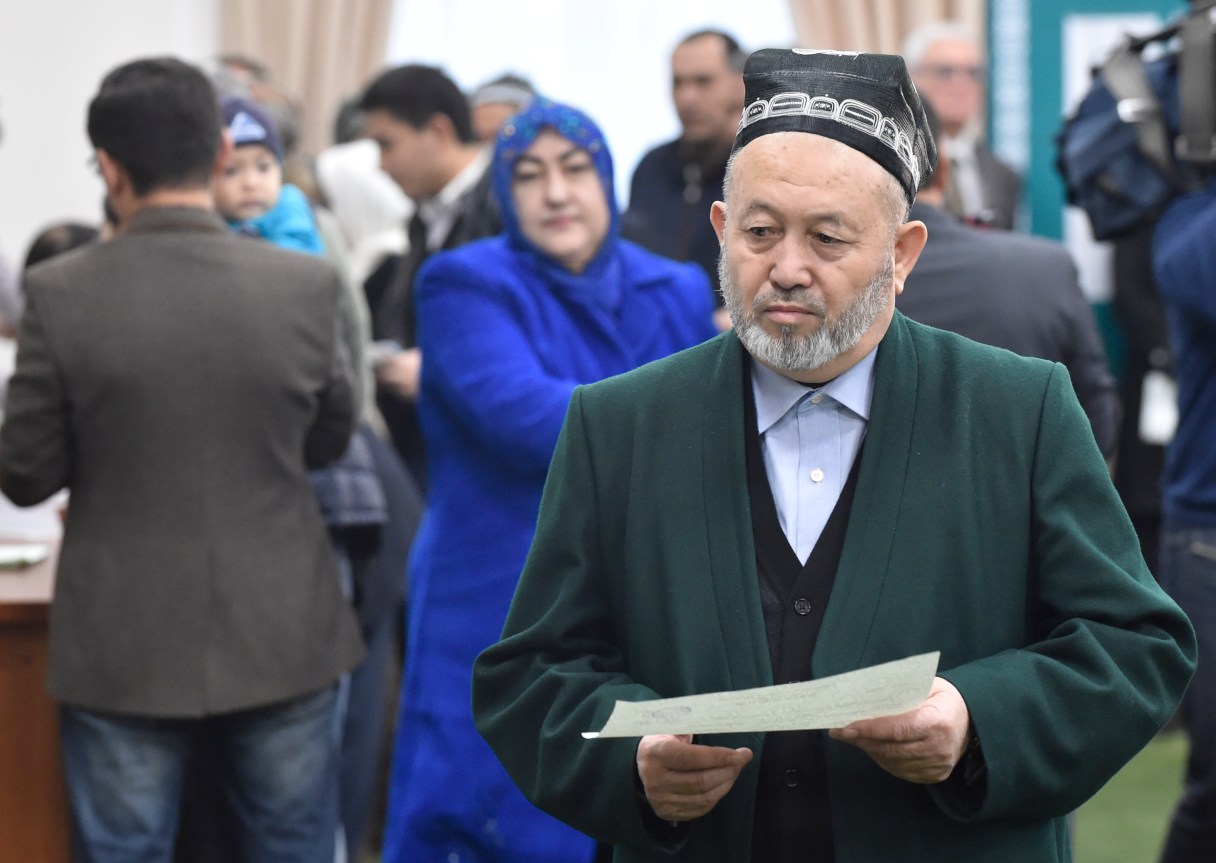
A Uzbek man walks to cast his ballot during tightly controlled presidential election, the first vote since the death of authoritarian leader Islam Karimov who ruled the country for 27 years, in Tashkent, Uzbekistan, Sunday Dec. 4, 2016. The odds-on favorite is acting President Shavkat Mirziyoyev, who spent 13 years as Karimov's prime minister. (AP Photo/Anvar Ilyasov)
A Uzbek man walks to cast his ballot during tightly controlled presidential election, the first vote since the death of authoritarian leader Islam Karimov who ruled the country for 27 years, in Tashkent, Uzbekistan, Sunday Dec. 4, 2016. The odds-on favorite is acting President Shavkat Mirziyoyev, who spent 13 years as Karimov's prime minister. (AP Photo/Anvar Ilyasov) A Uzbek man walks to cast his ballot during tightly controlled presidential election, the first vote since the death of authoritarian leader Islam Karimov who ruled the country for 27 years, in Tashkent, Uzbekistan, Sunday Dec. 4, 2016. The odds-on favorite is acting President Shavkat Mirziyoyev, who spent 13 years as Karimov's prime minister. (AP Photo/Anvar Ilyasov)

MOSCOW (AP) – Uzbekistan’s acting president has overwhelmingly won a tightly controlled presidential election, the Central Asian country’s first vote since the death of authoritarian leader Islam Karimov, election officials said Monday.

Shavkat Mirziyoyev garnered 88.61 percent of the vote, Central Election Commission head Murza-Ulugbek Abdusalomov said during a briefing in Tashkent. Turnout was 87.83 percent, according to officials.

None of the other three presidential contenders managed to get more than 4 percent of the ballots cast.

While there were some minor improvements compared with previous elections, the vote was marred by a muzzled media, lack of independent candidates and widespread falsification, according to a report released by the Organization for Security and Cooperation in Europe’s Office for Democratic Institutions and Human Rights.

The election “underscored the need of comprehensive reform to address long-standing systemic shortcomings,” the OSCE said in its preliminary findings.